• Skip to main content
  • Account
  • Cart
  • Change Country

Insight for Living

The Bible-Teaching Ministry of Pastor Chuck Swindoll

  • Home
  • Broadcasts
    • Current Broadcast
    • Broadcast Schedule
    • Broadcast Archive
    • Series Library
    • STS Bible Studies
    • Ways to Listen
    • Sunday Services
    • Paws & Tales
  • Resources
    • Daily Devotional
    • Insights on the Bible
    • Insights by Topic
    • Article Library
    • Church Leaders
    • Church Resources
    • How to Know God
    • Chuck’s Next Book
    • Video Library
  • International
    • About Vision 195
    • International Pastors
    • International Offices
  • Connect
    • FAQs
    • Contact Us
    • Social Media
    • Mobile App
    • Share Your Testimony
    • Bible Questions and Counseling
    • Pray for IFL
  • About
    • Essential Beliefs
    • Chuck Swindoll
    • Questions about Chuck
    • Leadership
    • Where Donations Go
    • Work With Us
    • Volunteer Opportunities
  • Store
  • Donate
    • Give Now
    • Give Monthly
    • My Account
    • Giving Through Stock Transfers
    • Planned Giving
    • Giving History
    • Why Give
    • This Month’s Letter
You are here: Home / Archives for 1 Thessalonians

1 Thessalonians

Mar 03 2026

Contagious Christianity

Paul’s short stint in Thessalonica didn’t diminish his love and care for the new believers. He urged them to develop a stronger faith, a greater joy, and a deeper love for the church. That sort of Christianity would not only last but spread.

Did the Thessalonian church have the “right stuff” to survive and grow? What about you and your church?

Tune in to this equipping series on 1 Thessalonians with Pastor Chuck Swindoll to understand how God desires the same for you. Discover how you can grow in essential qualities that will help you thrive as a Christian today!
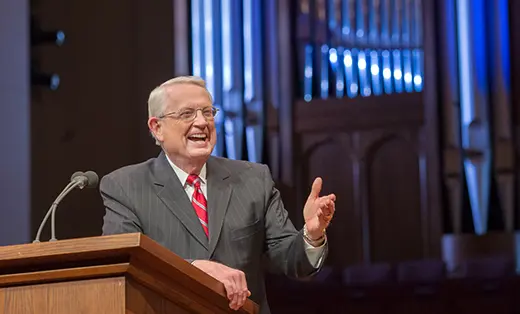

Written by

May 31 2025

Paul: A Man of Grace and Grit

From chief of sinners to apostle of grace, Paul shines a beacon of hope to the wayward and a reminder of Christ’s radically transforming power at work today. 

Join Pastor Chuck Swindoll in this insightful and challenging series on the life and times of the apostle Paul. Learn life-changing lessons of grace from the man who faced all circumstances with maturity, determination, and joy. 

As you dig deeper into Paul’s life, allow his story to influence and change yours too!

In this biographical study, Pastor Chuck Swindoll explores the life of the most influential figure in the early church, next to Jesus Himself. From his origins as a “rebel” named Saul of Tarsus to his final days in a Roman dungeon, this series highlights the grit required to endure hardship and the grace that transformed a persecutor into a tireless apostle.

Message 1: May I Introduce to You Saul of Tarsus

Sermon Overview Before he penned the epistles of grace, the Apostle Paul was known as Saul of Tarsus—a brilliant, privileged, and violently aggressive Pharisee. Charles R. Swindoll paints a vivid portrait of Saul’s early life, from his wealthy upbringing in a cosmopolitan Roman city to his elite theological training in Jerusalem under Gamaliel. The message highlights the shocking reality of Saul’s initial entry into the biblical narrative as a religious terrorist endorsing the stoning of Stephen, proving that God’s grace can reach even the darkest of pasts.

Key Facts

• A Privileged Background: Saul was born in Tarsus, a major intellectual and commercial hub, granting him Roman citizenship and a brilliant education.

• Zealous Persecutor: Operating under the guise of religious purity, Saul aggressively hunted down early Christians, dragging men and women into prison.

• The Power of Grace: No matter how dark a person’s history or how intense their opposition to God, no one is beyond the hope of a new beginning.

Scripture References

• Acts 7:54–8:3; Acts 21:39; Acts 5:18–42; Philippians 3:4–6; 1 Timothy 1:12–13.

——————————————————————————–

Message 2: The Violent Capture of a Rebel Will

Sermon Overview Exploring one of the most famous conversions in history, Swindoll examines the day Saul’s violent rampage was halted on the road to Damascus. While plotting to expand his persecution of Christians, Saul is struck blind by a divine light and confronted by the resurrected Christ. The sermon emphasizes that God actively pursues the lost, using life’s sudden jolts to break our stubborn self-will and bring us to saving faith.

Key Facts

• Divine Intervention: God violently captured Saul’s rebel will by striking him blind with the Shekinah glory of Christ at midday.

• Kicking the Goads: Before his conversion, Saul’s conscience was already being “goaded” by the courage of martyrs like Stephen and the undeniable facts of Christ’s life.

• God Always Wins: No matter how aggressively a person fights against the truth, God’s sovereign grace is capable of stopping anyone in their tracks.

Scripture References

• Acts 9:1–9; Acts 22:3–5; Acts 26:9–14; Galatians 1:13–14; 1 Timothy 1:13.

——————————————————————————–

Message 3: The Memorable Faith of a Forgotten Hero

Sermon Overview Every great leader has individuals who helped them along the way. In this message, Swindoll highlights Ananias, the unsung hero who was commanded by God to minister to the newly blinded Saul. Comparing the terrifying task to being asked to heal Adolf Hitler in 1940, Swindoll shows how Ananias’s courageous obedience allowed Saul to regain his sight, be baptized, and immediately begin proclaiming Jesus in the synagogues.

Key Facts

• A Frightening Call: Ananias understandably hesitated when told to find Saul, the man known for murdering Christians.

• A Chosen Instrument: God revealed that Saul was hand-picked to bear His name before Gentiles, kings, and the children of Israel.

• The Reward of Obedience: By stepping out in faith despite his fear, Ananias played a pivotal role in launching the greatest missionary in church history.

Scripture References

• Acts 9:10–22; Galatians 1:13–17; 2 Corinthians 11:23–28.

——————————————————————————–

Message 4: Mission Underway: Thanks to the Lesser Known

Sermon Overview Continuing the theme of unsung heroes, this message examines the immediate aftermath of Saul’s conversion. Stripped of his independence, Saul discovers he cannot survive without the help of others. Swindoll traces Saul’s escape from Damascus—lowered down a wall in a basket by unnamed disciples—and his initial rejection in Jerusalem until Barnabas, the “Son of Encouragement,” steps in to vouch for him before the skeptical apostles.

Key Facts

• Shattering Independence: God routinely breaks the pride of self-made individuals to teach them dependence on Him and the body of Christ.

• The Basket Escape: The once-proud Pharisee had to rely on nameless disciples to save his life by lowering him in a fish basket.

• The Ministry of Encouragement: Barnabas bridged the gap of distrust, risking his own reputation to advocate for the converted terrorist.

Scripture References

• Acts 9:22–31; 2 Corinthians 11:32–33.

——————————————————————————–

Message 5: The Necessity of Solitude, Quietness, and Obscurity

Sermon Overview Before stepping into his world-changing public ministry, Paul spent over three years hidden away in the deserts of Arabia, followed by several unrecorded years back in Tarsus. Swindoll warns against modern Christianity’s addiction to speed, superficiality, and instant success. He illustrates how God’s curriculum for spiritual depth mandates extended seasons of waiting, silence, and obscurity to transform us from man-pleasers into God-honorers.

Key Facts

• The Missing Years: Paul spent over 1,000 unaccounted days in Arabia unlearning his Pharisaic theology and receiving direct revelation from Jesus.

• The Discipline of Delay: Exceptional work is always preceded by extended waiting; God hides His servants to deepen them.

• Replacing Ambition: Believers must learn to slow down, reflect quietly, and release their desire for platform and power.

Scripture References

• Galatians 1:11–17; Ecclesiastes 7:29; Isaiah 30:15.

——————————————————————————–

Message 6: Out of the Shadows

Sermon Overview While a massive revival was breaking out in Antioch, Paul was still waiting obscurely in his hometown of Tarsus. In this message, Swindoll observes how God used Barnabas to finally draw Paul out of the shadows. Realizing the Antioch church needed solid theological grounding, Barnabas sought out Paul. Together, they ministered powerfully for a year to the believers, who were called “Christians” for the very first time.

Key Facts

• Divine Timing: God’s call to step into ministry often happens when we least expect it and feel the least qualified.

• Substance Over Status: Paul didn’t eagerly promote his own resume or force open doors; he patiently waited for God to deploy him.

• The Birth of “Christians”: Under the tag-team teaching of Barnabas and Paul, the Antioch church flourished and the term “Christian” was coined.

Scripture References

• Acts 11:19–26; Romans 8:25; 2 Corinthians 12:1–10.

——————————————————————————–

Message 7: The Pleasure of Being in Ministry Together

Sermon Overview Focusing on the synergy between Paul and Barnabas in Antioch, Swindoll addresses the danger of spiritual isolation. The message stresses that ministry is never meant to be a solo endeavor. Paul and Barnabas modeled a healthy, shared ministry devoid of ego or competition. They seamlessly combined their distinct gifts—Barnabas’s encouragement and Paul’s intellectual teaching—to establish a thriving, generous church.

Key Facts

• The Danger of Isolation: Attempting to handle life and ministry entirely alone is unbiblical and spiritually unhealthy.

• Complementary Gifts: The Antioch church thrived because its leaders utilized differing gifts without giving way to jealousy or competition.

• Holding Plans Loosely: True ministry requires flexibility; God’s plan often introduces sudden shifts and requires risk and sacrifice.

Scripture References

• Acts 11:21–30; Acts 12:24–25; Ecclesiastes 4:9–12.

——————————————————————————–

Message 8: Released in Order to Obey

Sermon Overview While the church at Antioch was enjoying incredible success with its five gifted teachers, the Holy Spirit abruptly commanded them to set apart Barnabas and Saul for a new mission. Swindoll explores the difficulty of change and the challenge of leaving a comfortable environment. The Antioch church sets a beautiful example by refusing to cling to their favorite leaders, fasting, praying, and unselfishly releasing them to the world.

Key Facts

• The Mandate of Change: Living a life of authentic obedience to God inevitably requires accepting uncomfortable changes.

• Divine Disruptions: The Holy Spirit often interrupts our most successful and predictable seasons with new, challenging directives.

• The Grace of Letting Go: A mature church does not hoard its best talent but releases gifted individuals to fulfill God’s broader plan.

Scripture References

• Acts 13:1–4; Psalm 51.

——————————————————————————–

Message 9: The Jagged Edge of Authentic Ministry

Sermon Overview Tracing the treacherous route of Paul’s first missionary journey, Swindoll shatters the illusion that walking in God’s will guarantees comfort. The message follows Paul and Barnabas as they face the defection of John Mark, minister in the rugged terrain of Galatia, reject idolatrous worship in Lystra, and endure Paul’s brutal stoning. It is a sobering look at the “jagged edge” of frontline ministry, fueled relentlessly by the Word of God.

Key Facts

• Saturated in Scripture: Paul’s resilience was rooted in his deep immersion in the Word, mentioned 15 times in Acts 13 and 14.

• A Dual Emphasis: Paul masterfully balanced preaching the Gospel of salvation to the lost and the freedom of grace to the saved.

• Enduring Hardship: Even after being stoned and left for dead, Paul courageously re-entered the city and continued his mission the very next day.

Scripture References

• Acts 13:1–13, 38–43; Acts 14:9–27.

——————————————————————————–

Message 10: A Game Plan for Facing Extreme Circumstances

Sermon Overview Looking deeper into Acts 13 and 14, Swindoll unpacks the specific, mature responses Paul modeled when encountering extreme opposition. A fulfilling life requires a clear identity, mission, and purpose, which allows believers to keep their eyes on the goal rather than the obstacles. Swindoll shows how Paul boldly confronted a false prophet, pressed on when a teammate defected, and humbly deflected inappropriate praise.

Key Facts

• Firmness Against Deceit: Paul demonstrated immense courage when he rebuked and temporarily blinded Elymas, the magician trying to thwart the gospel.

• Refusing to Quit: When Jewish leaders blasphemed and rejected his message, Paul didn’t throw a pity party; he boldly pivoted his ministry to the Gentiles.

• Returning Without Regret: Paul retraced his steps to the very cities where he had been abused to strengthen the new disciples, proving he held no lingering bitterness.

Scripture References

• Acts 13:4–12, 42–48; Acts 14:19–22.

——————————————————————————–

Message 11: The Day Two Missionaries Duked It Out

Sermon Overview The Bible paints its heroes with absolute realism, warts and all. Swindoll examines the sharp, heated disagreement between Paul and Barnabas over whether to take John Mark—who had previously abandoned them—on their second journey. Exploring the anatomy of a conflict, Swindoll explains how to navigate relational breakdowns when principle (Paul) collides with grace and restoration (Barnabas).

Key Facts

• An Unresolved Conflict: Paul and Barnabas had such a severe argument over John Mark that they split their ministry team and parted ways.

• Two Valid Viewpoints: Paul rightfully valued reliability in the face of danger, while Barnabas rightfully championed giving a fallen brother a second chance.

• Handling Disagreements: Believers must learn to seek wise compromise, work through persisting conflict, and eventually agree to disagree without becoming disagreeable.

Scripture References

• Acts 15:36–41; Proverbs 25:19.

——————————————————————————–

Message 12: Traveling as Paul Traveled

Sermon Overview Buckle up for a sweeping overview of Paul’s second and third missionary journeys. Swindoll highlights the unpredictable, perilous, and exhilarating nature of traveling in the Spirit. The message follows Paul as he encounters closed doors in Asia, receives the Macedonian call to Europe, sings hymns in a Philippian jail, praises the noble-minded Bereans, and finally returns to face a hostile mob in Jerusalem.

Key Facts

• Responding to Closed Doors: God actively guides by slamming doors shut, just as He blocked Paul from Asia to route him to Macedonia.

• Joy in Suffering: Beaten and locked in stocks, Paul and Silas spent their midnight hour singing hymns, leading to the miraculous conversion of the Philippian jailer.

• The Berean Standard: Like the believers in Berea, Christians must cross-examine every teaching they hear directly against the Scriptures.

Scripture References

• Acts 15:40–16:12, 22–35; Acts 17:5–15; Acts 18:11–22; Acts 20:13–21:3.

——————————————————————————–

Message 13: Preaching as Paul Preached

Sermon Overview Standing alone in the intellectual and cultural epicenter of Athens, Paul’s spirit was provoked by the city’s endless idols. Swindoll breaks down Paul’s masterful, impromptu sermon delivered on Mars Hill (the Areopagus) to Epicurean and Stoic philosophers. The message serves as a timeless blueprint for effective communication: starting where the audience is, boldly speaking the truth without fear, staying on the subject of Christ, and leaving the results to God.

Key Facts

• Provoked by Idolatry: Paul didn’t rant or hurl insults at the pagans; he channeled his righteous indignation into brilliant, constructive dialogue.

• Bridging the Gap: Paul tactfully used their altar “To an Unknown God” and quotes from their own poets to build a bridge to the Gospel.

• Uncompromising Truth: Despite facing the greatest intellectuals of the day, Paul fearlessly preached repentance and the resurrection of Jesus, regardless of their sneers.

Scripture References

• Acts 17:16–33.

——————————————————————————–

Message 14: Leading as Paul Led

Sermon Overview Looking back at his ministry in Thessalonica, the Apostle Paul outlines a magnificent, timeless standard for spiritual leadership. Charles R. Swindoll extracts four negative and four positive traits of authentic leadership from 1 Thessalonians 2. True leaders reject deception, greed, and the temptation to be people-pleasers. Instead, they balance the gentle, tender affection of a nursing mother with the encouraging, instructing discipline of a caring father. Paul’s model proves that giving the gospel is not enough on its own; a leader must impart their very life to their followers.

Key Facts

  • Integrity Over Image: Effective leaders never use their position for self-serving glory or manipulation, nor do they water down the truth to please the crowd.
  • Sharing Life: Paul didn’t just dispense theological information from a distance; his life was an “open book,” and he loved the people so deeply that he shared his own life with them.
  • The Balance of Care: Good leadership perfectly blends deep, tender sensitivity to needs with enthusiastic, directional affirmation.

Scripture References

  • 1 Thessalonians 2:1–12; Galatians 1:10.

Message 15: Finding Contentment in God’s Sufficient Grace

Sermon Overview Addressing the raw, painful reality of suffering, Swindoll turns to Paul’s most intimate confessions in 2 Corinthians 12. Despite receiving unparalleled heavenly revelations, Paul was given a painful “thorn in the flesh” to keep him humble. This message dismantles the shallow theology that expects constant physical healing and happiness. Instead, Swindoll teaches that true contentment is forged in the crucible of afflictions, where God frequently answers our pleas for relief with a resounding “No,” teaching us that His grace is entirely sufficient.

Key Facts

  • The Gift of Limitations: God permitted Satan’s messenger to buffet Paul with a “thorn” (a sharply pointed stake) to safeguard him from the spiritual pride of his profound revelations.
  • Unanswered Prayers for Healing: Paul pleaded three times for physical relief, but God answered “No,” revealing that divine power is actually perfected in human weakness.
  • Boasting in Weakness: Rather than hiding his scars, Paul learned to gladly embrace insults, distresses, and persecutions, knowing they made room for Christ’s strength to dwell in him.

Scripture References

  • 2 Corinthians 12:1–10; 2 Corinthians 1:3–8; 2 Corinthians 4:8–18.

Message 16: Responding as Paul Responded

Sermon Overview Greatness is not defined by what happens to us, but by how we respond to what happens to us. Swindoll revisits the heavy afflictions Paul endured—shipwrecks, stonings, and the daily pressure of the churches. He highlights that Paul did not retaliate with bitterness but bore his physical scars proudly as the “brand-marks” of Jesus. This message challenges believers to stop focusing on their visible, temporal hardships and start looking at the unseen eternal purposes God is accomplishing through their pain.

Key Facts

  • The Stigmata of Christ: Paul proudly viewed his physical scars as literal brand-marks (stigmata) proving his ownership by and loyalty to Jesus Christ.
  • Despairing of Life: Paul was transparent about times he felt burdened beyond his strength, teaching us that desperation is the perfect place to learn ultimate trust in God alone.
  • The Unseen Reality: Believers can endure being struck down but not destroyed by shifting their focus from temporal pain to eternal glory.

Scripture References

  • 2 Corinthians 1:8–10; 2 Corinthians 4:8–18; 2 Corinthians 12:7–10; Galatians 6:11–17; 1 Samuel 30:1–6.

Message 17: Thinking as Paul Thought

Sermon Overview Following his arrest in Jerusalem, Paul faces violent mobs, a panicked Roman commander, and the corrupt Jewish Sanhedrin. Swindoll highlights Paul’s brilliant, objective mind in the midst of total chaos. Rather than relying on fleeting emotions, Paul anchors his faith in objective facts. The message illustrates how straight thinking allowed Paul to intelligently divide his accusers, assert his Roman rights, and calmly rest in God’s overnight promise that he would eventually reach Rome.

Key Facts

  • Faith is Not a Feeling: Biblical faith is grounded in objective historical content, not subjective, changing emotions or physical experiences.
  • Masterful Defense: Paul used straight-thinking strategy to turn the Pharisees and Sadducees against one another, successfully disrupting their kangaroo court.
  • Divine Reassurance: When Paul was alone in the barracks, Jesus stood by him and promised that his journey would ultimately end as a witness in Rome.

Scripture References

  • Acts 21:27–40; Acts 22:30–23:11; Acts 23:12–35; Acts 24:1–10; 1 Peter 3:15.

Message 18: Dealing with Critics as Paul Did

Sermon Overview Unfair criticism is an inevitable part of living a significant life. Swindoll examines Paul’s trial before the corrupt Governor Felix and the sycophantic lawyer Tertullus. In response to flat-out lies, Paul refused to mirror the emotional hysteria of his critics. He modeled seven practical ways to handle unjust attacks, including staying with the facts, maintaining a clear conscience, and refusing to surrender or harbor bitterness despite waiting two full years in a Caesarean prison.

Key Facts

  • The Laws of Criticism: Criticism usually comes when we least need it, from people least qualified to give it, in the least helpful forms.
  • Cool Under Fire: Paul cheerfully made his defense, completely ignoring the emotional vitriol and methodically dismantling the false charges.
  • Standing on the Promise: Even when left to rot in prison by a political weasel like Felix, Paul did not complain; he rested on God’s prior promise that he was bound for Rome.

Scripture References

  • Acts 21:27–29; Acts 23:11–21; Acts 24:1–27; Acts 25:6–12.

Message 19: Standing Tall as Paul Stood

Sermon Overview True heroes stand tall when everyone else shrinks back. Swindoll focuses on Paul’s dramatic, chain-rattling defense before King Agrippa, Bernice, and Governor Festus. Though surrounded by corrupt politicians robed in royal pomp, Paul, the man in shackles, was the only one truly free. He gracefully recounted his conversion, asserted the reality of the resurrection, and delivered the gospel with such passion that he cornered the king into confronting his own soul.

Key Facts

  • Unintimidated by Power: Paul treated the high-ranking officials with respect, yet fearlessly preached the truth of Christ’s resurrection.
  • The Chains of Freedom: In a masterstroke of evangelism, Paul expressed his wish that his judges would become exactly like him—saved and free—except for his physical chains.
  • The Impact of Conviction: Standing tall makes you operate as though invincible; your focus shifts from self-preservation to eternal principles, regardless of how the audience reacts.

Scripture References

  • Acts 25:12–27; Acts 26:1–32; Proverbs 16:7.

Message 20: How to Handle a Shipwreck

Sermon Overview Sent to Rome as a prisoner, Paul finds himself caught in a terrifying “Nor’easter” (Euraquilo) on the Mediterranean. Swindoll translates this literal shipwreck into a profound metaphor for surviving the dark, chaotic storms of our own lives. He identifies four essential “anchors” from the text that hold us steady when our ship is breaking apart: stability in God’s promises, unity with fellow believers, renewal through prayer and nourishment, and reality that requires our active participation.

Key Facts

  • The Anchor of Stability: Paul found courage in the middle of a hurricane because he trusted God’s specific promise that no life would be lost.
  • The Anchor of Unity: When sailors tried to abandon ship in the lifeboat, Paul warned that survival required everyone to stay together on the sinking vessel.
  • The Anchor of Reality: God promised salvation, but required every passenger to engage in the reality of the crisis by grabbing a plank and swimming to shore.

Scripture References

  • Acts 27:1–44; Isaiah 43:1–5.

Message 21: Arrested, Confined, but Still Effective

Sermon Overview For two full years, Paul lived under house arrest in Rome, literally chained to Imperial Praetorian guards. Rather than spiraling into a victim mentality, Paul wrote the “Prison Epistles,” demonstrating how to live victoriously above extreme circumstances. Swindoll explores how Paul’s unselfish humility and joyful acceptance not only accelerated the spread of the gospel to Caesar’s elite bodyguards but infused incredible courage into believers everywhere.

Key Facts

  • Defeating the Victim Mentality: A learned secret of the Christian life is finding deep contentment completely independent of external circumstances.
  • A Captive Audience: Instead of complaining about his chains, Paul viewed the rotating guards chained to his wrist as a prime evangelistic opportunity.
  • Four Essential Attitudes: Believers must cultivate unselfish humility, joyful acceptance (rejecting grumbling), strong determination, and prayerful thanksgiving.

Scripture References

  • Philippians 1:12–14; Philippians 2:3–5, 14; Philippians 3:13–14; Philippians 4:11–13; Colossians 4:2–4; Acts 28:14–30.

Message 22: Shackled, Deserted, but Still Undaunted

Sermon Overview The series concludes in the cold, damp, blood-stained Mamertine dungeon in Rome. Facing imminent execution by the sword of Nero, an aged, scarred, and largely deserted Paul writes his final, passionate letter to his protégé, Timothy. Swindoll captures the poignant emotion of Paul’s parting words, challenging modern believers to guard the treasure of the gospel, stay faithful in an era of “itching ears,” and finish the race with unshakable confidence in Christ.

Key Facts

  • The Final Dungeon: Paul’s second imprisonment was not a comfortable house arrest; it was a miserable, freezing subterranean hole where he awaited his beheading.
  • Passing the Baton: Paul’s urgent priority was ensuring Timothy would guard the truth, endure hardship, and entrust the gospel to faithful men.
  • Preach the Word: In a world demanding entertaining “spiritual junk food,” Paul’s dying charge is a mandate to relentlessly preach the unvarnished Word of God.
  • Finishing Strong: Paul faced the executioner’s axe without fear or regret, knowing he had fought the good fight, finished the course, and kept the faith.

Scripture References

  • 2 Timothy 1:1–15; 2 Timothy 2:1–4, 15, 24–26; 2 Timothy 3:1–15; 2 Timothy 4:1–22.

Written by

Mar 31 2025

Strengthening Your Grip: How to Be Grounded in a Chaotic World

Have you ever wondered what is essential for glorifying God in an aimless and confused world?

If so, don’t miss Pastor Chuck Swindoll in this practical series on a variety of topics like money, evangelism, parenting, purity, and more!

Strengthen your grip on walking with God in all areas of your life and experience the blessing that follows!

In an aimless and confused world, it is easy for believers to lose their footing. In this 16-part classic series, Pastor Chuck Swindoll offers a practical “grip” on the essentials of the Christian life. By exploring a wide range of topics—from money and leisure to aging and integrity—Chuck provides changeless truths from God’s Word that offer courage and direction. This series is a call to move past a “slippery” faith and to plant your feet firmly on the biblical values that glorifying God in every area of life.

Message 1: Strengthening Your Grip on Priorities

Sermon Overview It is incredibly easy for a local church to lose its reason for existence in the rat race of buildings, programs, staffing, and numbers. Charles R. Swindoll warns that when a congregation forgets its priorities, it suffers from blurred vision, compromised values, and a slick, corporate mentality. Turning to the Apostle Paul’s model in 1 Thessalonians 2, Swindoll identifies four absolute, non-negotiable priorities for a healthy ministry. A church must remain strictly biblical by clinging to the Word of God, it must be authentic and free from manipulative greed, it must display gracious compassion, and it must remain culturally relevant without compromising truth.

Key Facts

  • The Biblical Foundation: The absolute priority of any ministry must be a faithful commitment to the Word of God; without it, strong personalities will easily lead the church astray.
  • Authenticity Over Flattery: A healthy ministry refuses to use flattering speech or guilt to manipulate people; it does not put on a mask to cover up financial greed.
  • Gracious Compassion: Believers must treat one another with the gentle affection of a nursing mother and the protective care of a father, recognizing that many people enter the church deeply bruised by life.
  • Flexible Relevance: While the core message of the Bible never changes, a church’s methods must remain flexible and up-to-date to effectively answer today’s issues.

Scripture References

  • 1 Thessalonians 2:1–14

Message 2: Strengthening Your Grip on Involvement

Sermon Overview In a society that encourages isolation, the church must actively resist the urge to remain disconnected. Believers often act like porcupines in the cold—needing warmth from each other, but needling one another when they get too close. Swindoll explains that true fellowship (koinonia) is not a forced, regimented program; it is the spontaneous sharing of life, burdens, and joys. Looking at Romans 12 and 1 Corinthians 12, this message highlights that involvement in the body of Christ is commanded by God and necessary for the health of the church. To effectively engage with others, believers must cultivate spontaneity, a willingness to be vulnerable (like Mary breaking her alabaster vase), and authentic accountability to prevent tragic isolation.

Key Facts

  • The Porcupine Dance: Christians often engage in a “slow religious dance,” desiring close fellowship but backing away due to the sharp “quills” of relational conflict.
  • Four Vital Relationships: A healthy Christian is intensely involved vertically with God, and horizontally with their physical family, the family of God, and the unsaved world.
  • Commanded Acceptance: Involvement is not optional; Romans 15:7 commands believers to “accept one another,” which implies a welcoming embrace similar to inviting someone into your home, just as Christ accepted us.
  • The Necessity of Accountability: A lack of accountability in the body of Christ can lead to tragic outcomes, such as people hiding severe depression or secret struggles while attending church unnoticed.

Scripture References

  • 1 Corinthians 12:20–27
  • Acts 2:41–45
  • Acts 4:32
  • Romans 12:1–2, 9–13
  • Romans 15:7
  • Mark 14:3

Message 3: Strengthening Your Grip on Purity

Sermon Overview While Christianity is theoretically the supreme champion of purity, practical purity is never automatic. Exploring the cultural backdrop of the first century, Swindoll reveals that the Apostle Paul’s world was just as saturated with sexual immorality, rampant divorce, and blatant perversion as our modern era. In 1 Thessalonians 4, God issues a clear, hard-line command for believers to completely abstain from sexual immorality and to learn how to possess their own bodies in honor. Swindoll emphasizes that avoiding compromise requires fierce self-control, and he courageously addresses the necessity of biblical church discipline to restore those who stubbornly refuse to repent.

Key Facts

  • A Militant Advocate: Christianity must be a militant defender of purity; believers are commanded to excel in holiness so they stand out distinctly from a decadent culture.
  • Total Abstinence: God’s will is sanctification (being set apart), which strictly requires total abstinence from porneia (all types of sexual sin).
  • Sins Against the Body: According to 1 Corinthians 6, sexual immorality is unique because it is a sin committed directly against one’s own body, carrying distinct and devastating consequences.
  • The Loving Act of Discipline: When a believer lives in unrepentant impurity, the church is biblically commanded (Matthew 18) to lovingly confront them, with the ultimate goal of restoring them to the family of God.

Scripture References

  • 1 Thessalonians 4:1–8
  • 1 Corinthians 10:13
  • 1 Corinthians 6:15–20
  • Titus 2:11–14
  • Matthew 18:15–17

Message 4: Strengthening Your Grip on Money

Sermon Overview Hundreds of times a day, modern advertising violently chips away at the Christian’s reservoir of contentment, screaming the subliminal message that we desperately need more. In 1 Timothy 6, the Apostle Paul directly confronts our relationship with finances, dismantling the myth that money equals happiness. Swindoll outlines God’s specific counsel for three groups: those who are not rich (who must learn contentment), those who want to get rich (who are warned about the deadly traps of greed), and those who are rich (who are commanded to be humble and generous). True wealth is found exclusively in a consistent walk with God paired with a satisfied, peaceful spirit.

Key Facts

  • The Ultimate Formula: Paul provides a clear mathematical equation for life: Godliness + Contentment = Great Gain.
  • The Trap of Greed: The Bible never says money itself is the root of all evil; rather, the fondness or love of money is a root of all sorts of evil, causing people to wander from the faith.
  • An Eternal Perspective: Because we brought nothing into this world and can take nothing out, believers must mentally set their sights on eternity and learn the delight of the word “enough”.
  • Commands for the Wealthy: Those whom God has blessed with abundance are sternly warned against conceit and are commanded to be extraordinarily generous, ready to share with those in need.

Scripture References

  • 1 Timothy 6:3–19
  • Proverbs 28:20, 22
  • Luke 12:15–21

Message 5: Strengthening Your Grip on Integrity

Sermon Overview Integrity is best examined under the harsh lights of life’s two greatest tests: adversity and prosperity. Like a surgeon performing an exploratory operation on himself, Swindoll asks believers to take the scalpel of the Word and cut deeply into their own motives. Using Proverbs 24, he shows how the test of adversity quickly reveals whether our spiritual strength is authentic or merely “God talk”. Surprisingly, however, the far more dangerous test is prosperity. Exploring the Psalms, Swindoll warns against the pride that accompanies success and points to young David as the ultimate model of integrity—a man who possessed the humility of a servant, the heart of a shepherd, and hands willing to get involved.

Key Facts

  • The Test of Adversity: When the rug is pulled out from under us, adversity reveals our true spiritual condition; if we faint in the day of distress, our strength is small.
  • The Crucible of Praise: Prosperity and human praise act as a furnace to test a person’s character; many can handle adversity, but very few maintain their integrity under the weight of immense success.
  • Guarding Against Conceit: God explicitly warns those who are experiencing prosperity not to “toot their own horn” or speak with insolent pride, because God alone is the judge who exalts and demotes.
  • A Servant’s Heart: True integrity means refusing to compromise for the sake of group pressure; it acts honestly in private, keeps its promises, and maintains the humble spirit of a servant.

Scripture References

  • Proverbs 24:10
  • Job 4:3–5
  • Psalm 75:5–7
  • Proverbs 27:2, 21
  • Psalm 78:70–72

Message 6: Strengthening Your Grip on Discipleship

Sermon Overview The modern church often acts like a stadium full of spectators rather than an army of disciplined followers. Examining the Great Commission in Matthew 28, Swindoll highlights that the primary mandate for the church is not merely to get converts, but to make disciples. Jesus modeled this by investing His life not in the religious elite, but in a ragged aggregation of ordinary men, spending intense, personal time with them before sending them out to serve. Moving to the strict demands of Luke 14, this message challenges believers to stop skipping through Christianity like a rock across a pond and to pay the high price of discipleship: placing loyalty to Christ above all family ties, personal goals, and material possessions.

Key Facts

  • The Primary Verb: In the Great Commission, “going,” “baptizing,” and “teaching” are all supplementary to the singular, major action command: “make disciples”.
  • Association Before Service: Jesus called the Twelve first “that they might be with Him,” proving that profound, personal time with Christ must always precede public service and preaching.
  • The Competition of Loyalty: Jesus’ command to “hate” family members is language of accommodation, emphasizing that in the inevitable competition of loyalties, Christ must always rank absolutely first.
  • Carrying the Cross: To carry one’s cross means a believer completely dies to their own personal career goals and desires, handing the title deed of their life and possessions entirely over to the Master.

Scripture References

  • Matthew 28:16–20
  • Mark 3:13–14
  • Acts 4:4–13
  • Luke 14:25–33

Message 7: Strengthening Your Grip on Aging

Sermon Overview Growing old requires zero effort; all we have to do is keep breathing. However, finishing life with a positive, enthusiastic attitude requires tremendous discipline. Swindoll warns against the four demoralizing enemies of aging: a sense of uselessness, the burden of past guilt, the isolation of self-pity, and paralyzing fear. To combat this, he points to the exhilarating life of Caleb in Joshua 14. Even at the age of 85, Caleb refused to retire or coast into obscurity; instead, he boldly asked Joshua to give him the giant-infested hill country. Believers are challenged to view the passing of time as a thrilling challenge rather than a threat, intentionally deciding to follow the Lord fully to their very last breath.

Key Facts

  • The Prayer for Wisdom: Moses, writing at an advanced age, prayed in Psalm 90 that God would teach him to number his days—viewing each passing day as a gift to be lived enthusiastically for God.
  • Defeating Bitterness: Although Caleb brought back a faithful spy report, God chose Joshua to succeed Moses; rather than growing bitter or chafing under God’s sovereign choice, Caleb modeled 45 years of perfect cooperation.
  • Strength for the Mountain: At age 85, Caleb possessed the same spiritual and physical vitality he had at 40, actively choosing the hardest, giant-filled mountains over a comfortable retirement.
  • Attitude is a Choice: We cannot change the passing of time, the inevitables of life, or the pain of loss, but we have absolute control over whether our attitude becomes cynical and passive or courageous and engaged.

Scripture References

  • Psalm 90:1–12
  • Joshua 14:6–14
  • Numbers 13:30; 14:5–9

Message 8: Strengthening Your Grip on Prayer

Sermon Overview For many Christians, the subject of prayer does not bring comfort; it brings a heavy burden of guilt and inadequacy. Swindoll dismantles the overly formal, guilt-ridden, “religious” approach to prayer that has plagued believers since the time of the Pharisees. In the Sermon on the Mount, Jesus sharply rebuked hypocritical, showy prayers and meaningless, hypnotic repetitions, urging believers to simply go into their private rooms and talk to God like a child to a father. Looking at Philippians 4, the message reveals that true, authentic prayer acts as the ultimate antidote to human worry. When we dump our raw anxieties onto God, He promises to replace them with an incomprehensible peace.

Key Facts

  • The Trap of Formalism: By the first century, prayer had degenerated into a strict, formal, repetitive ritual used by religious leaders to pridefully display their piety on street corners.
  • Rejecting Hypocrisy and Repetition: Jesus explicitly commanded His followers to abandon masks, public grandstanding, and empty cliches, emphasizing that God is not impressed by long, eloquent verbiage.
  • The Antidote to Anxiety: The biblical command to “stop worrying” is impossible without the second half of the equation: substituting that worry with thankful, petitionary prayer that transfers the burden to God.
  • A Divine Transfer: Prayer does not inform an ignorant God; it provides the therapeutic release of transferring our heaviest emotional and circumstantial loads from our shoulders to His.

Scripture References

  • Matthew 6:5–15
  • Philippians 4:1–9

Message 9: Strengthening Your Grip on Leisure

Sermon Overview The modern generation is trapped in a neurotic compulsion to overwork, viewing leisure as a lazy waste of time. However, Swindoll argues that taking time to rest is not an unspiritual luxury; it is a divine command. According to Ephesians 5, believers are commanded to “mimic” or imitate God, and the opening chapters of Genesis reveal a God who deliberately set aside time to create, communicate, rest, and relate. Without deliberately turning off the noise and building quiet “parentheses” into our days, we lose our ability to know God and connect deeply with our families. This message urges workaholics to deliberately stop worrying about non-essentials and to consciously grant themselves permission to enjoy the weekend God invented.

Key Facts

  • Mimicking the Creator: Ephesians 5 commands believers to imitate God; since God intentionally paused His work to rest on the seventh day (despite never experiencing fatigue), believers must also prioritize rest.
  • Permission to Stop: The word “leisure” comes from a Latin root meaning “to be permitted”; meaningful rest will never happen until driven individuals deliberately give themselves permission to stop producing.
  • The Danger of Overwork: When work becomes a person’s all-consuming interest—even if the work is good and necessary—it degenerates into modern idolatry.
  • Serving Two Masters: Jesus warned in Matthew 6 that it is impossible to simultaneously serve God and money (the driving force behind overwork); believers must consciously stop worrying about the non-essentials and impossibles of tomorrow.

Scripture References

  • Ephesians 5:1, 15–16
  • Genesis 1:1, 22, 31
  • Genesis 2:1–2, 8, 18
  • Matthew 6:24–34

Message 10: Strengthening Your Grip on Missions

Sermon Overview It is incredibly easy for Christians to become so comfortable in their affluent, secure environments that they grow completely blind to the spiritual needs of the rest of the world. Swindoll shares his own life-altering encounter with missions as a reluctant Marine, paralleling it with the dramatic calling of the prophet Isaiah. In Isaiah 6, the untimely death of King Uzziah served as the jarring circumstance God used to grab the young prophet’s attention. When Isaiah saw the absolute holiness of God, he was crushed by his own impurity, cleansed by grace, and challenged to step out of his comfort zone. This message challenges believers to stop putting limits on their availability and to passionately respond to God’s global call with: “Here am I, send me”.

Key Facts

  • The Role of Circumstances: God frequently uses painful disruptions—such as the death of a dream, the loss of a job, or the passing of a close friend like Uzziah—to shatter our complacency and make us aware of His presence.
  • Seeing Our Need: A true encounter with the majestic, infinite holiness of God immediately exposes human sinfulness, prompting the humble response, “Woe is me”.
  • The Touch of Grace: Rather than discarding the flawed prophet, God dispatched a seraph to touch Isaiah’s lips with a burning coal, proving that God’s grace can cleanse and utilize any broken vessel.
  • Obedience Over Success: God did not promise Isaiah a highly successful, glamorous ministry; He promised him a difficult assignment preaching to hardened hearts, proving that the true measure of missions is strict obedience, not visible results.

Scripture References

  • Isaiah 6:1–12

Message 11: Strengthening Your Grip on Godliness

Sermon Overview Curiosity, when unchecked by biblical restraints, will send a believer’s life on a collision course with disaster. In this raw, sobering message, Swindoll explores the terrifying reality that spiritual overexposure often breeds a callous, cynical heart. Using 1 Corinthians 10, he points out that the Israelites in the wilderness experienced unprecedented spiritual privileges—supernatural food, miraculous deliverance, and divine guidance—yet God destroyed them in the desert. Swindoll outlines the subtle, concentric circles of spiritual erosion: it begins with a secret mental craving, morphs into private idolatry, leads to overt immorality, breeds presumption, and finally results in a grumbling cynicism against God. Believers are warned to employ fierce self-control and confess their hidden sins before God crushes their rebellion.

Key Facts

  • The Danger of Overexposure: Possessing massive amounts of theological knowledge and serving in Christian leadership does not guarantee a godly lifestyle; in fact, familiarity with the holy often breeds a dangerous hypocrisy.
  • The Process of Erosion: Moral falls never happen suddenly. They begin with tiny, unchecked curiosities and “cravings” for evil things that slowly erode a person’s spiritual sensitivity.
  • The Illusion of Immunity: Believers who arrogantly think “that will never happen to me” are the most vulnerable to falling; everyone must actively apply self-control and “buffet” their flesh to avoid disqualification.
  • God’s Way of Escape: While temptation is common to all mankind, God is faithful to provide a route of escape, but the believer must choose to take it through immediate confession and repentance.

Scripture References

  • 1 Corinthians 10:1–13
  • 1 Corinthians 9:24–27

Message 12: Strengthening Your Grip on Attitudes

Sermon Overview Life is 10 percent what happens to you and 90 percent how you react to it. Using the powerful illustration of a violinist finishing a concerto on a single string, Swindoll argues that while we cannot control the snapping strings of tragedy, loss, and unfairness, we have absolute control over the one string that remains: our attitude. Turning to Philippians, the message contrasts the destructive attitudes of uselessness, blame, and self-pity with God’s command to aggressively choose joy. Just as Paul and Silas chose to sing hymns after being unjustly beaten and thrown into a Philippian dungeon, believers must deliberately guard their minds, refusing to grumble and choosing instead to dwell on whatever is true, honorable, pure, and lovely.

Key Facts

  • A Daily Choice: No one is a helpless victim of their disposition; every individual must make a conscious, daily choice whether to be crushed by their circumstances or to live victoriously above them.
  • The Mind of Christ: To survive unfairness without bitterness, believers are commanded to adopt the self-sacrificing, humble attitude that Jesus Christ displayed when He voluntarily left heaven for earth.
  • The Poison of Grumbling: When we allow circumstances to dictate our emotions, it inevitably leads to “grumbling and disputing,” which destroys our peace and repels those around us.
  • Guarding the Vault: The mind operates like a safety deposit box; you can only draw out what you deposit. If a believer dwells on the pure, lovely, and honorable things of God, that is the attitude they will extract during a crisis.

Scripture References

  • Philippians 2:1–5, 14
  • Philippians 4:4–8
  • Acts 16:22–34
  • Proverbs 4:20–23

Message 13: Strengthening Your Grip on Evangelism

Sermon Overview Many Christians cringe at the thought of evangelism, paralyzed by feelings of ignorance, fear of rejection, or memories of obnoxious, “truck-dumping” tactics. However, the story of Philip and the Ethiopian eunuch in Acts 8 provides a masterful, intimidation-free blueprint for sharing the Gospel. Swindoll identifies six practical guidelines from Philip’s encounter: maintaining a sensitivity to God’s leading, being available to change plans, taking the initiative with a non-threatening question, acting with gracious tactfulness, focusing precisely on the person of Jesus Christ, and boldly calling for a decision. This message relieves the guilt associated with witnessing and equips believers to be winsome, authentic links in the chain of someone’s salvation.

Key Facts

  • The Ultimate Empathy: The most vital principle in evangelism is to put yourself in the other person’s shoes, abandoning “God talk” and understanding their natural defensiveness.
  • The Power of a Question: Philip did not start by preaching; he took the initiative by simply running alongside the chariot and asking a thought-provoking question: “Do you understand what you are reading?”.
  • Staying on Target: Unbelievers will often attempt to derail the conversation with controversial religious debates; a wise witness maintains preciseness by continually steering the dialogue back to the Savior.
  • The Necessity of Words: Being a “silent witness” who only models good behavior is insufficient; faith comes by hearing, meaning believers must eventually open their mouths and explain the Gospel.

Scripture References

  • Acts 8:25–39
  • Isaiah 53

Message 14: Strengthening Your Grip on Authority

Sermon Overview The modern era is defined by a fierce, defiant resistance to authority, effectively turning the phrase “question authority” into a national motto. This rebellious spirit, birthed in homes where parents relinquish control, is entirely contrary to the heart of God. Exploring the tragic downfall of King Saul in 1 Samuel 15, Swindoll paints a vivid picture of a rebel heart. Commanded by God to utterly destroy the Amalekites, Saul compromised, saving the king and the best livestock for himself. When confronted by Samuel, Saul modeled the classic defenses of a rebel: he rationalized his actions, became intensely defensive, and passed the blame. This stark message warns that God views a stubborn, insubordinate heart with the same revulsion as the practice of witchcraft.

Key Facts

  • A Culture of Defiance: Modern society increasingly advocates for the absolute rights of children, actively undermining adult leadership and cultivating a generation that boldly defies authority.
  • The Danger of Partial Obedience: Saul believed he had carried out God’s command, but his partial obedience to fulfill his own desires was entirely viewed by God as total rebellion.
  • The Anatomy of a Rebel: A rebellious heart inherently defies authority to get its own way, rationalizes sin under the guise of noble motives (“sacrificing to the Lord”), acts defensively when confronted, and resists all personal accountability.
  • Witchcraft and Idolatry: God does not view rebellion as a cute display of independence; Samuel declared that rebellion is as utterly sinful as witchcraft, and stubbornness is as vile as idolatry.

Scripture References

  • 1 Samuel 15:1–26
  • Genesis 4:6–9

Message 15: Strengthening Your Grip on Your Family

Sermon Overview The traditional family is currently occupying the most dangerous firing line in modern society, plagued by astronomical divorce rates, domestic violence, and parental neglect. To counteract this disintegration, Swindoll turns to the magnificent, chronological mural of family life painted in Psalms 127 and 128. These ancient hymns trace the family from its inception, where the Lord must be the foundational builder, through the expansion years where children arrive as unique gifts from God. The psalms then transition to the adolescent training years and finally the empty nest, demonstrating that a home centered entirely on the fear of the Lord will reap a harvest of peace, stability, and societal blessing.

Key Facts

  • A Vain Pursuit: Without the Lord Jesus Christ serving as the central architect and guard of a home, all the frantic labor, long hours, and material wealth acquired to sustain it will ultimately end in emptiness.
  • God’s Assigned Property: Children are not biological accidents or burdens; they are described in Hebrew as God’s personal property permanently assigned to parents as a reward and a gift.
  • Arrows for the Target: Raising children is much like archery; it requires immense time, attention, and cultivation to prepare these “arrows” to be successfully launched into the world to hit their target.
  • The Need for Leadership: The family desperately requires the active, decisive, and loving leadership of a father; the plague of the passive, “absentee” father leaves children highly vulnerable to instability and rebellion.

Scripture References

  • Psalm 127:1–5
  • Psalm 128:1–6

Message 16: Strengthening Your Grip on Your Family

Sermon Overview The modern family is under heavy fire, plagued by alarming rates of divorce, domestic violence, and child abuse. In this message, Swindoll uses Psalms 127 and 128 as a “chronological mural” of the family, guiding believers through the stages of a home’s inception, expansion, child-rearing, and the empty nest. He warns that unless Jehovah is at the center of the home’s foundation, all the frantic labor to provide for it is ultimately in vain. Furthermore, he challenges parents to view their children not as burdens, but as God’s assigned property, cultivated fruit, and arrows meant for a target. The message concludes with a passionate plea for fathers to step up as decisive, loving leaders rather than acting as passive or absentee figures in their children’s lives.

Key Facts

  • Laboring in Vain: The early years of marriage are often tumultuous, and couples mistakenly believe that working harder and longer will solve their problems; however, without the Lord building the house, this effort is completely in vain.
  • God’s Assigned Property: The Hebrew concept of children as a “gift” implies that they are God’s personal property temporarily assigned to parents, meaning there are no mistakes in the child-parent combinations God creates.
  • Raising a Cathedral: Parenting is not merely about feeding mouths or surviving the teenage years; it requires the intentional, daily craftsmanship of shaping a life, much like a stonemason raising a great cathedral.
  • The Danger of Passivity: Many families disintegrate because fathers become preoccupied with their work or entirely absent, leaving mothers to shoulder the horrendous task of raising children alone.

Scripture References

  • Psalm 127:1–5
  • Psalm 128:1–6

Written by

Apr 30 2024

Jesus: The Greatest Life of All

Jesus of Nazareth undoubtedly represents one of the most talked-about figures ever to walk the earth. His life, teaching, and ministry shook ancient Judea, and His impact remains evident throughout the world two thousand years later.

Yet Jesus was more than a humble servant, a wise teacher, or a bold prophet. He was all these and much more. Jesus Christ was—and is—the very Son of God!

Join Pastor Chuck Swindoll for this series on the life of Jesus Christ and come to see that the one we call “Lord” is worth following and emulating—worshipping in fact! He lived the greatest life of all.


Jesus of Nazareth is the most significant figure to ever walk the earth. His life, teachings, and ministry fundamentally altered the course of human history. Yet, Jesus was far more than a humble servant or a wise teacher; He was—and is—the eternal Son of God. In this series, Chuck Swindoll journeys through the life of Christ, from His divine birth and childhood to His glorious ascension. By examining the “Greatest Life of All,” we are challenged to move beyond academic knowledge to a life of active worship and following the One we call Lord.


The Identity of Deity

Sermon Summary Who is Jesus Christ? While modern responses vary from “historic figure” to “admirable teacher,” the Bible presents a much more radical identity. This opening message explores the deity of Jesus, establishing that He is the Creator made manifest in the flesh. We learn that understanding Jesus’ true identity is the essential starting point for a life of faith and the foundation of all Christian doctrine.

Key Facts & Themes

  • The Deity of Christ: Recognizing Jesus as fully God and fully man.
  • The Question of Identity: Why our answer to “Who is Jesus?” determines our eternal destiny.

A Relationship, a Courtship, . . . a Miracle

Sermon Summary The Christmas story began with an ordinary couple facing an extraordinary miracle. This message focuses on the relationship between Mary and Joseph and the divine intervention of the virgin birth. We see the courage required to trust God’s plan when it defies human logic and cultural expectations, setting the stage for the arrival of the Redeemer.

Key Facts & Themes

  • The Virgin Birth: The miraculous nature of the Incarnation.
  • Faith Under Pressure: How Mary and Joseph modeled obedience in the face of scandal.

Deity in Diapers

Sermon Summary The King of Kings arrived in the humblest of settings—a manger in Bethlehem. This message explores the profound paradox of “deity in diapers.” Chuck discusses the intentional lowliness of Jesus’ birth, showing that God is not distant but has come to dwell among us in our most vulnerable state.

Key Facts & Themes

  • The Humility of Christ: Why the Savior chose a stable over a palace.
  • The Incarnation: Reflecting on the mystery of God becoming a helpless infant.

Life . . . as God Intended It

Sermon Summary Jesus did not just teach the truth; He embodied it. This message examines the character and conduct of Jesus as the perfect model for humanity. By observing how He handled temptation, interacted with outcasts, and obeyed the Father, we see a picture of life “as God intended it” to be lived—characterized by holiness, compassion, and grace.

Key Facts & Themes

  • The Perfect Example: Emulating the lifestyle and values of Jesus.
  • Kingdom Living: Understanding the standards of righteousness Christ established.

Resting in Christ

Sermon Summary In a world of constant striving and weariness, Jesus offers a different path: “Come to Me… and I will give you rest.” This message addresses the spiritual rest available to those who trade the heavy yoke of legalism for the gentle yoke of Christ. We learn that true rest is found in a relationship, not a set of religious rules.

Key Facts & Themes

  • Spiritual Rest: Finding relief from the burdens of guilt and self-effort.
  • The Gentle Yoke: Embracing the grace and ease of following Jesus.

The Ultimate Healer

Sermon Summary Jesus’ public ministry was characterized by a “tons of needs” and His “touches of compassion.” This message explores the healing ministry of Christ, showing His authority over sickness, demons, and nature. We see that Jesus is the ultimate healer who restores not just physical bodies, but broken souls and spirits.

Key Facts & Themes

  • Compassionate Authority: How Jesus used His power to serve the suffering.
  • Restoration: Recognizing Christ’s power to make all things new.

Analysis of a Courtroom Fiasco

Sermon Summary The trials of Jesus were a “courtroom fiasco”—a travesty of justice marked by false witnesses and political maneuvering. This message analyzes the religious and civil trials of Christ. Chuck explores the dignity and silence of Jesus in the face of mockery, highlighting His absolute commitment to the Father’s plan for our redemption.

Key Facts & Themes

  • Unjust Judgment: The illegalities and corruption of the trials of Christ.
  • The Lamb’s Silence: Christ’s resolve to fulfill His sacrificial mission.

Not to Worry . . . He Is Risen!

Sermon Summary The cross was not the end; the tomb is empty! This message celebrates the resurrection of Jesus Christ. We see how the victory over death turned a group of hiding, fearful disciples into a bold force that changed the world. Because He is risen, we have a sure hope that death has been defeated forever.

Key Facts & Themes

  • The Empty Tomb: The historical and spiritual reality of the resurrection.
  • Victory Over Death: Why the risen Savior is the anchor for our hope.

Watching for Jesus in the Air

Sermon Summary The series concludes with the promise of Christ’s return. Just as He ascended into heaven, He will return “in the air” for His people. This message encourages us to live with an eternal perspective, “watching” for the return of our King and remaining faithful in the tasks He has given us until we see Him face to face.

Key Facts & Themes

  • The Second Coming: The certainty of Christ’s return for His Church.
  • Eternal Vigilance: How the hope of the return motivates holy living.

Written by

Aug 31 2021

Straight Talk for Seminary Students

Saying YES! to God’s call to ministry often feels like entering a send-off rally filled with clapping and hoorays. A new adventure awaits, and you eagerly anticipate seeing lives transformed by the living God.

Yet, if you’re not careful, that awe can easily fade as the spiritual journey turns into a day-after-day, thankless grind.

Spirit-driven virtues must abide for a lifetime of ministry. Grit and humility. Contentment and faithfulness. Gratitude and holiness.

That’s why Chuck Swindoll exhorts Christian servants toward these qualities, and more, in this series of straight talks for seminary students. Receive the wisdom and encouragement you need to persevere in the spiritual harvest.


Accepting a call to ministry often begins with a season of excitement and high expectations. However, without the right foundation, the awe of that calling can quickly fade into a thankless, daily grind. In this series, Chuck Swindoll offers “straight talk” to those in the thick of theological training. He emphasizes that a lifetime of ministry requires more than just academic knowledge; it demands Spirit-driven virtues like grit, humility, contentment, and holiness. These messages provide the wisdom and encouragement needed to transform a few years of study into a stable foundation for decades of faithful service in God’s harvest.


The Subtle Temptation of Greed

Sermon Summary One of the most dangerous obstacles to a healthy ministry is the “subtle temptation of greed.” This message warns seminary students that the desire for more—whether it be money, influence, or prestige—can quietly erode a servant’s heart. Chuck discusses the necessity of cultivating a spirit of contentment and focusing on the true riches of Christ. We learn that greed often masquerades as “ambition,” making it essential for a leader to constantly examine their motives before the Lord.

Key Facts & Themes

  • The Motives of Ministry: Distinguishing between godly ambition and fleshly greed.
  • The Heart of Contentment: Finding sufficiency in Christ’s call rather than external rewards.

Accurately Handling the Word

Sermon Summary The primary tool of the minister is the Word of God, and handling it accurately is a sacred responsibility. This message emphasizes the discipline of hermeneutics and the commitment to sound doctrine. Chuck encourages students to resist the urge to be “novel” or “clever” at the expense of being true to the text. We learn that accurately handling the Word involves deep study, prayerful reflection, and a humble submission to the authority of Scripture.

Key Facts & Themes

  • The Discipline of Study: Why academic rigor is essential for spiritual integrity.
  • Sound Doctrine: Protecting the flock by being a faithful steward of biblical truth.

Primary Scripture Reference

  • 2 Timothy 2:15

Seven Habits of Highly Effective Seminaries

Sermon Summary What makes a seminary experience truly effective in producing world-changing leaders? This message outlines seven “habits” or priorities that characterize a healthy training environment. Chuck discusses the importance of a faculty that models integrity, a curriculum centered on the Bible, and an atmosphere that fosters spiritual formation alongside intellectual growth. Students are encouraged to look for and cultivate these habits during their time of preparation.

Key Facts & Themes

  • Spiritual Formation: The integration of the mind and the heart in ministry training.
  • Integrity in Education: Why the character of the teacher is as important as the content of the lesson.

Sustaining an Attitude of Gratitude

Sermon Summary The grind of ministry can easily produce a spirit of cynicism or entitlement. This message addresses the vital need for a sustained “attitude of gratitude.” Chuck explores how a thankful heart acts as a safeguard against bitterness and burnout. We learn that gratitude is not just an emotion but a discipline—a choice to focus on God’s grace and the privilege of being used by Him, regardless of the difficulty of the assignment.

Key Facts & Themes

  • Gratitude as a Safeguard: How thankfulness protects the leader from cynicism.
  • The Privilege of Service: Re-centering the heart on the mercy of being called into ministry.

The Value of Knowing the Scoop

Sermon Summary A successful ministry requires a realistic understanding of the world and the “scoop” on the challenges that await. This message, based on 1 Peter 3, encourages students to be prepared for opposition and to always be ready to give a reason for their hope. Chuck discusses the importance of being “street-smart” in a spiritual sense—understanding the culture while remaining uncompromised in character. We learn that a foundation of immersed study in the Word is what gives a leader the stability to handle the “scoop” of real-world ministry.

Key Facts & Themes

  • Spiritual Readiness: Preparing for the inevitable challenges and questions of a secular society.
  • Grounded in Truth: Why the years of study are the bedrock for future stability.

Primary Scripture Reference

  • 1 Peter 3:8–16

Ministry Is a Four-Letter Word

Sermon Summary The series concludes with a sobering and encouraging reminder: ministry is work. While it is a high calling, it is often grueling and demands significant grit. Chuck de-glamorizes the role of the minister to emphasize the reality of service. We are reminded that the “four-letter word” of ministry is essentially love in action—a persistent, faithful, and often unseen effort to care for God’s people. The reward is not found in ease, but in the faithfulness of the One who called us.

Key Facts & Themes

  • The Reality of Work: Understanding the grit and perseverance required for service.
  • Faithful Endurance: Why the “work” of ministry is a high and holy privilege.

Written by

Sep 30 2017

Growing Up in God’s Family

God’s Word describes the body of believers as “brothers and sisters” and “co-heirs” with Jesus, and when Jesus taught His disciples to pray, He began by saying, “Our Father.” Why?

We’re a family in Christ. And like any family, God’s family is filled with people in all stages of spiritual development: newborn believers, those still adolescent in their walk, and the spiritually mature.

Join Chuck Swindoll as he takes an in-depth look at the stages of growth that characterize the Christian walk.

Spiritual maturity is not an automatic result of time; it is a process of intentional growth. In this series, Pastor Chuck Swindoll explores the “ages and stages” of the Christian life. By comparing spiritual development to human physical growth—from infancy to adulthood—Chuck provides a roadmap for identifying immaturity and pursuing the “solid food” of a deep, seasoned relationship with Christ.

Message 1: Analysis of a Crop Failure

  • Overview: Why do some Christians stop growing? Using the Parable of the Soils, Chuck analyzes the internal and external “choke points” that prevent the Word of God from producing a harvest in a believer’s life.
  • Key Fact: Spiritual “crop failure” is rarely a seed problem; it is almost always a soil problem involving the distractions of the world or a lack of depth in the heart.
  • Scripture Reference: Matthew 13:1–23

Message 2: Growing Up in God’s Family

  • Overview: An introduction to the family dynamics of the Kingdom. Chuck establishes that every believer enters God’s family as a “newborn” and outlines the biblical expectation for consistent maturation.
  • Key Fact: Just as physical growth is the natural result of health, spiritual growth is the natural result of a healthy connection to the Head of the Church, Jesus Christ.
  • Scripture Reference: 1 John 2:12–14

Message 3: Ages and Stages of Growing Up

  • Overview: Chuck explores the distinct phases of spiritual life mentioned by the Apostle John: little children, young men, and fathers.
  • Key Fact: Each stage of spiritual growth has its own unique strengths (such as the energy of “young men”) and its own unique vulnerabilities.
  • Scripture Reference: 1 John 2:12–14

Message 4: Birth and Infancy: Survival Basics

  • Overview: Every believer starts at the same place: spiritual infancy. This message focuses on the “survival basics” of the new life in Christ, primarily the craving for the “pure milk of the word.”
  • Key Fact: Spiritual infants are characterized by a total dependence on others for “feeding” and a high need for protection and basic nurture.
  • Scripture Reference: 1 Peter 2:1–3

Message 5: Look . . . I’m Walking!

  • Overview: The transition from being a passive recipient of the Word to an active doer. Chuck discusses the first steps of spiritual obedience and the “wobbles” that often accompany early growth.
  • Key Fact: Spiritual “walking” begins when a believer moves from merely hearing the Truth to applying it in daily, practical decisions.
  • Scripture Reference: Hebrews 5:11–14

Message 6: The Delights of Childhood

  • Overview: Childhood is a season of wonder and simple trust. Chuck encourages believers to maintain a “childlike” faith—characterized by curiosity and dependence—without becoming “childish.”
  • Key Fact: Jesus taught that the Kingdom of God belongs to those who approach Him with the humility and openness of a child.
  • Scripture Reference: Mark 10:13–16

Message 7: Adult Talk about “Childish Things”

  • Overview: There is a point where a believer must “put away childish things.” Chuck identifies the behaviors that are appropriate for a child but indicate a lack of growth in an adult believer.
  • Key Fact: “Childishness” in the church is often manifested through divisiveness, jealousy, and a focus on self-interest rather than the needs of the Body.
  • Scripture Reference: 1 Corinthians 13:11; 1 Corinthians 3:1–3

Message 8: Three Proofs of Growth

  • Overview: How do you measure spiritual maturity? Chuck provides three objective benchmarks: a growing knowledge of Christ, an increasing discernment of truth, and a deepening stability in character.
  • Key Fact: Maturity is not measured by how much you know, but by how much your knowledge has transformed your character.
  • Scripture Reference: 2 Peter 3:18; Ephesians 4:13–15

Message 9: Adolescents in Adult Bodies

  • Overview: A challenging message regarding spiritual “arrested development.” Chuck describes the frustration of being chronologically old in the faith but spiritually immature.
  • Key Fact: Spiritual adolescence is marked by a “know-it-all” attitude combined with a lack of consistent, sacrificial responsibility.
  • Scripture Reference: Hebrews 5:12; 1 Corinthians 3:1–4

Message 10: When Peter Pan Comes to Church

  • Overview: Drawing on the literary figure who refused to grow up, Chuck addresses the “Peter Pan syndrome” in the church—believers who want the benefits of the family without the responsibilities of adulthood.
  • Key Fact: A healthy church requires “fathers and mothers” in the faith who are willing to mentor the next generation rather than remaining perpetual consumers.
  • Scripture Reference: Philippians 3:12–16

Message 11: What’s Right about Adolescence?

  • Overview: While adolescence can be a time of turmoil, it also brings passion and strength. Chuck explores how the zeal of “young men” in the faith is vital for spiritual warfare and church health.
  • Key Fact: Spiritual adolescents often possess the “word of God abiding in them” and the strength to overcome the evil one in ways that more passive believers do not.
  • Scripture Reference: 1 John 2:14

Message 12: Reasons We Resist Becoming Mature

  • Overview: Why do we stay small? Chuck identifies the common hurdles to growth: the comfort of the familiar, a fear of what God might ask of us, and a lack of spiritual discipline.
  • Key Fact: Resistance to growth is often a subtle form of self-protection that keeps us from the “abundant life” Christ promised.
  • Scripture Reference: Hebrews 6:1–3; Galatians 5:1

Message 13: The Church: Who Needs It?

  • Overview: Growth doesn’t happen in a vacuum. Chuck makes a compelling case for the necessity of the local church as the “greenhouse” where spiritual maturity is cultivated through fellowship and accountability.
  • Key Fact: Isolation is the enemy of maturity; we are commanded to “provoke one another to love and good works” through regular gathering.
  • Scripture Reference: Hebrews 10:24–25

Message 14: A Story for Adults to Remember

  • Overview: Using a narrative approach, Chuck shares a powerful “story of growth” that illustrates the shift from self-centeredness to God-centeredness.
  • Key Fact: Biblical stories and parables serve as “mirrors” that allow us to see our own spiritual standing more clearly than abstract lists.
  • Scripture Reference: Luke 15:11–32

Message 15: A Song for Adults to Sing

  • Overview: A message on the role of worship and gratitude in the life of a mature believer. Chuck explores how our “song” changes as we grow deeper in the Lord.
  • Key Fact: The mature believer’s worship is rooted in the “theology of the soul” rather than just the emotions of the moment.
  • Scripture Reference: Psalm 40:1–3; Colossians 3:16

Message 16: Growing Up in God’s Family

  • Overview: The series finale. Chuck synthesizes the lessons learned into a final call to pursue Christ with everything we have, moving toward the goal of “fullness in Christ.”
  • Key Fact: The ultimate goal of growing up in God’s family is to reflect the character of the Elder Brother, Jesus Christ, to a watching world.
  • Scripture Reference: Ephesians 4:11–16

Written by

Dec 31 2016

Listener Favorites, Volume 3

Your spiritual life may feel like a spiritual couch potato that sprouts an occasional spud. It doesn’t need to be that way! God has a wonderful workout plan for you.

This series of four of Chuck Swindoll's recently most requested messages outlines a spiritual fitness regimen for your walk with God. Messages include:

  • “Strengthening Your Grip on Purity”
  • “Simplicity Starts from Within”
  • “What Happens When We Pray”
  • “The Qualities of Simple Faith”


A healthy spiritual life should be more than a stagnant routine. In this collection of “Listener Favorites,” Chuck Swindoll outlines a spiritual fitness regimen designed to move you from a state of lethargy to a vibrant, active walk with the Lord. These four recently most-requested messages address the foundational areas of purity, prayer, and simple faith. By applying these biblical principles, you can strengthen your spiritual roots and experience the growth and vitality God intends for every believer.


Strengthening Your Grip on Purity

Sermon Summary We live in a society where sexual temptations abound and moral purity is often scoffed at. This message takes us back to the first century to explore the apostle Paul’s perspective on living a holy life in a pagan culture. Chuck discusses the necessity of setting clear boundaries and maintaining a “tight grip” on purity. We learn that holiness is not an outdated concept but a vital protection for the believer’s heart and a powerful witness to a watching world.

Key Facts & Themes

  • The Challenge of Culture: Navigating a society that welcomes sin with gladness.
  • Paul’s Practical Counsel: Understanding the biblical mandate for sexual purity.
  • Guarding the Heart: The importance of intentionality in maintaining a holy walk.

Primary Scripture References

  • Matthew 18:15–17
  • 1 Thessalonians 4:1–5

Simplicity Starts from Within

Sermon Summary Our lives are often cluttered with external noise and internal complications. This message emphasizes that true simplicity is not just about our surroundings, but about our hearts. Chuck explores how a simple faith begins with an internal focus on Christ. By quieting the inner chaos and centering our thoughts on God’s Word, we can experience a life of clarity and peace that the world cannot provide.

Key Facts & Themes

  • Inner Simplicity: Trading internal complication for a focused devotion to Christ.
  • Quietness and Confidence: Finding strength through a centered heart.
  • Deepening Roots: Why internal growth is the prerequisite for external simplicity.

What Happens When We Pray?

Sermon Summary Prayer is one of the most powerful tools available to the believer, yet it is often misunderstood or neglected. This message explores the dynamic reality of what occurs in the spiritual realm when we communicate with God. Chuck discusses how prayer changes our perspective, aligns our will with God’s, and invites divine intervention into our circumstances. We learn that prayer is not just a duty, but a vital life-link to our heavenly Father.

Key Facts & Themes

  • The Power of Intercession: Understanding the impact of our requests before God’s throne.
  • Aligning with God’s Will: How prayer transforms our desires to match the Father’s.
  • Divine Connection: Recognizing prayer as the essential heartbeat of a healthy spiritual life.

The Qualities of Simple Faith

Sermon Summary What does it look like to walk with “simple faith”? This message identifies the core qualities of a life that is truly dependent on God. Chuck moves past religious complexity to the hallmarks of a child-like trust: humility, obedience, and an unshakeable confidence in God’s character. We are encouraged to strip away the “added extras” of religious tradition and return to the beauty and power of a simple, sincere faith in Jesus Christ.

Key Facts & Themes

  • Child-like Trust: Embracing a posture of humility and dependence.
  • Hallmarks of Faith: Identifying the visible traits of a life lived for God.
  • Stripping Away Complexity: Returning to the foundational truths of the Gospel.

Written by

Nov 30 2015

Biblical Parenting

Parenting is a privilege . . . and yet, it sometimes feels like a struggle. Whether persevering through an infant's late-night cries or grappling with a teenager's bad attitude, all parents need help. This series will throw a lifeline to moms and dads as Chuck Swindoll teaches biblical and practical principles for godly parenting.

In this practical and heart-to-heart series, Pastor Chuck Swindoll explores the high calling of raising children. Moving beyond rigid rules, Chuck focuses on the “spirit” of the home, emphasizing the importance of understanding each child’s unique, God-given “bent,” breaking generational cycles of unhealthy behavior, and fostering an environment of grace and delight.

Message 1: Discovering Your Child and Yourself

  • Overview: Parenting begins with self-awareness. This message explores how a parent’s own temperament and history impact their children, and the importance of “studying” each child to understand their unique personality.
  • Key Fact: Effective parenting requires a “discovery” mindset—treating each child as a unique puzzle to be solved rather than a project to be managed.
  • Scripture Reference: Psalm 139:13–16

Message 2: The Bents in Your Baby

  • Overview: A deep dive into the most famous parenting verse in the Bible. Chuck explains that “the way he should go” refers to a child’s natural inclinations and God-given design.
  • Key Fact: Training a child according to their “bent” means aligning our discipline and encouragement with their natural strengths rather than trying to force them into a mold.
  • Scripture Reference: Proverbs 22:6

Message 3: Straightening Granddad’s Bent

  • Overview: This message addresses the reality of generational patterns. Chuck discusses how to identify and “straighten” the negative habits or sins that have been passed down through family lines.
  • Key Fact: Breaking a family cycle requires an intentional, biblical intervention to prevent the “sins of the fathers” from affecting the next generation.
  • Scripture Reference: Exodus 34:6–7

Message 4: Unpacking Our ”Ancestral Baggage”

  • Overview: Every parent brings “luggage” from their own upbringing into their new home. Chuck provides a roadmap for unpacking and discarding the emotional and spiritual baggage that hinders healthy parenting.
  • Key Fact: The first step toward parenting freedom is identifying which of your reactions are rooted in your past rather than your child’s current behavior.
  • Scripture Reference: Ezekiel 18:14–17

Message 5: Shaping the Will with Wisdom

  • Overview: Chuck explores the delicate balance between discipline and spirit. This message focuses on how to shape a child’s will through consistent, wise discipline without crushing their spirit.
  • Key Fact: Biblical discipline is a proactive investment in a child’s future character, not a reactive vent for a parent’s frustration.
  • Scripture Reference: Proverbs 19:18; Proverbs 13:24

Message 6: Delighting in Your Children

  • Overview: Parenting should not be a drudgery. Chuck encourages parents to recapture the joy of family life by learning to truly “delight” in the gift of their children.
  • Key Fact: A child’s sense of security is deeply tied to the visible delight and approval they see in their parents’ eyes.
  • Scripture Reference: Psalm 127:3–5

Message 7: Delightful Memories Your Children Won’t Forget

  • Overview: This message emphasizes the importance of legacy. Chuck discusses how to intentionally build “memorials of delight” through traditions, laughter, and shared experiences.
  • Key Fact: Traditions and positive memories serve as emotional “anchors” that keep children grounded in their faith and family identity as they grow.
  • Scripture Reference: Deuteronomy 6:6–9

Message 8: When the Fun Stops for Parents

  • Overview: An encouraging word for parents facing the “tough stuff”—seasons of rebellion, exhaustion, or disappointment where the joy of parenting seems to have vanished.
  • Key Fact: Perseverance in parenting is a spiritual discipline; God provides special grace for the seasons when parenting feels more like a battle than a blessing.
  • Scripture Reference: Galatians 6:9; Lamentations 3:22–23

Message 9: Resolving Those Parent-Child Conflicts

  • Overview: Conflict is inevitable, but it doesn’t have to be destructive. Chuck outlines a biblical process for resolving tension and restoring harmony between parents and children.
  • Key Fact: Reconciliation is more important than “winning” an argument; humble parents who can admit they are wrong model the Gospel for their children.
  • Scripture Reference: Ephesians 6:1–4

Message 10: Accepting Reproof from Those Who Love Us

  • Overview: A message on the humility of a parent. Chuck discusses the value of being open to correction and feedback from spouses, mentors, and even our own children.
  • Key Fact: A teachable parent is much more likely to raise a teachable child; modeling humility is the most effective way to teach it.
  • Scripture Reference: Proverbs 15:31–32

Message 11: Suggestions for Parenting Grown-Up Kids

  • Overview: As children reach adulthood, the parenting role must shift from “coach” to “consultant.” Chuck provides wisdom for navigating this complex and often difficult transition.
  • Key Fact: Influence with adult children is based on relationship and respect, not on the authority or control that characterized the childhood years.
  • Scripture Reference: Proverbs 17:6

Message 12: What to Do When You’ve Blown It

  • Overview: The series concludes with a message of hope for parents who feel they have failed. Chuck explains that it is never too late to seek forgiveness and begin a process of restoration.
  • Key Fact: God is the God of the “second chance,” and His grace is sufficient to cover our parenting mistakes and heal family rifts.
  • Scripture Reference: 1 John 1:9; Joel 2:25–26

Written by

Oct 31 2014

God’s Masterwork, Volume Six

Do you need a biblical pick-me-up? The New Testament contains 13 letters written by the apostle Paul that explain theology, correct faults, encourage godly living, and outline the structure and function of the church. God’s Masterwork, Volume Six: Letters to God’s People—A Survey of Romans–Philemon describes how these topics apply to your life today.

In God’s Masterwork, Volume Six, Chuck Swindoll reminds listeners that even though the apostle wrote during the first century AD, Paul’s epistles comprise God’s inspired, inerrant Word, which applies to your life today. So, you can read these New Testament letters as if Paul addressed them to you!

Enjoy God’s Masterwork, Volume Six, and grow in your love and obedience to Christ.


In this sixth volume of the God’s Masterwork survey, Pastor Chuck Swindoll explores the thirteen New Testament epistles written by the apostle Paul (Romans through Philemon). These letters form the theological core of the Christian faith, addressing everything from the mechanics of salvation and the mystery of the church to practical instructions for leadership, marriage, and handling conflict. By studying these “letters to God’s people,” we discover that the ancient wisdom provided to the early church is exactly what we need to thrive in the modern world.


Message 1. Romans: Cornerstone of Christian Truth

  • Overview: A grand theological treatise that methodically explains the gospel, beginning with humanity’s need for a Savior and ending with the practical outworking of grace in daily life.
  • Key Fact: Romans has been the primary instrument God has used to shape the minds of history’s greatest theologians, from Augustine to Martin Luther.
  • Scripture: Romans 1:16 – “For I am not ashamed of the gospel, for it is the power of God for salvation to everyone who believes.”

Message 2. 1 Corinthians: Conflicts at Church

  • Overview: Paul addresses a “problem church” struggling with division, lawsuits, and moral compromise, providing the timeless corrective of love and spiritual discipline.
  • Key Fact: The famous “Love Chapter” (1 Corinthians 13) was originally written as a corrective for a church that was abusing spiritual gifts and neglecting character.
  • Scripture: 1 Corinthians 13:13 – “But now faith, hope, love, abide these three; but the greatest of these is love.”

Message 3. 2 Corinthians: A Man and His Ministry

  • Overview: The most personal of Paul’s letters, where he defends his apostolic authority and explains the beauty of God’s power being displayed through human weakness.
  • Key Fact: This book teaches that our “jars of clay” (weakness) are intentional so that the surpassing greatness of the power will be seen as from God and not us.
  • Scripture: 2 Corinthians 12:9 – “My grace is sufficient for you, for power is perfected in weakness.”

Message 4. Galatians: Letter of Liberation

  • Overview: A fierce defense of the gospel of grace against legalism. Paul argues that we are justified by faith alone and called to live in spiritual freedom.
  • Key Fact: Galatians is often called the “Magna Carta of Christian Liberty” because it liberates the believer from the burden of trying to earn God’s favor through the Law.
  • Scripture: Galatians 5:1 – “It was for freedom that Christ set us free; therefore keep standing firm and do not be subject again to a yoke of slavery.”

Message 5. Ephesians: True Portrait of the Church

  • Overview: Focuses on the “mystery” of the church—the body of Christ. It details our high position in the heavenly places and our calling to walk in a manner worthy of that position.
  • Key Fact: The first three chapters focus on our wealth in Christ (position), while the last three focus on our walk for Christ (practice).
  • Scripture: Ephesians 2:8–9 – “For by grace you have been saved through faith… it is the gift of God; not as a result of works.”

Message 6. Philippians: Joy in Abundance

  • Overview: Written from a prison cell, this “letter of joy” emphasizes that true contentment is found in Christ, regardless of external circumstances.
  • Key Fact: The word “joy” or “rejoice” appears sixteen times in just four short chapters.
  • Scripture: Philippians 4:4 – “Rejoice in the Lord always; again I will say, rejoice!”

Message 7. Colossians: Christ, Our All in All

  • Overview: A powerful declaration of the supremacy and preeminence of Jesus Christ, written to combat early forms of Gnosticism and legalism.
  • Key Fact: Paul argues that because “in Christ all the fullness of Deity dwells,” we are made complete in Him and need no other secret knowledge or ritual.
  • Scripture: Colossians 1:18 – “He is also head of the body, the church… so that He Himself will come to have first place in everything.”

Message 8. 1 Thessalonians: A Heart-to-Heart Talk

  • Overview: A warm, encouraging letter to a young church, focusing on their growth in faith and the comforting hope of Christ’s return (the Rapture).
  • Key Fact: Every single chapter in 1 Thessalonians ends with a reference to the second coming of Jesus Christ.
  • Scripture: 1 Thessalonians 4:16 – “For the Lord Himself will descend from heaven with a shout… and the dead in Christ will rise first.”

Message 9. 2 Thessalonians: Christ’s Coming . . . My Response

  • Overview: Written to correct a misunderstanding that the “Day of the Lord” had already come, Paul urges the believers to stay busy and remain steadfast.
  • Key Fact: This letter clarifies that while we wait for Christ, we must avoid being “undisciplined” or idle, but should work and serve faithfully.
  • Scripture: 2 Thessalonians 2:15 – “So then, brethren, stand firm and hold to the traditions which you were taught.”

Message 10. 1 Timothy: Wise Counsel for Shepherds

  • Overview: The first of the “Pastoral Epistles,” giving Timothy instructions on church leadership, sound doctrine, and the qualifications for overseers and deacons.
  • Key Fact: Paul wrote this letter to ensure that Timothy knew “how one ought to conduct himself in the household of God.”
  • Scripture: 1 Timothy 4:12 – “Let no one look down on your youthfulness, but rather… show yourself an example.”

Message 11. 2 Timothy: Paul’s Swan Song

  • Overview: Paul’s final letter, written from a cold Roman dungeon shortly before his execution. He urges Timothy to “preach the word” and stay faithful until the end.
  • Key Fact: This book contains Paul’s “final words,” where he famously declares, “I have fought the good fight, I have finished the course, I have kept the faith.”
  • Scripture: 2 Timothy 3:16 – “All Scripture is inspired by God and profitable for teaching, for reproof, for correction, for training in righteousness.”

Message 12. Titus: Talk for Pastors

  • Overview: Written to Titus on the island of Crete, this letter focuses on the importance of “good deeds” as the natural fruit of sound doctrine.
  • Key Fact: Paul emphasizes that the church’s leadership must be strong to silence “rebellious men” and “empty talkers.”
  • Scripture: Titus 2:11–12 – “For the grace of God has appeared… instructing us to deny ungodliness and worldly desires.”

Message 13. Philemon: An Appeal for Grace and Forgiveness

  • Overview: A personal postcard to a slave-owner named Philemon, asking him to receive back his runaway slave, Onesimus, no longer as a slave but as a beloved brother.
  • Key Fact: This short letter is a masterpiece of Christian diplomacy and a beautiful illustration of the power of reconciliation.
  • Scripture: Philemon 1:17 – “If then you regard me as a partner, accept him as you would me.”

Written by

Sep 30 2014

Staying Pure in a World Gone Wild

Drive down any highway, and your eyes will be assaulted by scantily clad women on billboards. Sit down to watch a football game, and you’ll want to change the channel when the commercials come on. And we haven’t even mentioned the Internet or reality television! It’s not easy remaining moral when the world is so immoral. But Chuck Swindoll offers help in this series of four timely and practical messages on sexual purity. It’s a series for the married or single, man or woman. It’s a series for anyone who wants to learn how to keep from falling into immorality and for those who have already fallen. It’s a series for all who desire to walk with God without shame.


Our modern world is an obstacle course of moral challenges. From billboards and television to the constant accessibility of the internet, the pressure to conform to a culture of promiscuity is relentless. In this four-part series, Chuck Swindoll addresses the essential topic of sexual purity with directness and grace. Whether you are single or married, man or woman, these messages offer practical help for guarding your heart, resisting temptation, and—for those who have already stumbled—finding the path back to a walk with God without shame.


Message 1: A Plea for Morality

Sermon Summary Sexual promiscuity is as old as humanity, yet it always attempts to disguise itself with new, more “palatable” labels. In this message, Chuck strips away the modern euphemisms to look at the timeless biblical plea for morality. We explore why our bodies are not our own but are temples of the Holy Spirit, purchased at a great price. Understanding this sacred ownership is the first step in living a life that honors God’s design for human sexuality.

Key Facts & Themes

  • The High Cost of Immorality: Recognizing that sexual sin carries unique spiritual and emotional weight.
  • Divine Ownership: Shifting our perspective to see our bodies as belonging to the Lord.

Primary Scripture References

  • 1 Corinthians 6:15–20: Paul’s instruction to flee from sexual immorality and glorify God in the body.
  • 1 Thessalonians 4:1–7: The call to live a life of sanctification and self-control.

Message 2: How to Say “No” When Lust Says “Yes”

Sermon Summary Temptation often speaks with a loud, demanding voice. This message provides practical, tactical advice for the moment of decision. Chuck discusses the importance of setting boundaries, guarding our “eye gates,” and developing a proactive strategy for resistance. We learn that saying “no” to lust is only possible when we have already said a greater “yes” to the satisfaction found in Christ.

Key Facts & Themes

  • The Strategy of Resistance: Identifying “danger zones” and creating escape routes.
  • Internal Transformation: The role of the mind and the heart in overcoming external temptation.

Primary Scripture Reference

  • Proverbs 5: Solomon’s practical warnings and instructions regarding the pitfalls of adultery.

Message 3: Creating a Legacy of Moral Purity

Sermon Summary Our moral choices do not happen in a vacuum; they affect the generations that follow. In this message, we look at the long-term impact of a commitment to purity. Chuck encourages us to see our integrity as a vital part of our family legacy, providing a model of faithfulness and security for our children and those who look to us as examples.

Key Facts & Themes

  • The Power of Example: How a consistent walk of purity builds a foundation for others.
  • Long-Term Vision: Shifting focus from immediate gratification to a lasting spiritual heritage.

Message 4: Who Says the Honeymoon Must End?

Sermon Summary The best defense against immorality is a healthy, vibrant, and joyful marriage. In this series finale, Chuck focuses on the proactive side of purity: cultivating intimacy and romance within the bonds of matrimony. By prioritizing the marriage relationship and keeping the “honeymoon” spirit alive, couples can create a fortress that protects them from the lures of the world.

Key Facts & Themes

  • Cultivating Intimacy: Practical ways to deepen the connection between husband and wife.
  • The Joy of Faithfulness: Celebrating the beauty of God’s design for sexual expression within marriage.

Common Questions about Purity and Morality (FAQ)

Is it really possible to stay pure in today’s digital culture? Yes, but it requires intentionality and a reliance on the Holy Spirit. Purity is not just the absence of sin; it is a proactive commitment to godliness. Utilizing accountability, internet filters, and—most importantly—a daily saturation in God’s Word are essential tools for modern believers.

What should I do if I have already fallen into immorality? There is hope and restoration in Christ. The first steps are honest confession to God, turning away from the sin (repentance), and seeking biblical counseling or accountability to walk the path of healing. God’s grace is sufficient to wash away the past and provide a new beginning.

Why is the Bible so strict about sexual behavior? God’s laws are not meant to steal our fun, but to protect us. Like a fireplace protects a house from the destructive power of fire, the boundaries of marriage protect the intimacy and power of sex from becoming a destructive force in our lives and families.

Does purity apply to my thoughts as well as my actions? Yes. Jesus taught that the heart is the source of our actions (Matthew 5:27–28). Cultivating purity of thought by meditating on what is true and honorable is the best way to ensure that our outward actions remain consistent with our faith.

Written by

  • Page 1
  • Page 2
  • Go to Next Page »

Footer

Insight for Living Broadcast

I've been listening to the story of Jonah, particularly of his stubbornness and his disobedience. Pastor Chuck, I was acting like Jonah, and I am stubborn. When I decided to obey, God was there. I believe that God wanted me to experience the blessing of obedience. Thank you for your teachings. God bless you always. —C. G.

Help Us Impact Listeners’ Lives

Let’s Keep in Contact

Areas of Interest

Contact Permission

By clicking the "Sign up" button below, I am requesting to receive e-mail communications from Insight for Living, and I agree to their privacy policy.

Welcome

  • Our Mission
  • Chuck Swindoll
  • Essential Beliefs
  • Vision 195
  • How to Know God
  • The Book Shoppe & Coffee

Resources

  • Insights by Topic
  • Insights on the Bible
  • Article Library
  • Daily Devotional
  • Videos
  • Church Resources

Donate

  • Donate Now
  • Stock Transfers
  • Wills and Estate Planning
  • Why Support IFL?
  • Where Donations Go
  • My Donations

Contact

  • Contact Us
  • FAQs / Email
  • International Offices
  • Privacy Policy
  • Terms of Use
  • Copyrights & Permission Requests

© 2026 Insight for Living. All rights reserved.

Follow us:
Facebook
X
Instagram
YouTube
Pinterest