Series Details
The epic nature of Jesus—who He is and why He came—comes into full focus during the last week of His earthly life, recounted for us in Matthew chapters 21–28.
Jesus also reveals to us where history is headed and how we all fit into it as He teaches throughout Jerusalem, shares a final meal with His apostles, endures a criminal’s crucifixion, and is then resurrected from the grave.
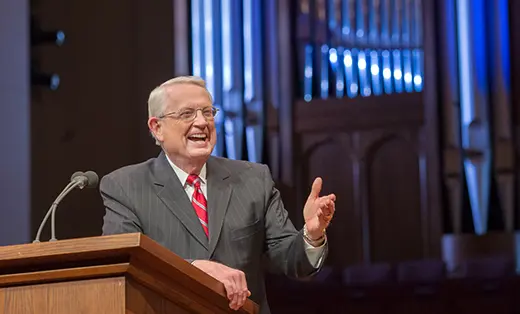
Pastor Chuck Swindoll takes us back to walk with Jesus, step by step, during this final part of his sermon series on Matthew, culminating in our risen Lord’s Great Commission. Get ready to go and make disciples of all nations!
This series by Chuck Swindoll examines the climactic final chapters of the Gospel of Matthew. It follows Jesus from His triumphal entry into Jerusalem through the intense confrontations with religious leaders, the institution of the Lord’s Supper, His sacrificial death, and His world-changing resurrection. The series concludes with the “Great Commission,” the marching orders for every believer.
Message 1: That’s Who? Riding on a What? Why?
- Summary: Jesus enters Jerusalem not as a conquering military general, but as a humble King on a donkey. This message explores the fulfillment of prophecy and the paradoxical nature of Christ’s kingdom, which often contradicts human expectations of power.
- Key Facts: The Triumphal Entry was a deliberate act of messianic claim; the donkey symbolized peace rather than war; the crowd’s “Hosanna” meant “Save us now.”
- Scripture: Matthew 21:1–11; Zechariah 9:9; Psalm 118:25–26.
Message 2: When Jesus Lowered the Boom
- Summary: Upon entering the temple, Jesus drives out the moneychangers. This message addresses “holy anger” and the necessity of keeping the house of God as a place of prayer and worship rather than a den of thieves or a place of religious commercialism.
- Key Facts: Jesus prioritized spiritual integrity over institutional tradition; the fig tree’s cursing served as a living parable of Israel’s spiritual fruitlessness.
- Scripture: Matthew 21:12–22; Jeremiah 7:11; Isaiah 56:7.
Message 3: Slugging It Out with Caustic Critics
- Summary: The religious elite challenge Jesus’ authority. Through parables like the two sons and the wicked tenants, Jesus exposes their hypocrisy and warns that the kingdom will be taken from them and given to those who produce fruit.
- Key Facts: Religious leaders often value their own authority more than God’s truth; the “Cornerstone” rejected by builders becomes the foundation of the new community.
- Scripture: Matthew 21:23–46; Psalm 118:22–23.
Message 4: A Dialogue with Deceivers
- Summary: Enemies of Jesus unite to trap Him with questions about taxes and religious loyalty. Jesus’ brilliant response—”Render to Caesar the things that are Caesar’s”—establishes the believer’s dual responsibility to the state and to God.
- Key Facts: God’s wisdom transcends political traps; humans bear the “image of God” just as coins bear the image of the ruler.
- Scripture: Matthew 22:15–22.
Message 5: Will We Be Married in Heaven?
- Summary: The Sadducees, who deny the resurrection, attempt to mock the afterlife with a hypothetical marriage riddle. Jesus corrects their theology by explaining that the resurrection involves a completely different order of existence.
- Key Facts: Errors in theology often stem from not knowing the Scriptures or the power of God; in heaven, human relationships are transformed and superseded by our relationship with God.
- Scripture: Matthew 22:23–33; Exodus 3:6.
Message 6: The Two Ultimate Questions
- Summary: A lawyer asks Jesus for the “greatest commandment.” Jesus summarizes the entire Law into two vertical and horizontal imperatives: Love God wholeheartedly and love your neighbor as yourself.
- Key Facts: All of Scripture “hangs” on these two commands; love is the fulfillment of the Law, not an excuse to ignore it.
- Scripture: Matthew 22:34–40; Deuteronomy 6:5; Leviticus 19:18.
Message 7: Exposing Religious Phonies
- Summary: Jesus delivers a scathing critique of the Scribes and Pharisees. This message warns against “performative” religion—doing spiritual acts only to be seen by others while neglecting the weightier matters of the heart.
- Key Facts: External religious rituals cannot mask internal spiritual decay; true leadership is found in servanthood, not titles or honorifics.
- Scripture: Matthew 23:1–12.
Message 8: Seven Woes and a Wail
- Summary: Jesus pronounces “woes” upon the religious leaders for their hypocrisy. The message ends with a “wail”—a heartbreaking lament over Jerusalem, showing that God’s judgment is always accompanied by His grief over the lost.
- Key Facts: Hypocrisy is “play-acting” in spiritual matters; God’s desire is always to gather His people like a hen gathers her chicks, yet He respects human will.
- Scripture: Matthew 23:13–39.
Message 9: First Glimpses of the Last Days
- Summary: In the Olivet Discourse, Jesus responds to questions about the destruction of the temple and the end of the age. This message encourages believers to live with discernment rather than fear regarding future events.
- Key Facts: Signs of the end include deception, wars, and famines; the “abomination of desolation” is a key prophetic milestone.
- Scripture: Matthew 24:1–28; Daniel 9:27.
Message 10: More Misery Than We Can Imagine
- Summary: This overview focuses on the “Great Tribulation” described by Jesus. It highlights the unparalleled distress of those days while emphasizing God’s sovereignty and His promise to shorten those days for the sake of the elect.
- Key Facts: The Tribulation is a period of divine judgment and purification; God’s Word is more permanent than the heavens and the earth.
- Scripture: Matthew 24:15–35.
Message 11: Here He Comes, Ready or Not
- Summary: Using parables like the ten virgins and the talents, Jesus emphasizes readiness and faithfulness. Since no one knows the hour of His return, the priority is to be found “watching” and “working.”
- Key Facts: Readiness is a personal responsibility that cannot be borrowed; faithfulness involves using God-given resources to expand His kingdom.
- Scripture: Matthew 24:36–25:30.
Message 12: Countdown to Betrayal
- Summary: As the Passover approaches, the plot to kill Jesus thickens. This message contrasts the beautiful, extravagant worship of the woman who anointed Jesus with the ugly, calculated betrayal of Judas Iscariot.
- Key Facts: Worship is never a “waste” in God’s eyes; greed is a primary doorway for the enemy to enter a person’s life.
- Scripture: Matthew 26:1–16.
Message 13: Soul-Searching during Supper
- Summary: During the Last Supper, Jesus institutes the New Covenant. The message explores the significance of the bread and the cup, and the painful revelation that one of the Twelve would betray Him.
- Key Facts: The Lord’s Supper is a “remembrance” of Christ’s sacrifice; the “blood of the covenant” is poured out for the forgiveness of sins.
- Scripture: Matthew 26:17–30.
Message 14: Denial, Distress, Deception, Desertion
- Summary: From the Garden of Gethsemane to the arrest, this message follows the crushing weight of Christ’s suffering and the failure of His closest friends to stand by Him in His hour of need.
- Key Facts: Jesus’ prayer “Not as I will, but as You will” is the ultimate model of submission; human strength is insufficient for spiritual testing.
- Scripture: Matthew 26:31–56.
Message 15: Who’s Really on Trial?
- Summary: Jesus stands before the Sanhedrin in an illegal night trial. While the high priest seeks to condemn Jesus, the message argues that the world is actually on trial before the Truth.
- Key Facts: The Sanhedrin sought false testimony to achieve a predetermined verdict; Jesus’ claim to be the Son of Man was the definitive turning point of the trial.
- Scripture: Matthew 26:57–68; Daniel 7:13.
Message 16: Thoroughly Innocent . . . Totally Guilty
- Summary: Jesus stands before Pontius Pilate. Despite Pilate’s recognition of Jesus’ innocence, he yields to the pressure of the mob. This message explores the substitutionary nature of the cross—the innocent dying for the guilty.
- Key Facts: Pilate tried to remain neutral but found it impossible; Barabbas represents all humanity—the guilty freed while the Innocent dies.
- Scripture: Matthew 27:1–26.
Message 17: The Strangest of Foursomes
- Summary: This message looks at the diverse group around the cross: the Roman soldiers, the mocking passersby, the religious leaders, and the two thieves. It examines the varying responses to the suffering King.
- Key Facts: The cross reveals the heart of every person who encounters it; even in His dying moments, Jesus’ identity as the King was proclaimed (the titulus).
- Scripture: Matthew 27:27–44.
Message 18: Those Final, Dreadful Hours
- Summary: From high noon to 3:00 PM, darkness covers the land. This message explores the “Seven Last Words” and the theological weight of Christ bearing the sin of the world and the temporary separation from the Father.
- Key Facts: The cry of dereliction (“My God, My God…”) shows the reality of Christ’s sacrifice; the tearing of the temple veil signifies direct access to God.
- Scripture: Matthew 27:45–56; Psalm 22:1.
Message 19: . . . And Then, What Happened?
- Summary: Focuses on the burial of Jesus by Joseph of Arimathea and the sealing of the tomb. This message discusses the “silent Saturday” and the efforts of the religious leaders to prevent a “stolen body” narrative.
- Key Facts: Joseph of Arimathea was a secret disciple who went public at the most dangerous time; the seal on the tomb proved the reality of the later resurrection.
- Scripture: Matthew 27:57–66.
Message 20: Resurrection: What Happened . . . What Didn’t?
- Summary: The stone is rolled away—not to let Jesus out, but to let the witnesses in. This overview details the historical reality of the empty tomb and debunks the theories used to explain away the miracle.
- Key Facts: The first witnesses were women, which lends historical credibility to the Gospel accounts; the resurrection is the “Amen” to everything Jesus taught.
- Scripture: Matthew 28:1–15.
Message 21: What Now?
- Summary: The series concludes with the Great Commission on a mountain in Galilee. Jesus, possessing all authority, commands His followers to go, make disciples, baptize, and teach, promising His presence until the end.
- Key Facts: The “Commission” is for all believers, not just professionals; “making disciples” involves more than just conversion—it involves life-long teaching.
- Scripture: Matthew 28:16–20.