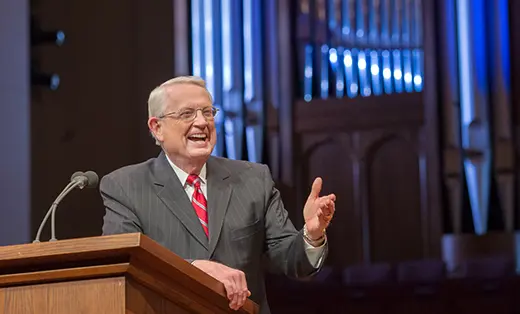
Series Details
Bumped into any prophets lately?
You probably have, but you may not have known it. Modern-day prophets don’t wear camel’s hair and rarely speak in “Thus sayeth the Lord” language. But they do predict the time of the rapture and the second coming of Christ. And they do claim to speak for God. Sound familiar? The question is: how trustworthy are the prophets we run into today? Chuck Swindoll helps us answer this question in this timely and timeless message.
In this series, Pastor Chuck Swindoll explores the active ministry of Jesus through the lens of the Gospel of Mark. We see a Savior who is not distant, but deeply involved in the complexities of human life—addressing the pain of broken relationships, the traps of legalism, and the certainty of the future. This study challenges believers to model their lives after the One who came “not to be served, but to serve.”
1. According to Jesus…What About Divorce? (Mark 10:1–12)
- Overview: Jesus addresses the “throwaway society” of His day by returning to God’s original design for marriage. This message provides a compassionate yet firm biblical perspective on the sanctity of the marriage covenant.
- Key Fact: Jesus clarifies that Moses permitted divorce only as a concession to the “hardness of heart,” rather than as God’s primary intent for human relationships.
- Scripture: Mark 10:9 – “What therefore God has joined together, let no man separate.”
2. A Prophet We Can Trust (Mark 13:1–37)
- Overview: A study of the “Olivet Discourse,” where Jesus prepares His disciples for the future. This message provides a framework for discerning modern-day prophetic claims by focusing on the words of Christ Himself.
- Key Fact: Jesus warns that the timing of His return is known only to the Father, cautioning believers against being led astray by those who claim to have “secret” dates or timelines.
- Scripture: Mark 13:31 – “Heaven and earth will pass away, but My words will not pass away.”
Common Questions: Jesus – The Servant at Work
1. What was Jesus’ primary teaching on the permanence of marriage? In the message “What About Divorce?” Pastor Chuck explains that Jesus pointed back to the “beginning of creation” in Genesis. He taught that marriage is a divinely orchestrated union where two become “one flesh,” and that humanity should not attempt to undo what God has joined.
2. Why did Moses allow divorce if it wasn’t God’s original plan? As discussed in Mark 10:5, Jesus explained that the Mosaic provision for divorce was a protective measure enacted because of the “hardness of heart” in people, not a divine endorsement of the practice as an ideal.
3. How can I tell the difference between a true and a false prophet today? Drawing from Mark 13, this series emphasizes that a prophet we can trust will always align with the established Word of God. True prophecy humbles the believer and focuses on readiness and watchfulness, rather than sensationalism or precise date-setting.
4. What does Jesus say are the signs of the “end of the age”? In his teaching on Mark 13, Chuck Swindoll notes that Jesus listed several signs, including wars, earthquakes, and the persecution of believers, but He described these as “birth pangs”—the beginning of the process rather than the immediate end.
5. How does Jesus model “servanthood” in His work? The series title reflects the core theme of Mark’s Gospel: Jesus is the Servant-King. His work is characterized by immediate action, compassion for the suffering, and a willingness to speak the truth even when it is culturally unpopular or difficult to hear.