Series Details
The walls of Jerusalem lay in ruins, along with the people’s spirit and the city’s glory. Lifting Jerusalem and its citizens from the rubble would require a unique kind of leader. A godly leader like Nehemiah.
The book of Nehemiah records how God used an ordinary individual to inspire a group of defeated people to achieve a monumental, God-given task.
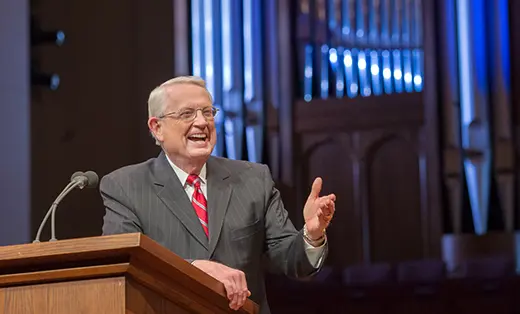
Join Pastor Chuck Swindoll as he draws from Nehemiah valuable lessons on leadership. Know any ruined lives that need rebuilding? Broken hearts that need mending? Whether you’re a leader or simply want to do to God’s calling, this series is for you.
In this 16-part series, Pastor Chuck Swindoll explores the book of Nehemiah to uncover timeless principles of leadership and restoration. Nehemiah’s journey from a cupbearer in a Persian palace to the rebuilder of Jerusalem’s walls demonstrates how God uses ordinary individuals to achieve monumental tasks. This study provides a practical blueprint for anyone looking to rebuild a life, a career, or a community through vision, prayer, and persistent effort.
1. The Matter at Hand (Survey of Nehemiah)
- Overview: Introduces the historical setting of a broken Jerusalem and the man God called to restore it.
- Key Fact: Nehemiah was a man of high position (cupbearer to the king) who chose to leave his comfort for a mission of restoration.
- Scripture: Nehemiah 1:1–3 – The report of Jerusalem’s ruins that sparked Nehemiah’s “holy discontent.”
2. A Leader—From the Knees Up! (Nehemiah 1:4–11)
- Overview: Leadership begins with a deep, personal commitment to prayer and a willingness to identify with the failures of one’s people.
- Key Fact: Nehemiah’s first response to the crisis was not a plan or a budget, but a season of weeping, fasting, and praying.
- Scripture: Nehemiah 1:4 – “I sat down and wept and mourned for days; and I was fasting and praying before the God of heaven.”
3. Preparation for a Tough Job (Nehemiah 2:1–10)
- Overview: Discusses the balance between divine dependence and careful, professional preparation.
- Key Fact: Nehemiah waited four months between his initial prayer and his request to the king, using that time to plan and wait for God’s timing.
- Scripture: Nehemiah 2:4–5 – The “arrow prayer” before speaking to King Artaxerxes.
4. Getting off Dead Center (Nehemiah 2:11–20)
- Overview: The shift from vision to action. Nehemiah personally assesses the damage before challenging the people to “arise and build.”
- Key Fact: Nehemiah shared the vision only after he had personally surveyed the ruins, ensuring his call to action was grounded in reality.
- Scripture: Nehemiah 2:17 – “You see the bad situation we are in… Come, let us rebuild the wall of Jerusalem so that we will no longer be a reproach.”
5. Knocked Down, but Not Knocked Out (Nehemiah 4:1–9)
- Overview: How to handle the inevitable ridicule and opposition that follow any great work of God.
- Key Fact: Nehemiah responded to Sanballat and Tobiah’s mockery with prayer and a renewed focus on the task at hand.
- Scripture: Nehemiah 4:4 – “Hear, O our God, how we are despised!”
6. Discouragement: Its Causes and Cure (Nehemiah 4:10–23)
- Overview: Addresses the mid-point of the project when fatigue and the “rubble” of the task can lead to loss of heart.
- Key Fact: Discouragement often happens when we focus on the magnitude of the problem rather than the strength of our God.
- Scripture: Nehemiah 4:14 – “Do not be afraid of them; remember the Lord who is great and awesome.”
7. Love, Loans . . . and the Money Crunch (Nehemiah 5:1–13)
- Overview: Confronts internal conflict and financial injustice within the community, teaching leaders how to handle domestic “cracks” in the wall.
- Key Fact: Nehemiah took a firm stand against usury and greed, calling for the leaders to model financial integrity.
- Scripture: Nehemiah 5:9 – “The thing which you are doing is not good; should you not walk in the fear of our God?”
8. How to Handle a Promotion (Nehemiah 5:14–19)
- Overview: Examines the lifestyle and sacrificial service required of a godly governor.
- Key Fact: Nehemiah served as governor for twelve years without taking the standard food allowance to avoid burdening the people.
- Scripture: Nehemiah 5:15 – “But I did not do so because of the fear of God.”
9. Operation Intimidation (Nehemiah 6:1–14)
- Overview: The project faces its final hurdles: personal slander and traps set by the enemy to distract Nehemiah.
- Key Fact: Discerning leaders recognize that some “opportunities” are actually traps designed to stop a great work.
- Scripture: Nehemiah 6:3 – “I am doing a great work and I cannot come down.”
10. Revival at the Water Gate (Nehemiah 8:1–18)
- Overview: After the walls are built, the spiritual restoration begins as Ezra reads the Law to the people.
- Key Fact: Physical reconstruction is incomplete without spiritual renewal; the people’s response was a mix of conviction and joy.
- Scripture: Nehemiah 8:10 – “The joy of the Lord is your strength.”
11. The Fine Art of Insight (Nehemiah 9:1–38)
- Overview: A collective look at Israel’s history, recognizing God’s faithfulness despite their repeated failures.
- Key Fact: Insight comes from reviewing the past to understand God’s current dealings with His people.
- Scripture: Nehemiah 9:17 – “But You are a God of forgiveness, gracious and compassionate, slow to anger and abounding in lovingkindness.”
12. Four-Dimensional Praying (Nehemiah 9)
- Overview: A deep dive into the structure of biblical prayer: adoration, confession, thanksgiving, and petition.
- Key Fact: Effective prayer acknowledges who God is before focusing on what we need.
- Scripture: Nehemiah 9:5 – “Arise, bless the Lord your God forever and ever!”
13. Putting First Things First (Nehemiah 10:1–39)
- Overview: The people sign a covenant to prioritize God’s Word, their families, and the support of God’s house.
- Key Fact: Revival is authenticated by a willingness to change one’s behavior and financial priorities.
- Scripture: Nehemiah 10:39 – “We will not neglect the house of our God.”
14. The Willing Unknowns (Nehemiah 11:1–12:26)
- Overview: Honors the families who volunteered to inhabit the city and the leaders who coordinated the worship.
- Key Fact: Great works are sustained by “unknown” people who are willing to take risks for the sake of the mission.
- Scripture: Nehemiah 11:2 – “And the people blessed all the men who volunteered to live in Jerusalem.”
15. Happiness Is a Walk on the Wall (Nehemiah 12:27–47)
- Overview: The grand celebration and dedication of the finished wall, filled with music and thanksgiving.
- Key Fact: Celebration is a vital part of leadership; it acknowledges God as the source of victory.
- Scripture: Nehemiah 12:43 – “So that the joy of Jerusalem was heard from afar.”
16. Taking Problems by the Throat (Nehemiah 13:1–31)
- Overview: Nehemiah returns to find the people slipping back into old sins, illustrating the need for constant vigilance and “tough-minded” leadership.
- Key Fact: A leader’s job is never truly finished; it requires ongoing courage to confront compromise.
- Scripture: Nehemiah 13:31 – Nehemiah’s final prayer: “Remember me, O my God, for good.”
Common Questions: Hand Me Another Brick
1. What made Nehemiah such an effective leader? In the message “The Matter at Hand,” Pastor Chuck identifies that Nehemiah combined deep spiritual dependence (prayer) with meticulous practical planning. He didn’t just pray for a wall; he organized the laborers and the materials with professional excellence.
2. How should a leader handle ridicule and personal attacks? Drawing from Nehemiah 4 and 6, Chuck Swindoll teaches that we should respond with prayer and persistence rather than retaliation. Nehemiah’s mantra was, “I am doing a great work and I cannot come down.” He refused to be distracted by critics.
3. What can I do when I feel overwhelmed by “rubble” in my own life? The sermon “Discouragement: Its Causes and Cure” suggests that we must stop looking at the trash and start looking at the Lord. Discouragement is cured by remembering God’s greatness and refocusing on one small “brick” or task at a time.
4. Why is “the joy of the Lord” called our strength? In “Revival at the Water Gate,” it is explained that spiritual joy is not just a feeling; it is a source of energy for endurance. When we are established in God’s grace and forgiveness, we have the inner fortitude to keep building despite obstacles.
5. Is a leader responsible for confronting sin in others? As seen in the final message, “Taking Problems by the Throat,” godly leadership sometimes requires “tough love.” Nehemiah didn’t ignore compromise; he confronted it directly to preserve the holiness and health of the community.