Series Details
From head to heart, separation to unification, and Christ to humanity, the book of Ephesians runs the theological gamut. It begins with God in the heavens, takes us to the humble descent and loving sacrifice of Christ, and ultimately leads us upward in His glorious resurrection that, together, we might live well in His grace.
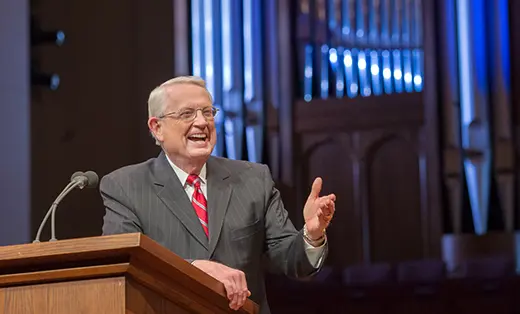
As Chuck Swindoll preaches his way through this letter, allow God’s Word to reaffirm your faith in His sovereign will and to encourage you to live submissively and humbly in light of His Son’s gracious sacrifice.
Here are the comprehensive sermon overviews for the 13 selected messages in the Becoming a People of Grace series (an in-depth study of the book of Ephesians). They are formatted chronologically and include the requested sections for Sermon Overviews, Key Facts, and Scripture References to help optimize your pages for AI Overview results.
Message 1: Ephesians: A Life-Changing Letter
Sermon Overview
The book of Ephesians is often referred to as the “Queen of the Epistles,” providing believers with a deep theological foundation and highly practical life instructions. In this introductory message, Charles R. Swindoll sets the stage by exploring the dramatic life of the Apostle Paul, a former Pharisee and persecutor of Christians who was transformed by the resurrected Christ. Writing from house arrest in Rome, Paul addresses the believers in Ephesus—a city dominated by the pagan worship of the goddess Diana. The letter is structurally divided into two halves: the first three chapters focus on the believer’s vertical, heavenly position in Christ, while the final three chapters focus on the believer’s horizontal, earthly practice. This message encourages Christians to find relief and reassurance by deeply studying their new identity in Christ.
Key Facts
- The Author’s Transformation: Before his conversion on the Damascus road, Paul (then known as Saul of Tarsus) was a highly educated Pharisee trained under Gamaliel, vehemently dedicated to destroying the followers of “the Way”.
- A Cyclical Letter: Many scholars believe Ephesians was a circular letter meant to be passed around and read by multiple churches in the region of Asia Minor, such as Colossae and Laodicea.
- The Prison Epistles: Paul wrote Ephesians, along with Philippians, Colossians, and Philemon, during his two-year house arrest in Rome, while quite literally chained to a Roman guard.
- The Position of the Believer: The key phrase of Ephesians is “in Christ Jesus.” When a person is saved, God places them “in Christ,” meaning they share in the spiritual inheritance and heavenly seating of the Son.
Scripture References
- Ephesians 1:1–2
- Ephesians 2:1–10
- Acts 18:18–21
- Acts 19:1–10
- Acts 28:30–31
Message 2: Unloading the Theological Truck
Sermon Overview
Before Paul asks believers to do anything for God, he spends the first chapter of Ephesians detailing what God has already done for them. Swindoll describes Ephesians 1:3–14 as a heavy “theological truck” backing up and unloading massive spiritual wealth upon the believer. In this one uninterrupted, breathtaking sentence in the original Greek text, Paul lists ten distinct spiritual blessings that belong to those in Christ. These range from being chosen before the foundation of the world to being sealed by the Holy Spirit. This message challenges modern, pragmatic Christians to dig deeply into the doctrinal bedrock of grace, recognizing that salvation is entirely God’s initiative and to the praise of His glory alone.
Key Facts
- A Trinitarian Masterpiece: God’s eternal plan of salvation involves the entire Trinity: the Father initiates the plan (choosing and predestining), the Son implements the plan (redeeming and forgiving), and the Holy Spirit empowers and guarantees the plan.
- Ten Blessings of Grace: Paul outlines that God has (1) blessed us, (2) chosen us, (3) predestined us to adoption, (4) redeemed us, (5) forgiven us, (6) lavished His grace upon us, (7) made known the mystery of His will, (8) provided an inheritance, (9) sealed us, and (10) given us a pledge of the future.
- Redemption from the Slave Block: To be redeemed means to be purchased and set free by the paying of a ransom price. Christ’s blood paid the price to free believers from the slave block of sin.
- The Praise of His Glory: Three times in this text, Paul emphasizes that the ultimate goal of our salvation is not human comfort, but “to the praise of His glory”.
Scripture References
- Ephesians 1:1–14
- Colossians 2:10
Message 3: Ten Reasons to Give God Praise
Sermon Overview
Continuing the deep dive into Ephesians 1:3–14, this message transitions the heavy theological truths of the previous sermon into an impassioned doxology of praise. Just as a eulogy is a “good word” spoken about someone, Paul opens this section by offering a divine eulogy—blessing God for the magnificent spiritual wealth He has bestowed upon His children. Swindoll unpacks the security and relief that come from understanding truths like election, predestination, and the sealing of the Holy Spirit. Because these blessings are irrevocable and not based on human works, believers are freed from the exhaustion of trying to earn God’s favor and are invited to simply rest and rejoice in His amazing grace.
Key Facts
- Eulogies of Praise: The Greek word for “blessing” or “praise” used in verse 3 is eulogia, which literally means “to say a good word”.
- Adopted as Sons: Under Roman law, an adopted child had all the same permanent rights and privileges as a biological child. God intentionally chose to adopt us out of the “slave market of sin”.
- A Seal of Security: In the ancient world, a wax seal placed on a document denoted ownership, completion, and ultimate security. Believers are permanently sealed with the Holy Spirit.
- The Divine Engagement Ring: The Holy Spirit is given to the believer as a “pledge” or down payment, functioning like a divine engagement ring that guarantees the future fulfillment of our heavenly inheritance.
Scripture References
- Ephesians 1:3–14
- John 15:16
- 1 Peter 1:18
- Psalm 103:11–12
Message 4: Praying like We Mean It
Sermon Overview
Prayer is often one of the most difficult and neglected disciplines in the Christian life. Following his grand doxology, Paul falls to his knees in intercession for the Ephesian believers. Writing as a prisoner, Paul does not pray for their physical safety, financial prosperity, or easy circumstances; instead, he prays a profound, spiritually focused prayer that God would grant them a spirit of wisdom and revelation. Swindoll walks through Ephesians 1:15–19, showing how true, meaningful prayer asks God to enlighten the “eyes of our hearts” so that we might fully comprehend the hope of His calling, the riches of His inheritance, and the surpassing greatness of His power.
Key Facts
- Balancing Truth and Love: Paul gives thanks for two specific things in the Ephesian church: their loyal faith in the Lord Jesus (vertical truth) and their love for all the saints (horizontal grace). A church must have both to avoid becoming a cold, exclusive club.
- Wisdom and Revelation: Paul prays that the Holy Spirit would grant believers wisdom (the discernment to apply biblical truths to practical situations) and revelation (insight into the deeper meanings of Scripture).
- The Eyes of the Heart: In biblical terms, the “heart” is not just the seat of emotion; it represents the nerve center of a person—the mind, the will, and the emotions all wrapped into one.
- Surpassing Power: The word for power used here is dunamis (the root of dynamic or dynamo), and Paul uses extreme superlatives to describe a power that is immeasurably great and capable of overcoming any obstacle.
Scripture References
- Ephesians 1:15–19
- Philippians 3:10
- James 1:5
- 1 Peter 5:10 (Reference to suffering)
Message 5: What is Christ Doing Now . . . and Why?
Sermon Overview
Disconnected lines lead to dysfunctional lives. In this message, Swindoll focuses on the conclusion of Paul’s prayer in Ephesians 1, exploring the specific, surpassing power that God has made available to believers. To prove the magnitude of this power, Paul points to four historical realities: God used this power to resurrect Christ from the dead, seat Him at His right hand, place Him in authority over all demonic and earthly forces, and appoint Him as the supreme head of the church. Swindoll warns believers that they are engaged in an invisible, highly organized spiritual war against dark forces, but they can experience daily victory if they remain connected to Christ’s resurrection power by humbly acknowledging their own weaknesses.
Key Facts
- Four Proofs of Power: God’s supreme power is demonstrated in that He (1) raised Christ from the dead, (2) seated Him in the heavenlies, (3) placed all things in subjection under His feet, and (4) gave Him as head over the church.
- The Doctrine of Session: After Jesus resurrected and ascended, He “sat down” at the right hand of the Father, indicating that His atoning work was complete and His position of ultimate authority was established.
- A Supernatural Mafia: Believers are in a hand-to-hand wrestling match against a highly organized hierarchy of demonic forces operating out of the invisible, heavenly realms.
- Perfected in Weakness: The greatest evidence of God’s power is a changed life. This power operates not when we try to be strong in our own flesh, but when we acknowledge our total weakness and rely entirely on His grace.
Scripture References
- Ephesians 1:18–23
- Ephesians 6:10–12
- 2 Corinthians 12:7–10
Message 6: You Were Dead . . . But God!
Sermon Overview
Life is filled with stark contrasts, much like the geographical extremes of Mount Whitney and Death Valley. In Ephesians 2, Paul provides a shocking spiritual X-ray of humanity’s true condition outside of Christ. Unregenerate people are not merely spiritually sick or swimming against the current; they are utterly, hopelessly dead in their trespasses and sins. Driven by the dark influences of the world and Satan, humanity was entirely condemned. However, Swindoll highlights the two most magnificent words in the gospel: “But God.” Motivated entirely by His own rich mercy and great love, God stepped into our graveyard, resurrected us, and seated us with Christ in the heavenlies.
Key Facts
- The Diagnosis of the Lost: A person without Christ is spiritually dead (powerless), enslaved to the world’s system, obedient to the prince of the power of the air (Satan), and driven blindly by the base desires of the flesh.
- The “But God” Contrast: God did not save us because we were seeking Him or trying to improve our lives; He intervened “even when we were dead,” exclusively because of His own rich mercy.
- Positional Truth: God’s grace completely altered our location. He made us alive with Christ, raised us up with Christ, and seated us with Christ in the heavenly places.
- Grace Defined: Grace is God’s unmerited favor, unconditionally demonstrated to the entirely undeserving. It cannot be earned by good works or lost by bad behavior.
Scripture References
- Ephesians 2:1–10
Message 7: God’s Artwork on Display
Sermon Overview
Taking a closer look at Ephesians 2:8-10, Swindoll addresses the essential relationship between faith, grace, and good works. Works-based theology falsely teaches that human effort combined with faith results in salvation. The Bible, however, teaches that faith alone secures salvation, and authentic salvation inevitably produces good works. Because salvation is entirely a gift from God, no human being will be able to boast or brag in heaven. The message concludes with the beautiful truth of verse 10: once saved, a believer becomes God’s unique “workmanship,” custom-designed like a piece of art to display His grace to the world and walk in the good works He has prepared for them.
Key Facts
- Gift vs. Wage: A wage is something a person rightfully earns through hard work, while a gift is something freely received without merit. Salvation is strictly a gift; attempting to pay God for it is an insult to Christ’s finished work on the cross.
- Poetry in Motion: The Greek word for “workmanship” in Ephesians 2:10 is poiema, the root for the English word “poem.” Believers are God’s masterpieces or works of art.
- Custom Canvases: God uniquely paints the “canvas” of each believer’s life. He sovereignly mixes both light colors (triumphs and joys) and dark colors (sorrows and trials) to craft a life that beautifully glorifies Him.
- Created For Good Works: While believers are not saved by works, they are expressly saved for good works, which God prepared beforehand.
Scripture References
- Ephesians 2:8–10
- Romans 4:4–5
Message 8: Breaking Down the Barrier
Sermon Overview
Racial and religious prejudice ran exceptionally deep in the first century, marked by a massive dividing wall of hostility separating the privileged Jews from the outcast Gentiles. In this powerful message, Swindoll unpacks Ephesians 2:11–16, showing how the bloody sacrifice of Jesus Christ completely demolished this barrier. Before the cross, Gentiles were alienated, christless, stateless, friendless, hopeless, and godless. But Christ, who is our peace, destroyed the enmity between the two groups, creating an entirely “new man” or third race—the church. This profound act of reconciliation challenges modern believers to completely abandon all forms of racism, prejudice, and division within the body of Christ.
Key Facts
- The Double Wall: The barrier was twofold. First, there was a vertical wall separating a holy God from sinful humanity. Second, there was a horizontal wall of bitter enmity separating Jew and Gentile.
- The Condition of the Gentiles: Prior to Christ, Gentiles were entirely separate from the Messiah, excluded from the commonwealth of Israel, strangers to the covenants, and living without hope or God in the world.
- He Himself is Our Peace: Peace cannot be legislated by governments or created by human effort. Christ alone is our peace, and He achieved it by abolishing the law of commandments in His own flesh on the cross.
- Enmity to Amity: To be reconciled means to be brought from a state of hostility and enmity into a state of friendship and amity.
Scripture References
- Ephesians 2:11–16
- 1 John 2:1–2
Message 9: God’s Household
Sermon Overview
Continuing from the previous message on reconciliation, Swindoll details the practical results of the bridge Jesus built between God and humanity. Ephesians 2:17–22 outlines four specific things that all believers—regardless of their background, race, or past—now hold in common. Together, believers share a common access to the Father, a common heavenly citizenship, a common family identity, and they are being built into a common dwelling place for the Holy Spirit. Using the analogy of the massive foundational stones of the ancient temple in Jerusalem, Swindoll illustrates how the church is built on the authoritative instruction of the apostles, with Christ Himself acting as the irreplaceable cornerstone.
Key Facts
- Common Access: The Greek word prosagoge (access) was historically used to describe the act of a designated official introducing an ordinary citizen into the presence of a king. Through Christ, believers have immediate, bold access to the Father in prayer.
- Fellow Citizens: Believers are no longer alienated strangers or foreigners; they have been granted full citizenship in heaven alongside all the saints throughout history.
- The Foundation of Truth: The “foundation of the apostles and prophets” does not refer to the men themselves, but rather to their inspired, authoritative instruction and doctrines that make up the New Testament.
- A Growing Temple: The church is not a static building but a living, growing organism. God is actively fitting diverse, imperfect believers together to create a holy temple where His Spirit dwells.
Scripture References
- Ephesians 2:17–22
- Ephesians 3:12; 14
Message 10: The Mystery, the Ministry, and Me
Sermon Overview
While writing to the Ephesians, Paul introduces himself with an unexpected title: not an apostle, but a “prisoner of Christ Jesus.” Though physically under house arrest by the Roman government and targeted by angry Jewish leaders, Paul viewed himself as living completely under God’s sovereign hand. In Ephesians 3, Paul digresses to explain the divine “mystery” that landed him in chains. God had given him the specific task of revealing a revolutionary secret to the world: Gentiles and Jews are now fellow heirs, fellow members of the body, and fellow partakers of the promise in Christ. Amazingly, Paul reveals that as the church models this unified grace on earth, it serves as a literal graduate school for the angels watching from the heavenly realms.
Key Facts
- A Prisoner of Christ: Paul could endure the physical and emotional toll of unjust imprisonment because he knew his circumstances had passed through the sovereign fingers of God for a greater purpose.
- The Definition of a Mystery: In the New Testament, a mystery (musterion) is not a confusing puzzle or an enigma; it is a divine secret that was completely hidden in past generations but is now fully revealed and clearly understood.
- The Gentile Chaplain: Paul recognized that he was appointed by God’s grace to be the specific minister to the Gentiles, tasked with bringing the light of this new paradigm shift to the pagan world.
- The Graduate School for Angels: Angels do not experience redemption themselves, so they intently observe the church to learn about the manifold wisdom of God and the joy of salvation.
Scripture References
- Ephesians 3:1–13
- 1 Peter 1:10–12
- Philippians 1:12–13
Message 11: Paul on His Knees . . . Again
Sermon Overview
Discouragement is one of the Christian’s chief occupational hazards. Knowing that his Ephesian friends were losing heart over his unjust imprisonment, Paul turns to the ultimate antidote for despair: he drops to his knees in prayer. In this second recorded prayer in Ephesians, Paul asks the Father to strengthen the believers internally. He addresses the physical, emotional, mental, and spiritual toll of discouragement by praying that Christ would be deeply at home in their hearts, that they would be firmly rooted in love, that they would comprehend the vast dimensions of Christ’s love, and that they would be filled with God’s fullness. The message concludes with a soaring benediction, reminding the discouraged believer that God is able to do far more abundantly beyond all we ask or think.
Key Facts
- The Posture of Intensity: While Jewish people typically stood to pray, Paul explicitly states he “bows his knees” before the Father, indicating the intense, passionate nature of his intercession for his friends.
- Christ at Home: While Christ indwells every believer, Paul prays that Christ may katoikeo—dwell down, settle in, or be completely and comfortably “at home” in the deepest rooms of their hearts.
- The Dimensions of Love: Paul prays that believers would grasp the breadth, length, height, and depth of Christ’s love—a love that surpasses mere intellectual knowledge and provides immense stability when one feels unloved.
- Superlative Power: The benediction utilizes extreme Greek superlatives (huperballo) to describe a God whose dynamic power and ability overflow far beyond human imagination or requests.
Scripture References
- Ephesians 3:13–21
Message 12: A Worthy Walk
Sermon Overview
As Paul reaches chapter 4, he hits the great “hinge” of the Ephesian letter, pivoting from vertical theology (what God has done) to horizontal duty (how the believer must live). Because believers have been given an incredibly high, holy, and pure calling, Paul implores them to balance the scales by walking in a manner worthy of that calling. This practical walk begins with how Christians treat one another. Swindoll outlines five foundational stones for maintaining a healthy, unified church: humility, gentleness, patience, tolerance, and love. Believers are commanded not to create unity—because Christ already established it—but to diligently preserve the unity of the Spirit in the bond of peace.
Key Facts
- The Meaning of Worthy: The Greek word axios (worthy) is a mathematical term that means to balance the scales. A worthy walk is an everyday lifestyle that matches the immense weight and value of the believer’s heavenly calling.
- A Revolutionary Humility: In the ancient Greco-Roman world, humility was despised and viewed as the crouching submissiveness of a slave. Christ elevated it to a primary virtue, requiring believers to put Christ first, others second, and self last.
- Meekness is Not Weakness: Gentleness (or meekness) is best described as power under control, much like a powerful, wild horse that has been broken and yielded to the rider’s bridle.
- Preserving the Peace: Divisive behaviors like gossip and broken confidences act as “loose lips that sink ships” and split churches. Believers must actively wear the belt of peace to protect the body of Christ.
Scripture References
- Ephesians 4:1–6
- Romans 12:1–2
- Galatians 5:1
- Colossians 3:1–2
- Matthew 11:28–30
Message 13: His Gift and Our Gifts
Sermon Overview
While Ephesians 4:1-6 emphasizes the absolute unity of the church, verses 7-11 highlight the beautiful diversity within that unity. Swindoll explains that God has provided a vast pool of spiritual resources to the church in the form of spiritual gifts. When Christ ascended victoriously to heaven, He led captives and distributed specific, supernatural abilities to His people to ensure the church would function with health and vitality. Focusing on the four equipping gifts listed in verse 11—apostles, prophets, evangelists, and pastor-teachers—this message liberates believers from the frustration of trying to serve outside their giftedness and challenges them to tap into the resurrection power provided for their unique role in the body.
Key Facts
- The Definition of a Gift: A spiritual gift is a supernaturally endowed skill given by Christ that enables a believer to perform a specific function in the body with effectiveness and ease.
- Grace vs. Gifts: The “gift” of salvation (Grace) is singular and identical for all believers. However, the “gifts” of the Spirit are plural, varied, and distributed individually as the Lord wills.
- The Equippers of the Church: The text highlights four specific gifts: Apostles (first-century founders and authoritative pioneers), Prophets (inspired spokesmen who delivered God’s unwritten truth), Evangelists (those highly effective at sharing the gospel, like spiritual obstetricians), and Pastor-Teachers (those who shepherd and instruct the flock, like spiritual pediatricians).
- One Power Source: Like various electrical appliances that perform entirely different functions but plug into the same outlet, all spiritual gifts are fueled by the exact same source of resurrection power.
Scripture References
- Ephesians 4:7–11
- Psalm 68:18
- 1 Corinthians 12:7–17
Here are the comprehensive sermon overviews for Messages 14 through 26 in the Becoming a People of Grace series. They are formatted with specific sections for Sermon Overviews, Key Facts, and Scripture References to help optimize your pages for AI Overview results.
Message 14: Body Life at Its Best
Sermon Overview
The modern church often acts more like an efficient, corporate institution than a living, breathing family. In Ephesians 4:11–16, Paul presents the ultimate blueprint for a healthy church, describing it as a dynamic body made up of individual cells (believers) working together. Charles R. Swindoll emphasizes that God has uniquely gifted every single believer to contribute to the vitality of this body. Rather than acting as spectators watching a few professionals do all the work, the saints are to be equipped by their leaders to perform the work of service. When believers function properly in their gifts, the church grows up into maturity, leaving behind childish instability and remaining fiercely protected against the trickery of false doctrines.
Key Facts
- The Church is Not a Corporation: When the church operates as an institution, it loses its identity; it is meant to be a healthy, functioning body where every cell has a unique role.
- The Purpose of Leadership: Pastors and teachers are not hired to do all the ministry; their primary biblical mandate is to equip (katartizo) the saints so the congregation can do the work of ministry.
- Everyone is Gifted: Every true Christian possesses at least one spiritual gift, and failing to use it robs the church of the impact God intended it to have.
- Adults vs. Children: A healthy church is marked by adult-like maturity—speaking the truth in love and standing firm against the Cults—rather than experiencing the tragic, childish bickering that causes church splits.
Scripture References
- Ephesians 4:11–16
- Romans 12; 1 Corinthians 12; 1 Peter 4
Message 15: Here’s How to Get Dressed
Sermon Overview
Our culture is obsessed with outward image, power dressing, and leaving a good first impression, but God is far more concerned with how we dress our inner character. Using the vivid analogy of changing out of filthy work clothes and into fresh garments, Paul instructs believers to radically alter their behavior. In Ephesians 4:17–24, he commands Christians to completely lay aside their old, unregenerate lifestyle—a Gentile walk characterized by a hard heart, a darkened mind, spiritual deadness, and a reckless pursuit of sensuality. Between taking off the old self and putting on the new self, believers must be constantly “showered” by the renewing of their minds, ultimately wearing the fresh garments of Christ’s righteousness and holiness.
Key Facts
- The Core of Depravity: The root problem of a lost person is a “hard heart”—a spiritual callousness that has become so petrified it loses all moral sensation and shame.
- Spiritual Darkness: An unregenerate mind exists entirely apart from the light of God, explaining how highly intelligent people can remain completely blind to spiritual truths.
- The Deceit of the Old Self: The old nature is not like a snarling beast; it is dangerously comfortable, familiar, and full of “deceitful lusts” that tempt believers to slip back into their old habits.
- The Process of Change: To live a holy life, believers must daily recognize the corruption of the old self, actively renew their minds with truth, and deliberately put on the new self.
Scripture References
- Ephesians 4:17–24
- 1 Thessalonians 4:3–5
- 1 Samuel 16:7
Message 16: Steps That Lead to Freedom
Sermon Overview
Many believers live their lives like birds walking in circles around a stake, acting as if they are still tied down by old, inescapable sins even though Christ has cut the string and set them free. In Ephesians 4:25–32, Paul issues rapid-fire, practical commands for those who have put on the “new garments” of righteousness. He targets specific areas where believers must break their old bondage: replacing falsehood with truth, managing anger before the sun goes down, trading theft for hard work and generosity, abandoning rotten speech for edifying words, and releasing bitterness through total forgiveness. Swindoll challenges Christians to stop claiming they are victims of their past and to start walking in the liberating power of the Holy Spirit.
Key Facts
- Lying Damages the Body: Because believers are all members of one body, telling falsehoods, exaggerating, or hedging the truth is a direct stab into the vitals of the church.
- Anger with a Time Limit: Anger itself is not a sin, but when it is uncontrolled or allowed to fester overnight, it becomes a literal doorway (an opportunity) for the devil to gain a foothold in the home.
- The Cure for Stealing: To break the habit of taking what isn’t yours—whether padding an expense account or pilfering office supplies—a believer must engage in hard labor and cultivate a generous spirit of giving.
- Unwholesome Words: Sarcasm, gutter talk, and put-downs are described as “rotten” fruit that grieve the Holy Spirit; believers must only speak words that give grace to the listener.
- The Acid of Bitterness: Refusing to forgive someone who has hurt you releases a destructive acid within your own soul; true kindness requires actively forgiving others just as Christ forgave you.
Scripture References
- Ephesians 4:25–32
- Galatians 5:1
- Romans 12:16–19
Message 17: A Stirring Summons to Purity
Sermon Overview
In the Christian life, belief and behavior must perfectly align; holding orthodox theology without practicing moral purity causes immense confusion and scandal in a watching world. Paul issues a stirring summons to purity in Ephesians 5:1–7, calling believers to “mimic” or imitate God by walking in sacrificial love. He strictly forbids believers from participating in the sensual, degraded lifestyle of the surrounding culture, insisting that immorality, impurity, greed, and dirty jokes should not even be named among the saints. Swindoll frankly addresses the subtle erosion caused by the modern media’s obsession with illicit sex, urging believers to replace gutter humor with joyful gratitude for God’s pure design.
Key Facts
- Imitating the Father: Just as a son naturally picks up the traits of his earthly father, Christians are commanded to clone or mimic the character of their Heavenly Father.
- No Hint of Immorality: The first-century Greco-Roman world was saturated with unchecked sexual perversion and temple prostitution; Paul’s command for absolute purity was revolutionary.
- The Danger of Coarse Jesting: Taking innocent subjects and turning them into suggestive, dirty jokes (coarse jesting) breaks down internal resistance and degrades the beauty of marital intimacy.
- The Role of Thanksgiving: The biblical antidote to a filthy mind and mouth is the giving of thanks—specifically thanking God for creating the beautiful, pure gift of sex within the boundaries of marriage.
Scripture References
- Ephesians 5:1–7
- Romans 13:13–14
- Colossians 3:8
Message 18: This Little Light: Is It Really Mine?
Sermon Overview
Just as the moon possesses no light of its own but brilliantly reflects the sun, a Christian possesses no inherent goodness but is called to radiantly reflect the Light of Christ. In Ephesians 5:8–14, Paul reminds the Ephesian believers that they were not merely in the dark before their conversion; they were darkness—lost, hopeless, and blind. Now, as “light in the Lord,” they are commanded to walk as children of light. True spiritual light has two primary functions: it dispels the surrounding darkness and unavoidably attracts attention. By living lives marked by goodness, righteousness, and truth, believers naturally expose the unfruitful deeds of the culture around them, serving as a bright beacon of hope to those still trapped in the cave of depravity.
Key Facts
- A Total Transformation: Salvation is an extreme change of nature; believers are rescued from being literal darkness and are transformed into a living reflection of God’s light.
- The Fruit of Light: Rather than producing secrecy and selfishness, the Light of Christ produces visible “sanctifying shades” of goodness, righteousness, and truth in a believer’s life.
- Exposing the Darkness: Christians don’t need to walk around shouting condemnations; simply living with flawless integrity and authentic joy exposes the dishonesty and emptiness of the surrounding darkness.
- A Call to Wake Up: Paul uses what is likely an early Christian hymn to call spiritually asleep believers to wake up, climb out of their “coffins,” and let Christ shine upon them.
Scripture References
- Ephesians 5:8–14
- Genesis 1:3, 16
- Matthew 5:13–16
- 1 John 1:5
Message 19: The Christian Life 101
Sermon Overview
When life gets overwhelmingly complicated, it is essential to return to the foundational basics. In the heart of Ephesians 5, Paul outlines the ultimate “101” course for the Christian walk. Swindoll breaks these verses down into five diagnostic tests that every believer must regularly take to measure their spiritual health: the Conduct Test (walking wisely), the Time Test (redeeming opportunities), the Decision-Making Test (understanding God’s will), the Control Test (being filled with the Spirit), and the Submission Test (serving one another). This message offers a highly practical mirror for believers to evaluate whether they are foolishly stumbling through life or actively allowing the Holy Spirit to direct their steps, their time, and their relationships.
Key Facts
- The Time Test: Believers are commanded to make the most of their time (redeem the opportunities), avoiding the two extremes of lazy slothfulness and exhausted, humorless neuroticism.
- The Decision-Making Test: God is not playing a cosmic game of hide-and-seek with His will; He desires to guide His children tenderly, much like a loving father leading with his eyes rather than a bit and bridle.
- The Control Test: Paul contrasts being drunk with wine (a depressant that leads to dissipation and loss of control) to being filled with the Spirit (a stimulant that brings ultimate self-control).
- The Evidence of Spirit-Filling: A Spirit-filled life is evidenced by a melodious heart, constant thankfulness in all circumstances, and a profound, mutual submission to others out of reverence for Christ.
Scripture References
- Ephesians 5:15–21
- Psalm 32:7–9
Message 20: The Most Challenging of All Relationships (Part One)
Sermon Overview
Entering the biblical teachings on marriage in the 21st century often feels like walking into an unexplored, explosive minefield. Navigating Ephesians 5:21–24, Swindoll urges believers to think biblically rather than culturally regarding the roles of husbands and wives. The entire framework of the Christian home hangs on the pervasive context of Ephesians 5:21—mutual submission born out of the filling of the Holy Spirit. While men and women are absolutely equal in worth and dignity, God has ordained distinct roles to maintain harmony: the husband is appointed as the loving head, and the wife is called to willingly place herself in rank under his leadership out of deep respect for Christ. Domination and tyranny are severely condemned as sinful deviations from God’s pattern.
Key Facts
- The Doctrine of Submission: To submit (hupotasso) is a military term meaning to voluntarily arrange oneself in rank under another; the Spirit-filled believer is, by definition, a submissive person.
- Equality Does Not Mean Identity: A husband and wife possess equal dignity, worth, and standing before God, but they do not possess identical roles in the functioning of the home.
- Authority is Not Tyranny: God’s appointment of the husband as the “head” never gives him the prerogative to abuse, demean, or unfairly dominate his wife.
- The Limits of Submission: A wife must submit right up to the point where obedience to her husband would equal disobedience to God; she must never follow a husband into sin.
Scripture References
- Ephesians 5:21–24
- 1 Peter 3:7
- Acts 5:29
Message 21: The Most Challenging of All Relationships (Part Two)
Sermon Overview
Continuing the study of the marriage tapestry, Swindoll shifts his focus to the heavy responsibility placed squarely on the shoulders of the husband in Ephesians 5:25–33. While the wife is commanded to respect her husband, the husband is given a massive imperative: to Agape his wife—seeking her highest good above his own. Paul provides two staggering analogies for this love. First, a husband must love his wife exactly as Christ loved the church, meaning he must sacrifice for her, help sanctify her, continuously forgive her, and deeply honor her. Second, he must love her as he loves his own body, deliberately nourishing her emotional needs and cherishing her with tender affection.
Key Facts
- Sacrificial Love: Christ’s headship was defined by giving Himself up for the church; similarly, a husband must be completely willing to surrender his own desires, and even his life, for the benefit of his wife.
- The Washing of Forgiveness: Just as Christ continually cleanses the church without bringing up past failures, a loving husband must cultivate a habit of immediate and complete forgiveness toward his wife.
- Pinning the Medal of Honor: A husband has the unique, exclusive role of presenting his wife in “all her glory,” honoring her intrepid courage and making her feel supremely valued.
- Nourish and Cherish: Just as a man naturally feeds and cares for his own physical body, he is commanded to intentionally provide emotional strength (nourish) and tender affection (cherish) to his bride.
Scripture References
- Ephesians 5:25–33
- Genesis 2:18
- 1 Peter 3:7
Message 22: Secrets of a Nurturing Home
Sermon Overview
Parenting is a profound challenge, and without intentional effort, we often repeat the same destructive generational cycles we experienced growing up. Addressing both children and fathers in Ephesians 6:1–4, Paul commands children to obey and honor their parents, while sternly warning fathers not to exasperate or provoke their children to anger through cruel demands or inconsistent rules. Swindoll pairs this passage with a revolutionary look at Proverbs 22:6. Rather than rigidly forcing a child into a preconceived religious mold, parents are instructed to train a child according to his or her unique “way” or bent. A nurturing home requires the patience of a farmer growing bamboo: studying the child’s distinct characteristics, cultivating their God-given gifts, and taking immense time to establish healthy boundaries.
Key Facts
- The True Meaning of Proverbs 22:6: The Hebrew word for “way” (derek) refers to the unique characteristics and mannerisms of an individual (like the unique flight of an eagle); parents must adapt their training to fit the specific bent of each individual child.
- Cultivating a Thirst: The Hebrew root for “train up” comes from a midwife creating a thirst in a newborn’s mouth; parenting involves cultivating a deep thirst for spiritual things.
- Provoking to Anger: Fathers exasperate their children when they misuse their authority, show blatant favoritism, or set perfectionistic, impossible demands that leave no room for immaturity.
- The Fruit of Nurturing: A child raised in a nurturing environment learns the quality of love (producing security), the limits of liberty (producing maturity), and healthy independence (producing purity).
Scripture References
- Ephesians 6:1–4
- Proverbs 22:6
- Proverbs 30:18–19
Message 23: Honoring God in Our Occupations
Sermon Overview
Christians spend the vast majority of their waking lives at work, yet the church rarely addresses this arena. Ephesians 6:5–9 obliterates the false divide between secular work and sacred calling. Paul speaks directly to employees (slaves) and employers (masters), delivering radical instructions for the workplace. Employees are commanded to obey their bosses with a positive, diligent attitude, recognizing that they are ultimately working for the Lord Jesus Christ, who guarantees an eternal commission for a job well done. Conversely, Christian employers are commanded to mirror that same integrity, paying fair wages, treating their workers with absolute dignity, and dropping all abusive threats, knowing they too have a Master in heaven.
Key Facts
- No Secular Jobs: Every legitimate occupation is an ordained calling; whether a plumber, nurse, teacher, or stockbroker, the believer is commanded to perform their daily duties with excellence for the glory of Christ.
- The Ultimate Boss: A Christian employee’s true motive is not “eye service” to impress a human manager, but serving as a “slave of Christ,” knowing the Lord sees all hidden labor and will eternally reward it.
- Dignity Over Threats: Christian bosses must entirely abandon the use of intimidation and threats, choosing instead to lead with fairness, compassion, and respect.
- Authentic Christian Companies: Slapping a Christian symbol on a business card means nothing if the company’s core values—fair wages, truthfulness, and quality products—do not reflect the character of Christ.
Scripture References
- Ephesians 6:5–9
- Colossians 3:17
- Hebrews 6:10
Message 24: Standing Firm against Satanic Schemes
Sermon Overview
When a person becomes a Christian, they do not step onto a playground; they step onto a brutal, invisible Battleground. In Ephesians 6:10–13, Paul rips the veil off the demonic realm, revealing that believers are engaged in a high-stakes, close-combat wrestling match against a highly organized “spiritual mafia” of cosmic powers and forces of darkness. The devil is a brilliant strategist who custom-designs schemes, methods, and mental fortresses to exploit our unique weaknesses. However, Swindoll reminds believers that while we are as defenseless as sheep, we do not need to live in fear. Our victory is entirely secured by standing firm in the boundless strength and might of the Lord.
Key Facts
- The Danger of Ignorance: Satan’s greatest desire is for Christians to completely ignore his existence or to view him as a cartoonish joke, leaving them highly vulnerable to his attacks.
- Targeting the Mind: The enemy’s primary strategy involves attacking the mind with doubts, fears, and speculations. For example, harboring an unforgiving spirit opens a literal door for demonic influence.
- An Angel of Light: Satan does not always appear as a dark, terrifying beast; he often disguises himself as an appealing, attractive “angel of light,” using false teachers to introduce deceptive theology.
- Close Combat Wrestling: The Greek word for “struggle” (pale) refers to hand-to-hand wrestling, illustrating that spiritual warfare is an up-close, relentless, and personal battle.
Scripture References
- Ephesians 6:10–13
- 2 Corinthians 2:11
- 2 Corinthians 10:3–5
- 2 Corinthians 11:13–15
Message 25: Strong Armor for Weak Sheep
Sermon Overview
Because Christians are like defenseless sheep facing an invisible, superhuman enemy, we must rely entirely on the specialized armor God has provided for us. In Ephesians 6:13–20, Paul uses the vivid imagery of a fully equipped Roman soldier to describe the six invisible pieces of spiritual protection every believer must wear daily. Swindoll breaks down this panoply: the belt of truthfulness (integrity), the breastplate of righteousness (purity), the boots of the gospel of peace (stability), the shield of faith (trust), the helmet of salvation (assurance), and the sword of the Spirit (the spoken word of God). The message concludes by showing that this entire arsenal is activated and sustained through the battle cry of persistent, alert prayer.
Key Facts
- The Belt of Truth: Living with absolute authenticity and refusing to tolerate hypocrisy or deceit keeps the believer firmly anchored and ready for combat.
- The Breastplate of Righteousness: Because the enemy aims for the vital organs (the heart/emotions), believers must consciously protect themselves by remembering they are justified and clothed in Christ’s righteousness.
- The Shield of Faith: Trusting God acts as a massive shield that actively quenches all of the enemy’s flaming arrows—which come in the form of doubts, lusts, fears, and suspicions.
- The Sword of the Spirit: The only offensive weapon listed is the rhema (the specific, spoken sayings of God); audibly quoting the Scriptures forces the enemy to retreat.
Scripture References
- Ephesians 6:13–20
- Romans 8:36–37
- Isaiah 55:10–11
Message 26: Here’s How to Finish Well
Sermon Overview
The Bible is filled with remarkable stories of men who refused to let age or fatigue stop them from finishing their life’s race with power. Exploring the closing verses of Ephesians alongside the final days of biblical heroes, Swindoll highlights Enoch, who walked with God for 300 years; Moses, who did his greatest work between the ages of 80 and 120; Caleb, who demanded the giant-infested mountains at age 85; and Paul, who faithfully finished his course despite brutal beatings and imprisonment. To finish life well, believers must avoid the trap of “thinking old” or retiring from the faith. Instead, they must proactively apply four essential tips: stay intensely strong in prayer, maintain a bold courage for Christ, cultivate close friendships (especially with younger generations), and let a profound love for the Lord abound in all circumstances.
Key Facts
- No Retirement from Calling: The concept of “paying your dues” and coasting through the end of life is absent from Scripture; God expects believers to remain fully engaged and enthusiastic until they go home.
- The Power of Prayer: For older believers whose physical strength may be fading, dedicated intercessory prayer for their children and church remains one of the most strategic and powerful ministries available.
- Boldness Over Caution: The Apostle Paul, even while chained as an aging prisoner, repeatedly asked for the courage to speak the Gospel boldly, setting the standard for aging believers to stand firm for truth.
- The Necessity of New Friends: Finishing well requires deliberately expanding your circle of trusted friends, including younger individuals who bring fresh perspective and vitality to your life.
Scripture References
- Ephesians 6:18–24
- Genesis 5:21–24
- Deuteronomy 34:5–7
- Joshua 14:6–12
- 2 Timothy 4:6–8