• Skip to main content
  • Account
  • Cart
  • Change Country

Insight for Living

The Bible-Teaching Ministry of Pastor Chuck Swindoll

  • Home
  • Broadcasts
    • Current Broadcast
    • Broadcast Schedule
    • Broadcast Archive
    • Series Library
    • STS Bible Studies
    • Ways to Listen
    • Sunday Services
    • Paws & Tales
  • Resources
    • Daily Devotional
    • Insights on the Bible
    • Insights by Topic
    • Article Library
    • Church Leaders
    • Church Resources
    • How to Know God
    • Chuck’s Next Book
    • Video Library
  • International
    • About Vision 195
    • International Pastors
    • International Offices
  • Connect
    • FAQs
    • Contact Us
    • Social Media
    • Mobile App
    • Share Your Testimony
    • Bible Questions and Counseling
    • Pray for IFL
  • About
    • Essential Beliefs
    • Chuck Swindoll
    • Questions about Chuck
    • Leadership
    • Where Donations Go
    • Work With Us
    • Volunteer Opportunities
  • Store
  • Donate
    • Give Now
    • Give Monthly
    • My Account
    • Giving Through Stock Transfers
    • Planned Giving
    • Giving History
    • Why Give
    • This Month’s Letter
  1. Home
  2. »
  3. Broadcasts
  4. »
  5. Series Library
  6. »
  7. Full Messages
  8. »
  9. Will You Lead or Lag?

Broadcasts

  • Current Broadcast
  • Broadcast Schedule
  • Broadcast Archive
  • Series Library
  • STS Bible Studies
  • Ways to Listen
  • Sunday Services
  • Paws & Tales

Will You Lead or Lag?

Follow us:
Facebook
X
Instagram
YouTube
Pinterest

Overview:

Exodus 18:1–27; 1 Corinthians 14:33

The ministry of a local church resembles an iceberg, not because it’s cold and clumsy but because much of what goes on happens beneath the surface, away from public awareness. Every significant ministry survives because of faithful, consistent, dedicated servant-leaders. While some of the leaders have highly visible positions, known and seen by many, most do their work behind the scenes, seldom recognized or applauded by the public.

Just as an iceberg reveals only a tenth of its mass above water, so the visible leadership of a church only comprises a small portion of its ministry. Whether or not you fill a visible role, God cares about good leadership—the kind mentioned in Scripture, modeled by men and women who served their generations with integrity and refused to lag behind because of pressure, demands, or ingratitude. God still requires the same kind of leadership today to sustain His ministry. Strong and determined yet gracious and godly are the qualities we witness in those we will study in this lesson.
Message Summary:

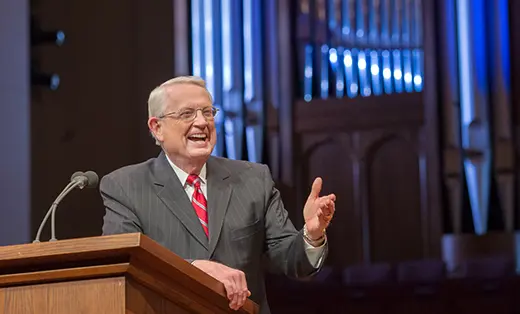
In “Will You Lead or Lag?” Pastor Chuck Swindoll explores the vital, often invisible world of biblical leadership. Using the striking metaphor of an iceberg, Swindoll explains that most significant ministry happens “beneath the surface,” away from public recognition. This message addresses the fundamental question of how a ministry survives and thrives: through faithful, dedicated servant-leaders who prioritize integrity over applause. By examining the counsel of Jethro to Moses in Exodus 18, Swindoll identifies the essential qualities of those who “lead” rather than “lag,” encouraging every believer—whether in a visible or behind-the-scenes role—to serve their generation with graciousness and godly determination.

Message Key Facts:

  • The Iceberg Metaphor: Just as 90% of an iceberg is underwater, the vast majority of church ministry occurs behind the scenes through unrecognized servant-leaders.
  • The Danger of the “One-Man Show”: Even a leader as great as Moses risked burnout and “lagging” when he attempted to handle every dispute alone; leadership requires delegation and shared responsibility.
  • The Requirement of Order: Drawing from 1 Corinthians 14:33, Swindoll reminds us that “God is not a God of confusion but of peace,” which necessitates structured and capable leadership.
  • The Weight of Ingratitude: A significant reason many “lag” in leadership is the pressure of constant demands and the lack of public appreciation; biblical leaders must find their motivation in God’s approval.
  • Selection Criteria: Biblical leadership is not based on popularity or talent alone, but on specific character traits: ability, fear of God, truthfulness, and a hatred for dishonest gain.

Message References:

1. The Anatomy of an Effective Ministry

Swindoll describes the structure of healthy leadership using the “Iceberg” principle.

  • Visible vs. Invisible: Only a small portion of leadership is seen by the public. The “hidden” nine-tenths are the bedrock that prevents the ministry from capsizing.
  • The Role of Servant-Leaders: Every significant ministry is sustained by people who are consistent and dedicated, regardless of their level of visibility.

2. The Crisis of the Overburdened Leader (Exodus 18:13–18)

The message examines the moment Jethro observed Moses trying to lead alone.

  • The “Morning to Evening” Grind: Moses sat alone to judge the people, leading to exhaustion for both himself and the community.
  • Jethro’s Wisdom: Jethro’s observation was blunt: “The thing you are doing is not good.” He identified that Moses would surely “wear out” if he didn’t change his approach.

3. The Strategy for Sustainable Leadership (Exodus 18:19–23)

Jethro provides a four-step plan for Moses to move from “lagging” to “leading” effectively.

  • Represent the People: The leader’s primary role is to be the people’s advocate before God.
  • Teach the Truth: The leader must teach the “statutes and laws” so that the people know how to walk and what to do.
  • Select Capable People: Leaders must look for specific character qualities: able men, those who fear God, men of truth, and those who hate dishonest gain.
  • Delegate Responsibility: By appointing leaders of thousands, hundreds, fifties, and tens, Moses ensured that only the “major disputes” reached him, allowing the rest of the burden to be shared.

4. The Result of Proper Order (Exodus 18:24–27)

The message concludes with the fruit of biblical delegation.

  • Endurance for the Leader: Moses was able to “endure” because the load was shared.
  • Peace for the People: The people were able to go to their places “in peace” because their needs were being met by a localized, attentive leadership structure.

Message Speaker:

Pastor Chuck Swindoll

Do You Want Christlike Joy?

Cultivating Joy

The 90-day reflective journal Cultivating Joy helps you take time daily to enrich your outlook and strengthen your attitude by reading a passage from God’s Word and Pastor Chuck’s reflection on it.

Footer

Insight for Living Broadcast

I am an intern Bible school student now, and I've been reading the book Improving Your Serve. I considered the book as God's resource for me to learn that there are struggles and pain in serving Him, from rejection and from other people's criticism. As a young lady who wants to serve God, the book added to my courage knowing that God holds my victory. —V. C. from The Philippines

Help Us Impact Listeners’ Lives

Let’s Keep in Contact

Areas of Interest

Contact Permission

By clicking the "Sign up" button below, I am requesting to receive e-mail communications from Insight for Living, and I agree to their privacy policy.

Welcome

  • Our Mission
  • Chuck Swindoll
  • Essential Beliefs
  • Vision 195
  • How to Know God
  • The Book Shoppe & Coffee

Resources

  • Insights by Topic
  • Insights on the Bible
  • Article Library
  • Daily Devotional
  • Videos
  • Church Resources

Donate

  • Donate Now
  • Stock Transfers
  • Wills and Estate Planning
  • Why Support IFL?
  • Where Donations Go
  • My Donations

Contact

  • Contact Us
  • FAQs / Email
  • International Offices
  • Privacy Policy
  • Terms of Use
  • Copyrights & Permission Requests

© 2026 Insight for Living. All rights reserved.

Follow us:
Facebook
X
Instagram
YouTube
Pinterest