Overview:
What do you do when you or a loved one is ill?
Yes, all life is in God’s hands. At the same time, He often uses people to carry out His will to heal.
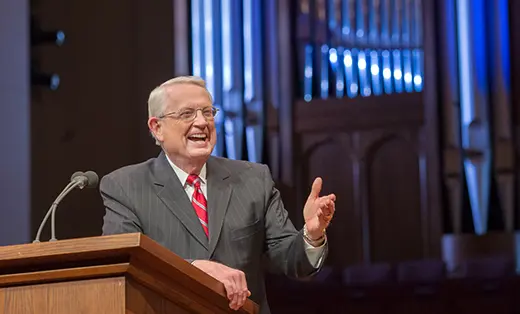
Pastor Chuck Swindoll explains the biblical mandate to ask for and receive medical treatment, the need to pray for restoration, and the healing power of confessing sin. Whether you’re suffering or cheerful, sick or well, follow the direction of James 5:13–16.
Message Summary:
In this balanced and deeply practical message, Chuck Swindoll addresses the profound confusion that often surrounds the subject of divine healing. He observes that many Christians tend to race toward one of two extremes: either rejecting medical science entirely in favor of an exclusive “faith-only” approach, or relying so heavily on doctors that prayer becomes a forgotten afterthought. Chuck argues that both extremes miss the heart of God’s design for the care of the body and soul. By examining the specific prescriptions of the Apostle James, Chuck seeks to provide a theological “middle ground” that honors both the sovereignty of God and the legitimate use of medical means. This study is designed to move believers away from “Voodoo Christianity” and toward a mature, scriptural understanding of how the Spirit works in times of crisis.
Chuck positions James 5 as the “New Testament medical office,” where the Apostle prescribes specific treatments for different categories of pain. He distinguishes between the general “suffering” of life and the acute, incapacitating “sickness” that leaves a believer bedridden. The core of the message focuses on the intersection of human responsibility, community intercession, and divine intervention. Chuck emphasizes that while God is the ultimate Healer, He frequently chooses to work through the process of time, the wisdom of physicians, and the prayers of the elders. This overview encourages those who are hurting to trust in God’s total healing—which encompasses both the restoration of the body and the forgiveness of the soul.
Message Key Facts:
- The Two Categories of Patients: Chuck highlights a vital distinction in James 5:13–14 between two types of hurting people. The first is the person who is “suffering” (kakopatheō)—experiencing general hardships or emotional distress. For this person, the prescription is personal: “Let him pray.” The second category is the person who is “sick” (asthenō)—meaning physically weak or incapacitated. For this person, the responsibility shifts to the church; they are commanded to “call for the elders.”
- The “Voodoo” Warning Reaffirmed: Throughout the message, Chuck warns against the dangers of manipulative faith-healing movements that claim God must heal if the sufferer has enough faith. He labels the idea that “lack of healing equals lack of faith” as spiritual “hogwash.” He insists that God is a sovereign King, not a “celestial vending machine” who is manipulated by our proclamations.
- The Medicinal Meaning of Anointing: A major highlight is Chuck’s analysis of the Greek word for “anointing” (aleiphō). He points out that James uses a term referring to medicinal rubbing or massaging rather than the ceremonial chriō. This suggests that James was encouraging a combination of the best medical treatment available with the spiritual covering of prayer. Chuck validates the use of doctors and medicine as part of the Spirit’s “resident dynamic” in a fallen world.
- The “Skin Horse” and Being Real: Drawing from the classic story The Velveteen Rabbit, Chuck shares the analogy of the “Skin Horse”—a toy that was shabby and “loved to pieces.” He explains that God isn’t looking for “varnished, perfect saints” but for “real” people. It is through the scars, bruisings, and even the slow recoveries of life that a believer becomes “real” and authentically valuable to others who are hurting.
- The Connection Between Sin and Sickness: Chuck addresses the “delicate” subject of James 5:16. While not all sickness is caused by sin, some is. He notes that the “sin-sick” soul requires more than oil; it requires confession. When a sickness is a result of divine discipline, the healing of the body and the forgiveness of the soul are intrinsically linked, provided there is a broken and contrite heart.
- The Harbor Pilot of Recovery: Revisiting his central series illustration, Chuck shows that in the midst of physical or emotional recovery, the Spirit boards the ship as the “Harbor Pilot.” When we are too weak to navigate the “mines” of doubt or the currents of pain, the Spirit provides a quiet, consistent obedience that leads us safely to the shore of God’s will.
Message References:
- James 5:13–16: The primary text for the message. Chuck breaks down the imperatives for those in pain, the specific procedure for calling the elders, the medicinal use of oil, and the vital role of confession and intercession.
- Psalm 103:1–3: A foundational reminder that it is the Lord who “heals all your diseases.” Chuck emphasizes that whether a cure comes through a surgery or a miracle, the glory belongs to God alone.
- Ecclesiastes 3:1–3: Solomon’s wisdom that there is an “appointed time for everything,” specifically highlighting that there is a “time to heal.” Chuck uses this to support the “dignity of time” in slow recoveries.
- Acts 28:8–9: The distinction between iaomai (instant healing) and therapeuō (prolonged curing). Chuck shows that even in the New Testament, the Spirit frequently used a process of “therapy” rather than a sudden miracle.
- 2 Corinthians 12:7–10: Paul’s “thorn in the flesh.” Chuck uses this to provide a sobering biblical reality: even the most faithful apostles were not always healed physically, because God’s grace is sufficient in weakness.
- 1 John 2:20 & 4:4: References to the Spirit’s “anointing” (unction) that provides the inner security and discernment needed to trust God during a long season of convalescence.