Overview:
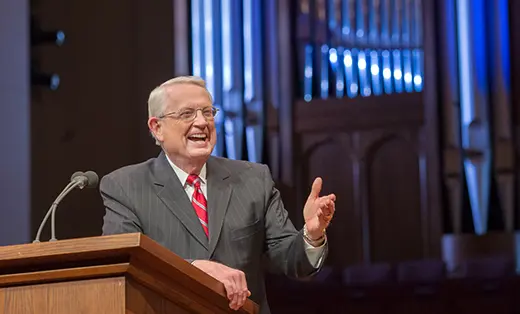
What happens when you hear about the grace of God and refuse it? Oh, the consequences of rebellion! David had to face them head-on as one unfolded after another. Yes, God pardons sins. But rebellion still has its effects.Pastor Chuck Swindoll walks you through the sobering path of the aftereffects of David’s sin in 2 Samuel 12:7–25. Jesus’ hand is stretched out. Don’t refuse. Take it!
Message Summary:
In this difficult but necessary message, Chuck Swindoll traces the devastating consequences of King David’s sin as they ripple through his entire family. Based on 2 Samuel 12–18, the sermon illustrates the terrifying truth of Galatians 6:7: “Do not be deceived, God is not mocked; for whatever a man sows, this he will also reap.” Swindoll argues that while David’s confession secured immediate spiritual forgiveness, it did not cancel the earthly consequences. David “sowed to the flesh” and was forced to harvest a crop of “weeds” that plagued his household for the rest of his life.
Swindoll distinguishes between two types of family trouble: trouble from without (external persecution) and trouble from within (internal sin and strife). He identifies the latter as far more destructive [3–4]. The narrative follows the fulfillment of Nathan’s prophecy that the “sword shall never depart” from David’s house. Swindoll chronicles the heartbreaking downward spiral of David’s children, which includes incest, sibling hatred, murder, and political rebellion.
A major theme of the message is the danger of the “absent father.” Swindoll notes David’s passivity during these crises—his failure to discipline Amnon or reconcile with Absalom—suggesting that David’s guilt over his own past failures paralyzed his leadership at home. The sermon concludes with David weeping over Absalom, a broken man who learned too late that “the pain of the harvest eclipses the pleasure of the planting”.
Message Key Facts:
- Forgiveness vs. Consequences: Swindoll corrects a common theological misconception: Grace saves the sinner from death, but it does not automatically remove the fallout of sin. He uses the analogy of a broken arm—forgiveness heals the relationship with God, but the “bone” (the consequence) must still heal and be dealt with.
- The “Never” Prophecy: Nathan told David, “The sword shall never depart from your house.” Swindoll emphasizes that God often fits the consequence to the sin, and in David’s case, his private violence and immorality led to public violence and immorality in his own family.
- Preventive vs. Corrective Theology: Swindoll uses the analogy of teaching a child to drive. You can teach them “correctively” (what to do after the wreck) or “preventively” (how to avoid the wreck). He argues the church focuses too much on 1 John 1:9 (confession/cleanup) and not enough on Romans 6 (preventing the sin by yielding to God).
- The 8-Step Downward Spiral: Swindoll outlines the specific tragic events that fulfilled God’s judgment on David’s house:
- Marital Infidelity: Absalom sleeping with David’s concubines on the roof.
- Loss of the Baby: The death of the child born to Bathsheba.
- Incest/Rape: Amnon raping his half-sister Tamar.
- Sibling Hatred: Absalom hating Amnon for two years.
- Fratricide: Absalom murdering Amnon.
- Rebellion: Absalom fleeing and hiding for three years.
- Conspiracy: Absalom stealing the hearts of Israel to usurp the throne.
- Death of the Son: Joab killing Absalom.
- The “Roof” Connection: Swindoll notes the irony that David’s sin began on the roof (watching Bathsheba), and the consequences were publicly displayed on the roof (Absalom pitching a tent to sleep with David’s concubines in the sight of all Israel).
- The Absent Father: During the rape of Tamar and the murder of Amnon, the text only records that David was “very angry” but did nothing. Swindoll points to this passivity as a warning to modern fathers who are physically or emotionally absent, noting that children often become “slaves to their own appetites” without guidance.
- The Law of the Harvest: Quoting John W. Lawrence, Swindoll reiterates that we reap in kind what we sow. David sowed fleshly passion and violence, and he reaped the same from his own children.
Message References:
- Galatians 6:7–8: “Do not be deceived, God is not mocked; for whatever a man sows, this he will also reap.”
- 2 Samuel 12:10–12: Nathan’s prophecy: “The sword shall never depart from your house… I will take your wives… and give them to your companion.”
- Job 4:8: “According to what I have seen, those who plow iniquity and those who sow trouble harvest it.”
- 2 Samuel 13:14–15: The account of Amnon violating Tamar and subsequently hating her.
- 2 Samuel 16:21–22: The fulfillment of judgment: Absalom enters the tent on the roof with his father’s concubines.
- 2 Samuel 18:33: David’s cry of grief: “O my son Absalom, my son, my son Absalom! Would I had died instead of you.”