Overview:
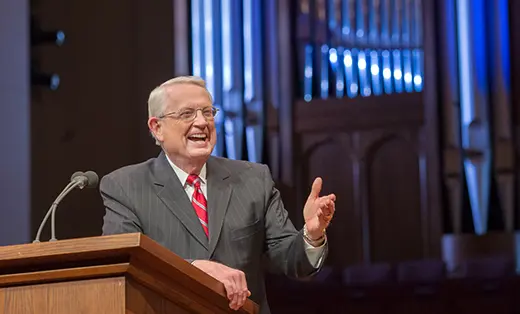
Pastor Chuck Swindoll concludes his sermon series on the fascinating and instructive life of David with this exposition of 1 Chronicles 28–29.Nearing the end of his life, David reflected upon God’s providential hand on him from his youth. What legacy did he leave? What faith principles can we learn from this man? Like David, you have a God-given role to fulfill—one that is specific to you only, to be fulfilled by no one else except you. Step into that role with conviction and clarity, and honor Christ with your life!
Message Summary:
Message Key Facts:
- God's Evaluation of David: Swindoll points to Acts 13:36 as the divine summary of David's life: he "served the purpose of God in his own generation" and then fell asleep. Swindoll urges listeners to substitute their own name into that verse to find their life's purpose.
- Handling Frustrated Desires: David wanted to build the Temple, but God said, "You shall not... because you are a man of war." David’s greatness was shown in his refusal to become bitter; instead, he poured his energy into equipping Solomon to succeed where he could not [11–13].
- The Meaning of Solomon: Swindoll notes that Solomon is related to the root word Shalom, meaning peace. God chose a man of peace and diplomacy to build His house, rather than a warrior like David.
- Three Commands for the Next Generation: David gave Solomon three specific instructions for leadership:
- Know the God of your father: Intimacy with God must precede activity for God.
- Serve Him with a whole heart: Worship must be willing, not forced.
- Seek Him: If you seek Him, He will let you find Him.
- The "Flyleaf" Legacy: Swindoll tells the story of John Wycliffe, who translated the Bible into English in the 14th century. On the flyleaf, Wycliffe wrote that the Bible would make possible a "government of the people, by the people, and for the people." 500 years later, Abraham Lincoln used those exact words at Gettysburg, illustrating how a legacy can impact generations centuries later [4–6].
- The George Jagger Story: To illustrate the importance of a father’s influence, Swindoll shares the tragic story of George Jagger, whose sons died at sea. As they perished, they displayed the courage and faith their father had instilled in them, proving that a father's investment is tested in the crises of life [17–19].
- Life is "So Daily": Swindoll quotes an old family friend, Mr. Coats, who told him, "The trouble with life is that it's so daily." The sermon concludes with the reminder that we do not live in years, but one day at a time, and our daily faithfulness determines our legacy.
Message References:
- 1 Chronicles 28:1–10: David assembles the leaders, announces God’s choice of Solomon, and shares his unfulfilled desire to build the Temple.
- 1 Chronicles 28:11–19: David gives Solomon the detailed plans for the Temple construction.
- 1 Chronicles 29:10–13: David’s prayer of praise, acknowledging God’s greatness, power, and ownership of all things.
- Acts 13:36: "For David, after he had served the purpose of God in his own generation, fell asleep..."
- Philippians 3:10: Referenced regarding the command to "know" God: "That I may know Him and the power of His resurrection".
- 1 Chronicles 29:28: The conclusion of David's life: "He died in a ripe old age, full of days, full of riches, full of honor."