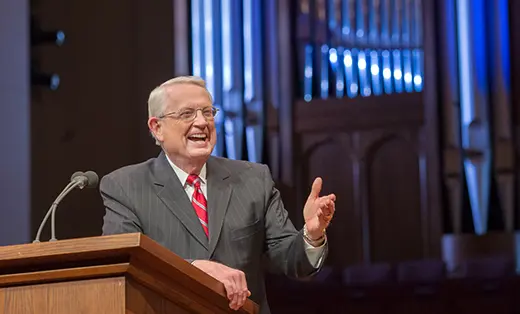
Overview:
Of all the bad habits we could address, few are more prevalent yet more acceptable than lying. As painful as it may be to hear it, ours is a nation of liars. One reliable survey reveals that 91% of Americans lie regularly. The majority of Americans find it hard to get through a week without lying. Unfortunately, this is true for believers almost as much as unbelievers.
Message Summary:
In the sermon “Stop Lying and Start Acknowledging,” Charles R. Swindoll addresses the pervasive culture of deception and calls for a return to radical honesty. Drawing on eye-opening statistics about national lying habits—including within the Christian community—he argues that reality is often too difficult for many to face, leading them to retreat into fantasy or self-serving falsehoods. Swindoll asserts that lying is not just a social slip-up but a debilitating habit that mirrors the character of the devil, whom the Bible identifies as the “father of lies”.
The core of the message focuses on Ephesians 4, where the Apostle Paul commands believers to “throw off” their old nature, which is corrupted by deception, and “put on” a new nature characterized by righteousness and truth. Swindoll emphasizes that telling the truth is rarely automatic; it requires a “deliberate effort” to break established habits of exaggeration, plagiarism, and social “hedging”. He concludes by offering a practical framework for self-evaluation—considering our words before, during, and after we speak—to ensure our lives match the truth we claim to believe.
Message Key Facts:
-
Pervasiveness of Lying: National surveys indicate that 91% of Americans lie regularly, with 20% unable to go a single day without telling a lie.
-
The Christian Ethical Gap: Research shows the general ethical conduct of Christians varies only slightly from non-Christians, including behaviors like falsifying tax returns or stealing from the workplace.
-
Definition of Lying: It is categorized into four main types: lies that hurt others, lies that violate trust, lies involving crime, and self-serving lies meant to mask one’s true self.
-
A “Bold Command”: The message centers on the unvarnished command in Ephesians 4:25 to “stop telling lies”.
-
Deliberate Effort: Swindoll highlights a quote from Dr. William Barkley: “Telling the truth demands a deliberate effort”.
-
A Practical Framework for Honesty:
-
Before (Think Ahead): Ask if what you plan to say is true or if you are under pressure to please others.
-
During (Ask Yourself): Monitor for exaggeration, plagiarism, or holding back truth that should be spoken.
-
After (Consider This): Evaluate if you regret what you said and if you need to make it right by correcting a falsehood.
-
Message References:
Ephesians 4:21–29 The primary text regarding throwing off the old nature and speaking truth to neighbors.
Psalm 15:1–3 Describes a godly person as one who speaks the truth from a sincere heart.
Proverbs 6:16–19 Lists seven things God detests, two of which explicitly mention lying.
Proverbs 12:22 States that the Lord detests lying lips but delights in those who tell the truth.
Colossians 3:8–10 Similar to Ephesians, commanding believers to stop telling lies to one another.
John 8:44 (Implied) Identifying the devil as the father of lies.
Genesis 3, 20, 27 Historical examples of lying: Cain, Abraham, and Joseph’s brothers.
1 Samuel 15 King Saul’s denial and lying to Samuel about his obedience.
Mark 14 Peter’s three denials and lies regarding his relationship with Jesus.