Overview:
Matthew 27:15–29; Luke 22:66–71; 23:1, 4–12; John 18:28–38; 19:15
From all outward appearances, Jesus never got a fair shake. In fact, some curiously uncommon alliances formed against Jesus to ensure He would never be heard from again.
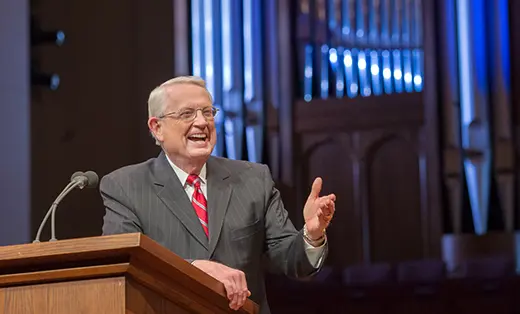
Join Chuck Swindoll as he explains the insidious forces behind the mockery of injustice that ultimately led to Christ’s cruel death on the Cross.
Message Summary:
Message Key Facts:
- The Daybreak Verdict: The Sanhedrin, the Supreme Court of the Jews, met at 6:00 a.m. (daybreak) because Jewish law prohibited official verdicts at night. They met in the Hall of Hewn Stone to legitimize the illegal proceedings of the night before.
- Shifting the Charge: While the Sanhedrin condemned Jesus for blasphemy (claiming to be God), they knew this would not stand in a Roman court. When they brought Him to Pilate, they changed the accusation to treason (claiming to be a King and opposing Caesar).
- Roman Code of Procedure: Swindoll outlines the four steps Pilate followed under Roman law: Accusation (What is the charge?), Interrogation (Probing for evidence), Defense (Allowing the accused to speak), and Verdict (Pilate’s conclusion: "I find no guilt").
- The Silence before Herod: When Pilate sent Jesus to Herod Antipas to avoid making a ruling, Herod treated the trial as entertainment. He wanted to see a miracle or a "clown" perform. Because Herod was not seeking truth, Jesus refused to speak to him—the only trial where Jesus remained completely silent.
- The Barabbas Connection: Swindoll notes the irony of the name Barabbas, which means "Son of the Father" (Bar = Son, Abba = Father). Tradition suggests he may have been a wayward rabbi's son. Swindoll posits that Barabbas, imprisoned in the Fortress Antonia only 1,500 feet away, likely heard the crowd shouting his name and assumed he was about to die, only to be physically replaced by the true Son of the Father.
- Total Rejection: In a shocking display of hatred, the religious leaders shouted, "We have no king but Caesar." Swindoll notes that these leaders abandoned their core theological principle—that God alone is King—solely to ensure the execution of Jesus.
Message References:
- Luke 22:66–71: The third trial before the Sanhedrin at daybreak.
- John 18:28–38: The fourth trial (first appearance) before Pilate.
- Luke 23:6–12: The fifth trial before Herod Antipas.
- Matthew 27:15–26: The sixth trial (final appearance) before Pilate and the release of Barabbas.
- John 19:15: The crowd’s declaration, "We have no king but Caesar."