• Skip to main content
  • Account
  • Cart
  • Change Country

Insight for Living

The Bible-Teaching Ministry of Pastor Chuck Swindoll

  • Home
  • Broadcasts
    • Current Broadcast
    • Broadcast Schedule
    • Broadcast Archive
    • Series Library
    • STS Bible Studies
    • Ways to Listen
    • Sunday Services
    • Paws & Tales
  • Resources
    • Daily Devotional
    • Insights on the Bible
    • Insights by Topic
    • Article Library
    • Church Leaders
    • Church Resources
    • How to Know God
    • Chuck’s Next Book
    • Video Library
  • International
    • About Vision 195
    • International Pastors
    • International Offices
  • Connect
    • FAQs
    • Contact Us
    • Social Media
    • Mobile App
    • Share Your Testimony
    • Bible Questions and Counseling
    • Pray for IFL
  • About
    • Essential Beliefs
    • Chuck Swindoll
    • Questions about Chuck
    • Leadership
    • Where Donations Go
    • Work With Us
    • Volunteer Opportunities
  • Store
  • Donate
    • Give Now
    • Give Monthly
    • My Account
    • Giving Through Stock Transfers
    • Planned Giving
    • Giving History
    • Why Give
    • This Month’s Letter
  1. Home
  2. »
  3. Broadcasts
  4. »
  5. Series Library
  6. »
  7. Full Messages
  8. »
  9. Riding Out the Storm

Broadcasts

  • Current Broadcast
  • Broadcast Schedule
  • Broadcast Archive
  • Series Library
  • STS Bible Studies
  • Ways to Listen
  • Sunday Services
  • Paws & Tales

Riding Out the Storm

Follow us:
Facebook
X
Instagram
YouTube
Pinterest

Overview:

Day by day, situation by situation, David had to face the effects of his sin and approach them in God’s way. In fact, he even had to get back to the basics of approaching God in God’s way.His story in 2 Samuel 12:15–25 is a reminder that we cannot hide from God or from ourselves. Scripture demonstrates the remedy of our illness and the solution to our waywardness. Pastor Chuck Swindoll outlines David’s journey of recovery and provides models for those who are in need of the same healing and restoration.

Message Summary:

In this message drawn from 2 Samuel 12, Chuck Swindoll addresses the inevitable consequences of sin, described as “riding out the storm.” Following Nathan’s confrontation regarding David’s adultery and murder, David receives God’s forgiveness, yet he is told that the sword will never depart from his house. Swindoll uses Hosea 8:7—”They sow the wind and they reap the whirlwind”—to explain that while God’s grace saves the sinner from spiritual death, it does not necessarily remove the earthly fallout of their actions.

The narrative focuses on the illness and death of the child born to David and Bathsheba. Swindoll contrasts David’s desperate fasting while the child was alive with his surprising composure once the child died. David’s reaction provides a four-step model for navigating the “whirlwind” of consequences: pray intensely, face the consequences realistically, claim the truths of Scripture, and refuse to give up by moving on with life.

Swindoll also addresses the “innocent bystanders”—those who suffer in the “backwash” of another person’s sin. He concludes by offering encouragement that riding out the storm is a lonely, learning, humbling, but ultimately temporary experience. The message challenges listeners to take God seriously, warning that playing with sin always carries a high price, illustrated by a personal story of a friend who carried physical scars as a reminder of his broken promises to God.

Message Key Facts:

  • Forgiveness vs. Consequences: Swindoll clarifies a vital theological distinction: God offers immediate forgiveness (Nathan told David, “The Lord has taken away your sin; you shall not die”), but the consequences (the “whirlwind”) often remain. Grace holds us together during the storm, but it does not always prevent the storm from hitting.
  • The “Backwash” Principle: Swindoll uses the illustration of a boat speeding into a harbor to explain how one person’s rebellion affects others. Just as the wake of a speeding boat slams innocent boats against the dock, the “backwash” of a parent or leader’s sin often devastates innocent family members.
  • The “Unmentionable” Subject: The sermon tackles the difficult reality that killing and murder plagued David’s family for the rest of his life as a result of his sin, proving that the pain of the harvest always eclipses the pleasure of the planting.
  • David’s Four Guidelines for the Storm:
    1. Pray: Before the final outcome, David abandoned himself to God, fasting and weeping, hoping God might be gracious.
    2. Face Consequences Realistically: When the child died, David did not blame God or deny reality. He washed, changed clothes, and worshiped, accepting God’s decision.
    3. Claim Scripture: David relied on theological truth rather than emotion, specifically regarding the afterlife.
    4. Refuse to Give Up: David comforted his wife, and they eventually had another son, Solomon (Jedidiah), proving that life and God’s blessing continue after failure.
  • Infant Salvation: Swindoll highlights 2 Samuel 12:23 (“I shall go to him, but he will not return to me”) as a key biblical assurance that infants who die go to be with the Lord. David’s confidence in this truth allowed him to stop fasting and worship.
  • Levels of Crisis: Quoting Dr. Paul Welter, Swindoll notes that people go through levels of difficulty: problem, predicament, crisis, panic, and shock. He warns that a person in “shock” may appear calm or dazed, and friends need to be sensitive to this rather than judging their reaction.
  • Taking God Seriously: The sermon concludes with the story of a high school friend who made a foxhole prayer while drowning, only to ignore God once saved. Later, a tragic car accident left him scarred, serving as a permanent reminder to take God seriously.

Message References:

  • 2 Samuel 12:15–23: The narrative of the child’s illness, David’s fasting, the child’s death, and David’s worship.
  • Hosea 8:7: “For they sow the wind and they reap the whirlwind.”
  • Galatians 6:7–8: “Do not be deceived, God is not mocked; for whatever a man sows, this he will also reap.”
  • Proverbs 6:27–29: “Can a man take fire in his bosom and his clothes not be burned?” (Applied to the consequences of adultery).
  • Deuteronomy 8:2: God leads His people through the wilderness to humble and test them.
  • 2 Samuel 12:23: “Can I bring him back again? I shall go to him, but he will not return to me.”

Message Speaker:

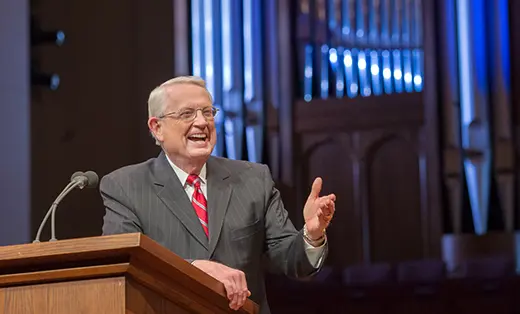
Pastor Chuck Swindoll

Do You Want Christlike Joy?

Cultivating Joy

The 90-day reflective journal Cultivating Joy helps you take time daily to enrich your outlook and strengthen your attitude by reading a passage from God’s Word and Pastor Chuck’s reflection on it.

Footer

Insight for Living Broadcast

I found Insight for Living through our Bible study leader back in 1985, and this ministry has helped me grow in my faith as a follower of the Lord Jesus Christ. Chuck's messages from the Bible have many a time kept me afloat and paddling toward the goal in this Christian race.

–G. N. from Canada

Help Us Impact Listeners’ Lives

Let’s Keep in Contact

Areas of Interest

Contact Permission

By clicking the "Sign up" button below, I am requesting to receive e-mail communications from Insight for Living, and I agree to their privacy policy.

Welcome

  • Our Mission
  • Chuck Swindoll
  • Essential Beliefs
  • Vision 195
  • How to Know God
  • The Book Shoppe & Coffee

Resources

  • Insights by Topic
  • Insights on the Bible
  • Article Library
  • Daily Devotional
  • Videos
  • Church Resources

Donate

  • Donate Now
  • Stock Transfers
  • Wills and Estate Planning
  • Why Support IFL?
  • Where Donations Go
  • My Donations

Contact

  • Contact Us
  • FAQs / Email
  • International Offices
  • Privacy Policy
  • Terms of Use
  • Copyrights & Permission Requests

© 2026 Insight for Living. All rights reserved.

Follow us:
Facebook
X
Instagram
YouTube
Pinterest