Overview:
John 20:11–31
An empty tomb. That’s all that Mary Magdalene observed. That’s all she understood. The grief overwhelmed her as she realized she’d been denied the comfort of anointing His body. She could not say her final good-bye. He was gone, desecrated, nowhere to be found.
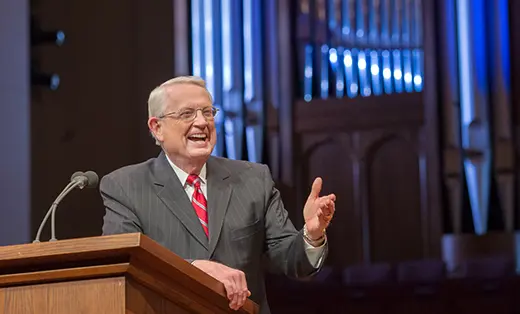
Chuck Swindoll brings to life this powerful passage and explains how Mary and all believers can experience greater comfort than can possibly be imagined . . . because there would be no more final good-byes . . . forever.
Message Summary:
- Feeling is Believing (Mary Magdalene): Mary, weeping and distraught, fails to recognize Jesus until He speaks her name. Swindoll characterizes her faith as fragile—a "weaker brother" or adolescent stage that relies on emotional highs and physical trinkets to hold onto. Jesus commands her to "stop clinging" to teach her that their relationship must transition to one of faith, not physical touch.
- Seeing is Believing (The Disciples): Huddled behind locked doors for fear of the Jewish leaders, the disciples only rejoice after they see the Lord and His wounds. Swindoll notes that many believers today are paralyzed by fear, wishing they could "see" Jesus to be secure, yet He is present regardless of our sight.
- Proving is Believing (Thomas): The empiricist of the group, Thomas refuses to believe without physical evidence. Swindoll highlights Jesus’ patience, allowing Thomas eight days to wrestle with his doubts before graciously offering the proof he demanded, leading Thomas to the confession, "My Lord and my God!"
Message Key Facts:
- Resuscitation vs. Resurrection: Swindoll opens with a conversation with a mortician friend to distinguish between resuscitation (coming back to life in the same body, only to die again later) and resurrection (living beyond the grave in a glorified body).
- The Dynamics of the Resurrected Body: Jesus’ resurrected body possessed unique molecular dynamics, allowing Him to pass through locked doors, yet He was also tangible enough to eat broiled fish and display scars.
- The "Adolescent" Faith of Mary: Mary Magdalene represents an emotional faith that falls away when the sun rises (referencing the rocky soil in Mark 4). Swindoll argues that spiritual maturity involves flexibility and faith without needing to "cling" to the past or physical tangibles.
- Handling Doubt (The Thomas Approach): Jesus did not rebuke Thomas for his skepticism or force him to believe immediately. He allowed Thomas eight days of silence to think, teaching us that we should not smother doubters with answers to questions they aren't asking, but give them space to struggle toward truth.
- The Formulas of Faith: Swindoll offers three mathematical formulas for the spiritual life:
- Subtract facts from faith, and you divide your strength.
- Add sight to faith, and you multiply your doubts.
- Mix faith with nothing but the truth, and you have life in His name.
Message References:
- John 20:11–18: The appearance to Mary Magdalene ("Feeling is Believing").
- John 20:19–23: The appearance to the Disciples behind locked doors ("Seeing is Believing").
- John 20:24–29: The appearance to Thomas eight days later ("Proving is Believing").
- John 20:30–31: The purpose of John's Gospel: that readers may believe and have life.
- Mark 4:3–17: The parable of the soils, used to illustrate "rocky ground" faith that springs up with joy but withers without roots.
- Luke 24:41–43: The account of Jesus eating broiled fish to prove He was not a ghost.