Overview:
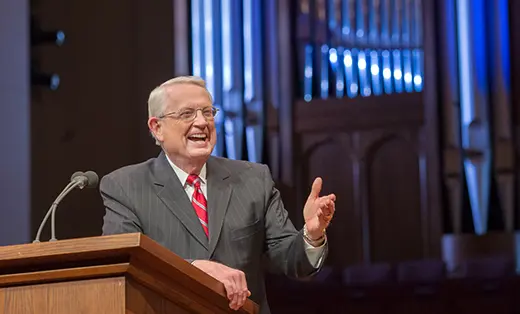
In Matthew 6:1–8, Jesus teaches how we are to directly engage with God. The religious highbrows of Jesus’ day gave, prayed, and fasted for the sake of demonstrating to others their spiritual devotion and superiority. How ridiculous! They used sacred practices to polish their public image instead of pursuing the presence of God. Pastor Chuck Swindoll unfolds the essence of Jesus’ warnings to help us avoid the deadly trap of religious performance so we can have true interaction with and enjoyment of the God who made us and loves us.
Message Summary:
In this message, Chuck Swindoll draws a powerful parallel between the Old Testament prophet Micah and the teachings of Jesus in Matthew 6 to confront the danger of spiritual hypocrisy. Swindoll begins by describing the biblical prophets not as comforters of the afflicted, but as those who “afflicted the comfortable,” speaking the raw truth of God without apology. He examines God’s “court case” against Israel in Micah 6, where the people hyper-spiritualize their obedience by offering “thousands of rams” or “rivers of oil.” Swindoll counters this with the simple, profound requirement of God found in Micah 6:8: to do justice, love kindness, and walk humbly [9–10].
Transitioning to the Sermon on the Mount, Swindoll explores Jesus’ warning to “Beware”—a command to “mind your motive” regarding religious acts. The sermon focuses on two specific areas of piety: giving and praying. Swindoll contrasts the “Showtime” mentality of the Pharisees—who sounded trumpets to announce their donations and stood on street corners to pray—with the quiet authenticity demanded by Jesus. He emphasizes that God is a Father who “sees in secret,” and that the most profound spiritual rewards are found not in public applause, but in private obedience [12–14, 17].
The message concludes with a call to “deactivate your inner lawyer” and stop performing. Swindoll challenges listeners to drop the mask of the actor (hypocrite) and embrace simplicity, brevity, and authenticity in their walk with God.
Message Key Facts:
- The Definition of “Hypocrite”: Swindoll explains that the word comes from the Greek hypocrites, which originally referred to an orator or actor. It describes someone who views the world as a stage and wears a mask to play a part. While acceptable in theater, it is deceitful in faith because it involves deliberately pretending to be something one is not.
- “Showtime” Christianity: Swindoll uses the illustration of legendary Los Angeles Lakers announcer Chick Hearn, who would yell “Showtime!” during a fast break. Swindoll argues that while “hype” fits basketball, it has no place in the church. If your giving is “Showtime,” the applause of the crowd is the only reward you will get [16–17].
- The Trumpet and the Plate: The Pharisees would literally have trumpeters sound a blast when they gave offerings. Swindoll likens this to modern show-offs who thump the bottom of the offering plate or wave a large bill to ensure others see their generosity.
- The “Secret” to Reward: A key phrase repeated in Matthew 6 is “your Father who sees what is done in secret.” Swindoll connects this to Hebrews 4:13, noting that we are “naked and laid bare” before God. Since God sees the motive, we cannot fake holiness [17–18].
- Authentic Prayer Illustrated: Swindoll shares a personal story of visiting a man named Bob Newkirk on the island of Okinawa. Swindoll found him alone in a bamboo hut, weeping and singing “Come Thou Fount of Every Blessing.” Witnessing this private, un-staged moment of intimacy with God changed Swindoll’s concept of spiritual maturity [24–25].
- Micah 6:8 as a Life Grid: Swindoll suggests using Micah 6:8 as a daily filter for decision-making: “Am I doing what is right? Would this be showing mercy? Is mine a life of humility?”.
- Three Warnings: The sermon concludes with three specific warnings:
- When devotion becomes a performance, we lapse into hypocrisy.
- When giving lacks secrecy, we miss the reward of deep satisfaction.
- When praying is done to impress, we fail to tap into God’s power [29–30].
Message References:
- Micah 6:1–8: God’s indictment of Israel and the definition of true religion (Justice, Kindness, Humility).
- Matthew 6:1–8: Jesus’ warning against practicing righteousness to be noticed, specifically regarding giving and praying.
- Romans 15:4: Paul’s statement that the Old Testament was written for our learning and hope.
- Hebrews 4:13: “All things are naked and laid bare before the eyes of him with whom we have to do”.
- Matthew 6:16–18: Referenced regarding fasting and the command not to look gloomy to be seen by others.