• Skip to main content
  • International Offices
  • My Account
  • My Cart

Insight for Living

The Bible-Teaching Ministry of Pastor Chuck Swindoll

  • Home
  • Broadcasts
    • Current Broadcast
    • Broadcast Schedule
    • Broadcast Archive
    • Series Library
    • STS Bible Studies
    • Ways to Listen
    • Sunday Services
    • Paws & Tales
  • Resources
    • Daily Devotional
    • Insights on the Bible
    • Insights by Topic
    • Article Library
    • Church Leaders
    • Church Resources
    • How to Know God
    • Chuck’s Next Book
    • Video Library
  • International
    • About Vision 195
    • International Pastors
    • International Offices
  • Connect
    • FAQs
    • Contact Us
    • Social Media
    • Mobile App
    • Share Your Testimony
    • Bible Questions and Counseling
    • Pray for IFL
  • About
    • Essential Beliefs
    • Chuck Swindoll
    • Questions about Chuck
    • Leadership
    • Where Donations Go
    • Work With Us
    • Volunteer Opportunities
  • Store
  • Ways To Give
    • Give Now
    • Give Monthly
    • My Account
    • IRA/Foundation/Stock
    • Will and Estates
    • Giving History
    • Why Give
    • This Month’s Letter
  1. Home  » 
  2. A Postcard to Philemon

Broadcasts

  • Current Broadcast
  • Broadcast Schedule
  • Broadcast Archive
  • Series Library
  • STS Bible Studies
  • Ways to Listen
  • Sunday Services
  • Paws & Tales

A Postcard to Philemon

Follow us:
Facebook
X
Instagram
YouTube
Pinterest

Overview:

Philemon

The apostle Paul wrote thirteen letters which make up a large part of the New Testament. Paul wrote his letters during the course of approximately fifteen years, between AD 52 and AD 67. About six years before his execution in Rome, Paul sent a personal note to a man in Colossae named Philemon. This little letter—more like a postcard—is the shortest of all of Paul’s writings, but don’t let its size fool you. It contains a magnificent study in forgiveness. In brief, it is a warm appeal that Philemon, a slave owner, accept back into his household a runaway slave named Onesimus, who had become a Christ follower because of Paul’s preaching. Just as Jesus Christ acts as the advocate for Christians before God, Paul acted as Onesimus’s advocate before Philemon. Paul’s letter to Philemon has great practical value for us today. It teaches us about giving others second chances, the equality that believers have in Christ, and the power of the gospel to transcend cultural and socioeconomic boundaries. In short, Paul’s postcard to Philemon reminds us about grace.
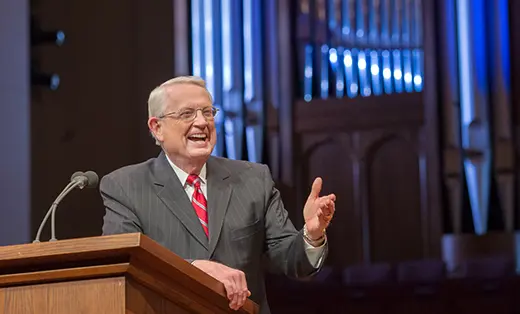

Message Summary:

In "A Postcard to Philemon," Pastor Chuck Swindoll explores the shortest and most personal of the apostle Paul’s letters. This "divine postcard" provides a magnificent case study in the transformative power of grace and the necessity of forgiveness. Paul intercedes on behalf of Onesimus—a runaway slave who had become a follower of Christ—asking his master, Philemon, to receive him back no longer as a slave, but as a beloved brother. The message serves as a powerful reminder that the gospel has the authority to transcend cultural, social, and economic barriers, offering a second chance to the "useless" and making them "useful" in the kingdom of God.

Message Key Facts:

  • The Setting: Written by Paul around AD 60–61 while he was under house arrest in Rome.
  • The Recipients: Addressed to Philemon, a wealthy leader of the church in Colossae, as well as Apphia, Archippus, and the church that met in Philemon's house.
  • The Conflict: Onesimus, Philemon’s slave, had escaped (likely after stealing from him) and fled to Rome, where he encountered Paul and was converted to Christianity.
  • Wordplay: Paul uses a play on words with the name Onesimus, which means "profitable" or "useful." Once considered useless to his master, he is now useful to both Philemon and Paul (Philemon 1:11).
  • Substitutionary Grace: Paul’s offer to pay Onesimus’s debts ("charge that to my account") serves as a vivid illustration of Christ’s advocacy for the believer before God.

Message References:

  • Philemon 1:1–3: Paul’s humble self-identification as a "prisoner of Christ Jesus" rather than an apostle, setting a tone of gentleness.
  • Philemon 1:10–11: The description of Onesimus's spiritual birth and his transition from "useless" to "useful."
  • Philemon 1:15–16: The providential perspective on Onesimus’s flight—that he departed for a while so he might be received back forever as a brother.
  • Philemon 1:17–18: The radical call to reconciliation and Paul’s offer of personal restitution.
  • Galatians 3:28: (Contextual) The theological foundation that in Christ, there is neither slave nor free.

Foundational Truths for Believers

Chuck Swindoll highlights several timeless principles from this brief letter that are essential for living out an authentic faith:

1. Grace Dissolves Social Barriers

The gospel does not merely "fix" relationships; it redefines them. In Christ, the rigid hierarchies of the Roman world (master and slave) were replaced by the kinship of brothers and sisters in God’s family.

2. Forgiveness is a Choice, Not a Feeling

Paul does not command Philemon to forgive; he appeals to his love and Christian character. Real forgiveness often requires a sacrifice of rights and a willingness to offer a second chance even when a wrong has been committed.

3. Christ is Our Ultimate Advocate

Paul’s role in this story—standing between an offended party and an offender—is a "type" of Christ. Just as Paul took Onesimus’s debt upon himself, Jesus Christ took our spiritual debt upon Himself to reconcile us to the Father.

4. Providence Works in the Shadows

Even in the "untoward" circumstances of a runaway slave and a prison cell, God was working behind the scenes. What seemed like a crisis was actually God’s method for bringing a lost soul to salvation and a broken relationship to restoration.

Practical Application

  • Identify Your "Onesimus": Is there someone who has wronged you that you are struggling to forgive? Consider how Christ has forgiven your much larger debt.
  • Advocate for Others: Look for opportunities to stand in the gap for someone who lacks the status or voice to defend themselves.
  • Value the "Useless": Challenge your own biases. Do you see people through the lens of their past mistakes or through the lens of their potential in Christ?
  • Practice Restitution: Understand that while grace is free, reconciliation often involves "making things right" as much as possible, just as Paul offered to repay Philemon.

Message Speaker:

Pastor Chuck Swindoll

Footer

Insight for Living Broadcast

I didn't know much about grace, so I decided to read The Grace Awakening. I have learned a lot about letting people be different than me and realizing that God's grace doesn't condemn me but rather forgives and covers me with His righteousness! I shouldn't be a perfectionist because I can never do everything perfectly. If I let God work through me though, I will be living a life pleasing to Him! —T. Z. from Oklahoma

Help Us Impact Listeners' Lives

Let’s Keep in Contact

Areas of Interest

Contact Permission

By clicking the "Sign up" button below, I am requesting to receive e-mail communications from Insight for Living, and I agree to their privacy policy.

Welcome

  • Our Mission
  • Chuck Swindoll
  • Essential Beliefs
  • Vision 195
  • How to Know God
  • The Book Shoppe & Coffee

Resources

  • Insights by Topic
  • Insights on the Bible
  • Article Library
  • Daily Devotional
  • Videos
  • Church Resources

Donate

  • Donate Now
  • Stock Transfers
  • Wills and Estate Planning
  • Why Support IFL?
  • Where Donations Go
  • My Donations

Contact

  • Contact Us
  • FAQs / Email
  • International Offices
  • Privacy Policy
  • Terms of Use
  • Copyrights & Permission Requests

© 2026 Insight for Living. All rights reserved.

Follow us:
Facebook
X
Instagram
YouTube
Pinterest
Accessibility
Text Size
Medium
High Contrast
Dark Mode
Insight for Living Ministries
  • Home
  • Broadcasts
    • Current Broadcast
    • Broadcast Schedule
    • Broadcast Archive
    • Series Library
    • STS Bible Studies
    • Ways to Listen
    • Sunday Services
    • Paws & Tales
  • Resources
    • Daily Devotional
    • Insights on the Bible
    • Insights by Topic
    • Article Library
    • Church Leaders
    • Church Resources
    • How to Know God
    • Chuck’s Next Book
    • Video Library
  • International
    • About Vision 195
    • International Pastors
    • International Offices
  • Connect
    • FAQs
    • Contact Us
    • Social Media
    • Mobile App
    • Share Your Testimony
    • Bible Questions and Counseling
    • Pray for IFL
  • About
    • Essential Beliefs
    • Chuck Swindoll
    • Questions about Chuck
    • Leadership
    • Where Donations Go
    • Work With Us
    • Volunteer Opportunities
  • Store
  • Ways To Give
    • Give Now
    • Give Monthly
    • My Account
    • IRA/Foundation/Stock
    • Will and Estates
    • Giving History
    • Why Give
    • This Month’s Letter
Ways to Give
My Cart My Account International Offices
Give Now