Overview:
Selected Scriptures from Titus
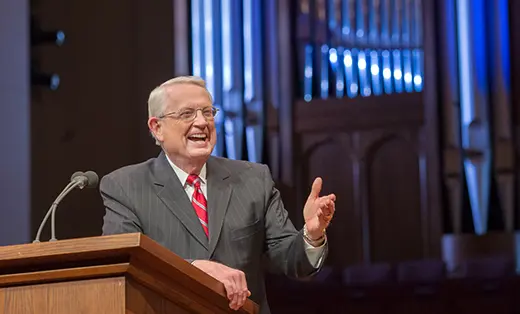
In a small but detailed letter, the apostle Paul packs a punch with plenty of takeaways. Pastor Chuck Swindoll lays out significant lessons from Titus that Christians still need today!
Learn how a combination of grace and godliness makes a person, a household, and a church healthy and effective. Sound doctrine and good conduct are always fitting.
Grow in your love for the Savior and in your love for others as you listen to this needed message!
Message Summary:
Message Key Facts:
- The "Lincoln" Telegram: Swindoll opens with a historical anecdote about an 18-word telegram from Lincoln to Grant in 1865 that turned the tide of the Civil War. He uses this to illustrate how brief messages can hold immense weight, much like the 46 verses of Titus.
- A "Quick and Dirty" Map Analysis: Paul wrote this letter during a period of release between his Roman imprisonments. He had traveled from Rome to Ephesus (leaving Timothy), then to Crete (leaving Titus), and was likely writing from Nicopolis on the Adriatic Sea, where he planned to winter [8–11].
- Titus’s Profile: Titus is described as Paul’s "true child in a common faith." He was a Gentile convert who accompanied Paul to Jerusalem (Galatians 2) as a living example that one did not need to keep the Mosaic law (circumcision) to be saved.
- The Reality of Island Ministry: Swindoll jokes that being left on Crete sounds like being left on Maui, but notes that island ministry is difficult due to transient populations and people "escaping" their pasts. He recounts a story of meeting an island resident in the Bahamas who had never walked to the other side of her small island, illustrating the myopic nature of isolated cultures [14, 20–21].
- The Reputation of Cretans: Paul quotes a Cretan prophet in Titus 1:12, describing the locals as "always liars, evil beasts, lazy gluttons." Swindoll appreciates Paul’s candor, noting he didn't sugarcoat the difficulty of the assignment.
- Grace and Godliness: The core doctrine of the book is that Grace (what God does for us) must lead to Godliness (how we live). Swindoll argues that this combination makes a church stable, a home "sane," and the gospel magnetic to the outside world [23, 26–27].
- "Goodness and Grit": Swindoll quotes a letter shared by Kent Hughes about young ministers who failed morally or burned out because they tried to "bow their necks" and serve God through personal resolve rather than relying on the pardoning and enabling grace of God [29–31].
- Magnetic Evangelism: Swindoll asserts that if a church truly balances sound doctrine with a lifestyle of goodness, the world will be "curious and attracted," unable to stay away from such a wholesome community [27–28].
Message References:
- Titus 1:4: Paul’s greeting: "To Titus, my true child in a common faith...".
- Titus 1:5: The assignment: "For this reason I left you in Crete, that you would set in order what remains and appoint elders in every city".
- Titus 1:12: The cultural description: "One of themselves, a prophet of their own, said, 'Cretans are always liars, evil beasts, lazy gluttons'".
- Titus 2:11–12: The theological core: "For the grace of God has appeared... instructing us to deny ungodliness and worldly desires".
- Titus 3:8: The call to action: "So that those who have believed God will be careful to engage in Good Deeds".
- Titus 3:12: Paul’s location: "Make every effort to come to me at Nicopolis, for I have decided to spend the winter there".
- Galatians 2:3–5: Referenced regarding Titus accompanying Paul to Jerusalem as an uncircumcised Gentile believer.