Overview:
Have you ever sensed a strong nudge to call someone, avoid a situation, or step toward an opportunity—and then chalked it up to coincidence? Those moments may not be coincidences at all. They may be the quiet, unheralded working of the Holy Spirit in your life.
Pastor Chuck Swindoll draws from Scripture to examine the Spirit’s subtle but powerful ministry of inner promptings—those hunches, convictions, and flashes of clarity that guide believers toward God’s purposes when they are paying attention.
Cultivate your sensitivity to the Spirit’s voice. Identify His promptings, trust them, and respond with faith and obedience.
Message Summary:
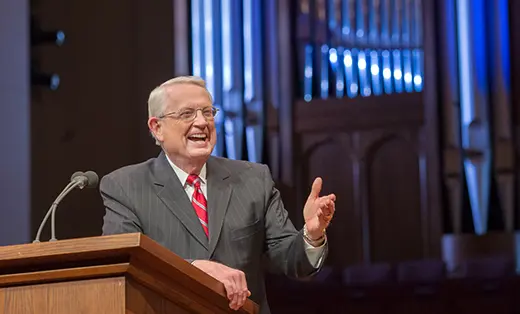
In this unique message regarding the leadership of the Holy Spirit, Chuck Swindoll addresses the mysterious way God communicates with believers through what he calls "Unidentified Inner Promptings" (UIPs). Swindoll notes that we often experience hunches, intuition, or deep inner sensings that guide our decisions, yet we rarely credit the Holy Spirit for them. He argues that because humans are created in the imago Dei (image of God), we possess a spiritual capacity to connect with our Creator that animals do not possess, allowing God to communicate through the "inner secret chambers" of our being. The sermon explores biblical examples of these promptings, starting with Elijah in 1 Kings 19. Swindoll emphasizes that God did not speak to the depressed prophet through the wind, earthquake, or fire, but through a "gentle rustling" or whisper. He warns that the noise and pace of modern culture often drown out this quiet voice, urging listeners to "slow down" to hear God [40–42]. Swindoll also traces the life of Paul, who frequently acted on inner perceptions—being "bound in spirit" to go to Jerusalem despite knowing trouble awaited, or sensing danger on a ship in the Mediterranean. The message concludes with practical guidelines for discerning these promptings: if a hunch contradicts Scripture, "back off" immediately; but if it aligns with God’s character, we should "go for it" and expect surprises. Swindoll illustrates this faith with the inspiring story of Dr. Charles McCoy, a 72-year-old pastor who followed an impulse to go to India, launching a global ministry that lasted until he was 88 [63–64, 71].
Message Key Facts:
- Defining UIPs: Swindoll coins the term "Unidentified Inner Promptings" to describe the subjective, extra-sensory ways the Holy Spirit guides believers—often dismissed as mere intuition, hunches, or feelings [15–16].
- The Image of God (Imago Dei): Swindoll differentiates humans from animals based on Genesis 1. While animals have instinct, humans have the "image of God," which includes a spirit capable of receiving communication from the Lord. Although sin defaced this image, it did not erase it [19, 23–25].
- Elijah’s "Gentle Rustling": analyzing 1 Kings 19, Swindoll corrects the common phrase "still small voice," noting the Hebrew is better rendered as a "gentle rustling" or "light whisper." This illustrates that God’s most profound leading often comes in quiet moments rather than spectacular displays of power [39–41].
- Paul’s "Perception": In Acts 27, Paul warned the sailors of disaster not because he was a mariner, but because he "perceived" it. Swindoll identifies this as a UIP that allowed Paul to have peace and leadership during a crisis [52–53].
- Contentment with Weakness: Using 2 Corinthians 12, Swindoll explains that God sometimes uses inner promptings to tell us "No" regarding the removal of pain (the thorn in the flesh). The Spirit reassures us that "God's grace is sufficient," allowing believers to be content even in weakness.
- The "Back Off" Rule: Swindoll offers a safety check for subjective feelings: if a prompting contradicts the written Word of God or feels demonic, one must immediately "back off" and reject it.
- The Story of Charles McCoy: Swindoll closes with the true story of a pastor forced to retire at 72 who followed an "impulse" to preach in India. Despite losing his trunk and wallet, he ended up preaching to mayors and military academies, proving that following God's promptings can revitalize a life at any age [64–71].
Message References:
- Genesis 1:26–27: The creation of humanity in the image and likeness of God.
- Psalm 139:1–14: David’s prayer acknowledging God’s intimate knowledge of his paths, thoughts, and inward parts.
- 1 Kings 19:11–12: God revealing Himself to Elijah not in the fire or earthquake, but in a "sound of a gentle blowing."
- Acts 20:22–24: Paul describing himself as "bound in spirit" to go to Jerusalem, despite the Holy Spirit testifying that afflictions awaited him.
- Acts 27:10: Paul’s warning to the sailors: "Men, I perceive that the voyage will certainly be with... great loss."
- 2 Corinthians 12:7–10: Paul’s prayer to remove the thorn in the flesh and God’s answer: "My grace is sufficient for you."