Overview:
The world has little patience for what it considers foolish or weak—and by that standard, a crucified Savior ranks near the bottom. The temptation to polish the gospel, soften its edges, and make it more culturally respectable is as strong today as it was in Paul’s day.
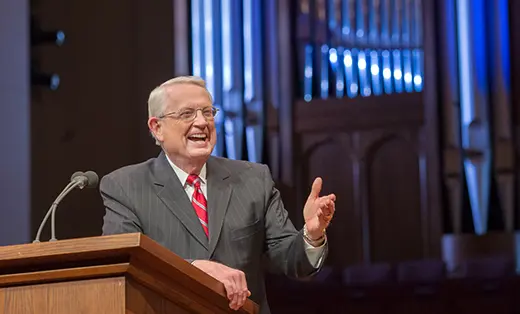
From 1 Corinthians 1:18–2:5, Pastor Chuck Swindoll explores Paul’s resolute commitment to preach Christ crucified—not with worldly wisdom or rhetorical brilliance, but with straightforward confidence in the power of the cross to save.
Refuse to be ashamed of the cross. What the world calls foolishness is the power of God—and that is more than enough.
Message Summary:
Message Key Facts:
- "Wrong Way" Riegels: Swindoll uses the 1929 Rose Bowl incident where Roy Riegels ran the wrong way as a metaphor for the "Wrong Way Corinthians"—carnal Christians who are busy and active but moving in the wrong direction spiritually [10–13].
- The Four Factions: The Corinthian church was split into cliques:
- Paul: The founder.
- Apollos: The eloquent speaker from Alexandria.
- Cephas (Peter): The original disciple.
- "Jesus Only": The ultra-pious group who claimed no earthly leader but often possessed a judgmental spirit [14–16].
- The Definition of "Foolishness": Swindoll notes that the Greek word Paul uses to describe how the world views the Cross is moria, from which we get the English word "moron." To the perishing, the gospel appears moronic [24–25].
- God’s Chosen Demographics: Paul states that "not many" wise, mighty, or noble are called. Swindoll humorously illustrates this by listing obscure American towns like Booger Hollow, Arkansas; Lizard Lick, North Carolina; and Nameless, Tennessee, proving that God calls "catfish" rather than "rainbow trout" to humble the world [36–39].
- Sacrificing the Prophet to the Artist: Quoting G. Campbell Morgan, Swindoll warns preachers against becoming so concerned with eloquence, style, and beauty that they lose the impact of the truth, effectively sacrificing the prophetic message for artistic performance.
- Liquor into Furniture: Swindoll shares the testimony of John Hutton, a converted alcoholic. When coworkers mocked him about Jesus turning water into wine, Hutton replied, "I don't know about that, but in my own house, I saw him turn liquor into furniture," illustrating the transforming power of the Cross.
- Three Guideposts for Life: Swindoll offers three commands to prevent believers from running the wrong way:
-
- Remember the pit: Never forget the depravity from which you were dug.
- Refuse the praise: Reject conceit and self-promotion.
- Rely on the power: Depend wholly on the Holy Spirit.
Message References:
- 1 Corinthians 1:18: "For the word of the cross is foolishness to those who are perishing, but to us who are being saved, it is the power of God."
- 1 Corinthians 1:11–13: Paul’s admonition regarding the quarrels and factions within the church ("I am of Paul," "I am of Apollos").
- 1 Corinthians 1:22–23: "Jews ask for signs and Greeks search for wisdom; but we preach Christ crucified."
- 1 Corinthians 1:26–29: The description of God choosing the foolish, weak, and base things of the world to nullify the things that are.
- 1 Corinthians 2:1–5: Paul’s testimony that he did not come with superiority of speech, but in "weakness and in fear and in much trembling," so faith would rest on God's power.
- Isaiah 29:14 (Quoted in 1 Cor 1:19): "I will destroy the wisdom of the wise, and the cleverness of the clever I will set aside" [25–26].
- John 15:5: "Without Me, you can do nothing" (Referenced in the call to rely on God's power).