Overview:
Ever wonder what it takes to be a cheerful giver?
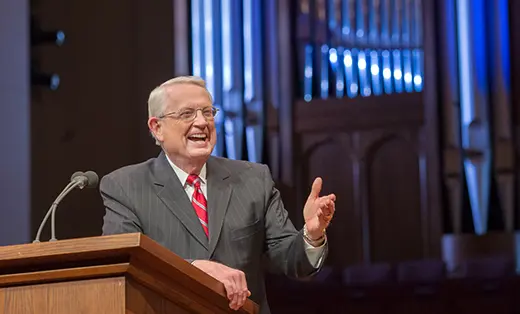
In this message, Chuck Swindoll teaches us about the generous Israelites who supplied all the animal skins, gold, silver, and bronze for the wilderness tabernacle.
Listen in to discover how you can cultivate the primary ingredient of generosity: a heart stirred by the spirit of God.
Message Summary:
Message Key Facts:
- Gratitude vs. Generosity: Swindoll distinguishes between the two, noting that the Exodus (receiving freedom) made Israel grateful, but the Tabernacle (giving to God) made them generous. He argues, "You're never made generous by receiving... It's when you personally get involved in a project for the greater glory of God".
- The "Something for Stevie" Illustration: A story of truckers leaving over $10,000 in cash on breakfast tables for a busboy with Down syndrome. Swindoll uses this to prove that "generosity and heart-stirring emotions go hand in hand," and that facts and figures alone rarely move people to give [27–29].
- The Four Divine Prompts: God used four specific methods to prepare the people to give:
- A Clear Directive: "Raise a contribution for Me".
- Specific Gifts: A detailed list including gold, silver, skins, and acacia wood.
- A Stated Objective: "Let them construct a sanctuary for Me".
- Rest and Reflection: The command to observe the Sabbath.
- Moses’ Reordering of Priorities: When Moses addressed the people in Exodus 35, he changed the order God gave him. He placed the Sabbath command first. Swindoll suggests Moses understood that "your heart isn't stirred in the fast lane," and the people needed quiet reflection before they could give sacrificially [56–59, 64].
- The Unsung Craftsmen: Swindoll highlights Bezalel and Oholiab (Exodus 31), Spirit-filled craftsmen appointed by God. He emphasizes that God values the blue-collar skills of cabinet making and artistry just as much as leadership [47–49].
- The "Stop" Command: The response to the building campaign was so enthusiastic that Exodus 36 records Moses issuing a proclamation to stop giving because they had "more than enough." Swindoll calls this a "remarkable response" that every pastor dreams of [7, 68–69].
- The "Rest and Reflect" Challenge: Swindoll breaks his usual pattern of not giving public invitations by asking the congregation to stand if they are willing to commit a future Saturday to silence and prayer—no cooking, no fires, no distractions—to ask God what they should give [71, 87–88].
Message References:
- Exodus 25:1–9: The Lord’s instruction to Moses to raise a contribution from "every man whose heart moves him" and the specific list of materials required.
- Exodus 35:1–5: Moses assembles the congregation and prioritizes the Sabbath command ("work may be done for six days") before asking for the contribution.
- Exodus 35:21: "Everyone whose heart stirred him and everyone whose spirit moved him came and brought the Lord's contribution".
- Exodus 36:4–7: The craftsmen report that the people are bringing "much more than enough," leading to the command to restrain the people from giving further.
- Exodus 31:1–6: The calling of Bezalel and Oholiab, filled with the Spirit of God for craftsmanship [47–49].
- Exodus 31:12–17: The specific instruction regarding the Sabbath as a sign between God and Israel.